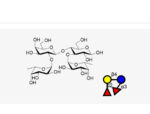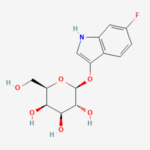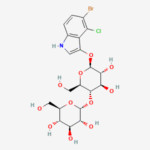
α-Gal Lewis A (Galα1-3GlcNAcβ1-3(Fucα1-4)GlcNAc) is a branched trisaccharide antigen found in human blood group A structures and mucins, appearing as a white powder used in glycan research for immune studies and pathogen mimicry. Synthesized enzymatically or chemically, it features α-1,3-galactose on a Lewis A core, enabling specific lectin binding and antibody recognition, with applications in diagnostics, vaccines, and allergy research; purity exceeds 95% via HPLC/NMR, stable at -20°C for years.
Appearance
Pristine white to off-white amorphous or crystalline powder.
Melting point ~200-210°C; water solubility >100 g/L.
Source
Naturally in human A blood group secretions, gastrointestinal mucins, and select pathogens.
Commercially via glycosyltransferase cascades on GlcNAc acceptors using E. coli or yeast expression systems.
Molecular Weight and Structure
Molecular mass 811.73 g/mol, formula C₃₂H₅₅N₃O₂₄.
Galα1-3GlcNAcβ1-3(Fucα1-4)GlcNAc branched scaffold with rigid glycosidic linkages.
Sugar Specificity
Binds anti-α-Gal antibodies, Lewis lectins (e.g., LEA), and helminth adhesins via terminal Galα1-3 and Fucα1-4.
Hydrolyzed by α-galactosidases (e.g., from Bacteroides) and α1-4 fucosidases.
Biological Activity
Elicits IgE/IgG responses in α-Gal syndrome; inhibits norovirus/rotavirus adhesion.
Modulates allergy, promotes T-reg cells, targets cancer glycans, and barriers xenotransplants.
Purity and Microbial Contamination
≥95-99% by HPLC/NMR; endotoxins <10 EU/mg, no pathogens.
Heavy metals per ICH Q3D; moisture <10% post-lyophilization.
Identity and Quality Control
¹H-NMR for anomeric protons; LC-MS/MS for [M+H]+; HPAEC-PAD for monosaccharides.
COA includes heavy metals (ICP-MS), residuals (GC-MS).
Shelf Life and Storage
24-36 months at -20°C under N₂, lyophilized.
Ambient short-term if desiccated; avoid humidity to prevent hydrolysis.