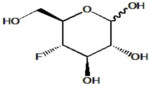
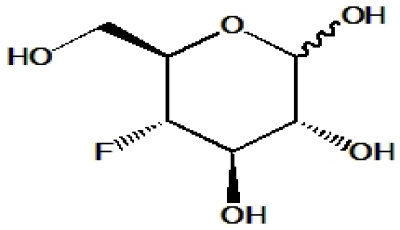


Methyl 4-deoxy-4-fluoro-α-D-glucopyranoside is a chemically synthesized fluorinated sugar derivative where the hydroxyl group at the 4-position of α-D-glucopyranoside is replaced by a fluorine atom, and the anomeric hydroxyl is methylated. This modification combines the stability of methyl glycosides with the unique properties imparted by fluorine substitution, such as altered electronic effects and enhanced metabolic stability. The compound typically appears as a white crystalline solid with high purity. It is valuable in glycochemistry and medicinal chemistry as a probe molecule for studying enzymatic mechanisms, glycosyltransferase specificity, and fluorinated glycomimetic drug development. The fluorine substitution can affect sugar recognition and enzyme binding, enabling medicinal chemists to design novel compounds with improved biological properties. Methyl 4-deoxy-4-fluoro-α-D-glucopyranoside is produced via stereoselective fluorination and methyl glycosylation of glucose derivatives, purified to ≥98% purity, and confirmed by spectral and chromatographic methods. It is synthesized under controlled conditions ensuring minimal microbial contamination. Optimal storage is recommended in a sealed container at 2–8 °C with protection from moisture and light, preserving the compound’s integrity for 1–2 years. Applications include synthetic carbohydrate chemistry, biochemical assay development, and therapeutic molecule design.
IUPAC Name:
Appearance:
Source:
Molecular Weight and Structure:
Sugar Specificity:
Biological Activity:
Purity and Microbial Contamination:
Identity and Quality Control:
Shelf Life and Storage:
Application:
Key Characteristics:
Citation Links:
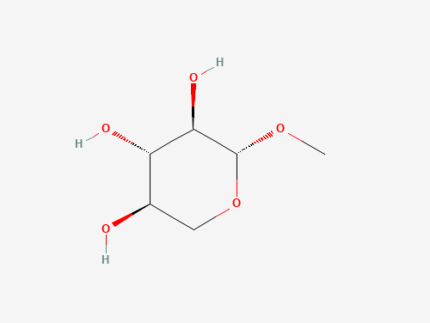
Catalog No: A10GD-4836
Cas No: 612-05-5
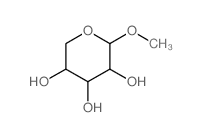
Properties: Mol Formula: C6H12O5, Mol Weight: 164.16
IUPAC Name: (2R,3R,4S,5R)-2-methoxyoxane-3,4,5-triol
Synonym: Methyl-beta-D-xylopyranoside, Methyl beta-D-xyloside, (2R,3R,4S,5R)-2-Methoxytetrahydro-2H-pyran-3,4,5-triol
10 in stock
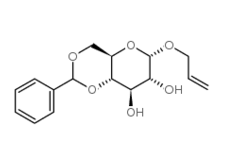
Catalog No: A10GD-4833
Cas No: 20746-64-9
Properties: Mol Formula: C16H20O6, Mol Weight: 308.33
IUPAC Name: 2-phenyl-6-prop-2-enoxy-4,4a,6,7,8,8a-hexahydropyrano[3,2-d][1,3]dioxine-7,8-diol
Synonym: (4AR,6R,7R,8R,8aS)-6-(allyloxy)-2-phenylhexahydropyrano[3,2-d][1,3]dioxine-7,8-diol, (4AR,6S,7R,8R,8aS)-6-(allyloxy)-2-phenylhexahydropyrano[3,2-d][1,3]dioxine-7,8-diol, Allyl 4,6-O-benzylidene-alpha-D-glucopyranoside
10 in stock
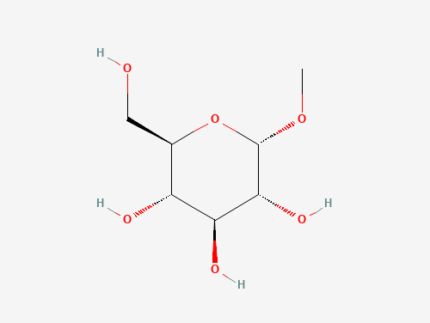
Catalog No: A10GD-4829
Cas No: 97-30-3
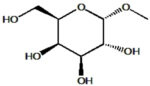
Properties: Mol Formula: C7H14O6, Mol Weight: 194.18
IUPAC Name: (2R,3S,4S,5R,6S)-2-(hydroxymethyl)-6-methoxyoxane-3,4,5-triol
Synonym: Methyl-alpha-D-glucopyranoside, alpha-Methylglucoside, Methyl alpha-D-glucoside
10 in stock
Catalog No: A10GD-4830
Cas No: 6988-39-2
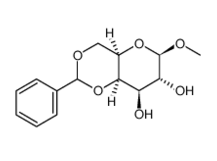
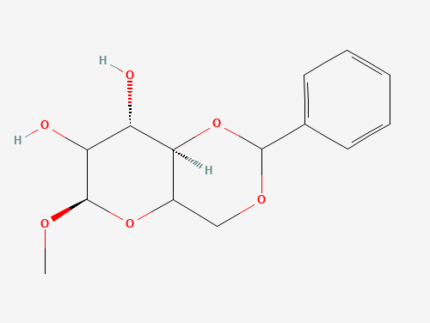
Properties: Mol Formula: C14H18O6, Mol Weight: 282.29
IUPAC Name: (6R,8S,8aR)-6-methoxy-2-phenyl-4,4a,6,7,8,8a-hexahydropyrano[3,2-d][1,3]dioxine-7,8-diol
Synonym: METHYL-4,6-O-BENZYLIDEN-BETA-D-GALACTOPYRANOSIDE, Methyl-4,6-O-benzylidene-beta-D-galactopyranoside, methyl 4,6-o-benzylidene-alpha-d-galactopyranoside
10 in stock




Reviews
There are no reviews yet.