



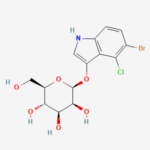
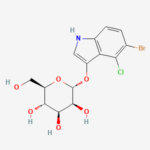
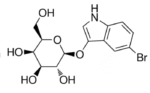
X‑β‑Man (CAS 129787‑67‑3) is a synthetic β‑mannosidase‑specific chromogenic substrate composed of a 5‑bromo‑4‑chloro‑3‑indoxyl aglycone linked via a β‑glycosidic bond to D‑mannose. When cleaved by β‑mannosidase or β‑mannosidase‑containing enzymes, the indoxyl moiety is released and undergoes rapid oxidation in air to form an intensely colored, water‑insoluble indigo‑like precipitate, enabling visual or spectrophotometric detection of enzyme activity. This substrate is commonly used in microbiology to screen for or enumerate mannose‑utilizing bacteria or yeast, as well as in histochemistry and recombinant‑enzyme assays where spatial localization or high‑sensitivity readouts are required. Compared with other X‑type substrates, X‑β‑Man offers good selectivity for β‑mannosidases and is compatible with a range of buffers and culture‑medium components.
Appearance
Source / synthesis
Molecular weight and structure
Sugar specificity
Biological activity
Purity and microbial contamination
Identity and quality control
Shelf life and storage
Application
Key characteristics
citations
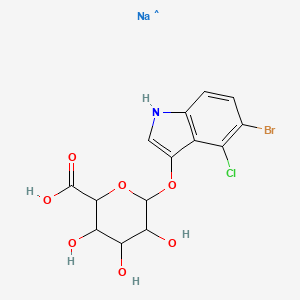
| Name | X-GlcA Sodium Salt Anhydrous |
| Synonyms | 5-Bromo-4-chloro-3-indolyl-β-D-glucuronic acid sodium salt |
| CAS Number | 125441-49 |
| Molecular Formula | C14H12BrClINNaO7 |
| Molecular Weight | 544.59 g/mol |
| Specifications & Purity | ≥95% (Vacuum foil packaging) |
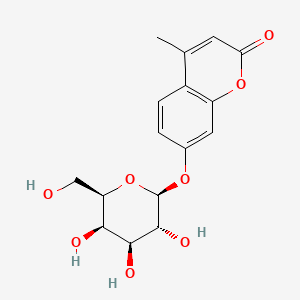
| Name | 4MU-Gal |
| Synonyms | 4-Methylumbelliferyl-β-D-galactopyranoside |
| CAS Number | 6160-78-7 |
| Molecular Formula | C16H18O9 |
| Molecular Weight | 338.31 g/mol |
| Specifications & Purity | 98% (Vacuum foil packaging) |
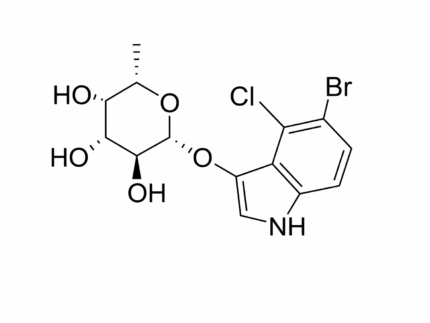
| Name | X-β-L-Fuc |
| Synonyms | 5-Bromo-4-chloro-3-indolyl-β-L-fucopyranoside |
| CAS Number | 125280-49 |
| Molecular Formula | C14H15BrClNO5 |
| Molecular Weight | 392.63 g/mol |
| Specifications & Purity | ≥95% (Vacuum foil packaging) |
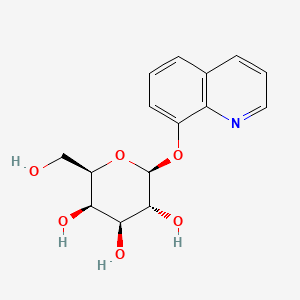
| Name | 8HQ-Gal |
| Synonyms | 8-Hydroxyquinolyl-β-D-galactopyranoside |
| CAS Number | 110379-84-8 |
| Molecular Formula | C15H17NO6 |
| Molecular Weight | 307.30 g/mol |
| Specifications & Purity | 98% (Vacuum foil packaging) |



Reviews
There are no reviews yet.