


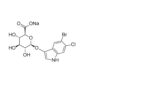
Magenta-GlcA Sodium Salt (5-Bromo-6-chloro-3-indolyl-β-D-glucuronide sodium salt, CAS 216971-54-9) represents an advanced chromogenic substrate optimized for β-glucuronidase (GUS, EC 3.2.1.31) detection, where enzymatic hydrolysis liberates a dibromochloroindoxyl aglycone that rapidly dimerizes and oxidizes to form an insoluble magenta-colored precipitate, providing superior visual contrast and reduced background compared to traditional X-GlcA blue substrates in high-density colony screening applications. With molecular formula C14H12BrClNNaO7 (MW 444.59 g/mol), this white to off-white water-soluble sodium salt features β-D-glucuronopyranuronic acid linked via β1-O-glycosidic bond to the 3-position of 5-bromo-6-chloro-1H-indol-3-ol, exhibiting exceptional selectivity for bacterial (E. coli GusA), plant (uidA reporter), and mammalian β-glucuronidases while demonstrating >1000-fold resistance to endogenous glucosidases/galactosidases due to the uronic acid configuration and vicinal halogen substitution pattern. The magenta product’s distinctive hue (λmax ~550-570 nm) enables unambiguous multiplexing with X-Gal (blue) and X-Glc (blue-green) systems for simultaneous screening of lacZ/GUS dual-reporter constructs, supporting transformation efficiency assessments exceeding 10^6 CFU/μg DNA in Agrobacterium-mediated plant biotechnology workflows. Incorporated into selective media at 50-100 μg/mL, it identifies GUS-positive recombinants through magenta colony formation within 24-48 hours, with applications spanning plant molecular biology (transgenic selection), microbiome functional screening (E. coli O157:H7 detection), and HTS of glucuronidase inhibitors for irinotecan detoxification and xenobiotic metabolism modulation.
Appearance
Source
Molecular Weight and Structure
Sugar Specificity
Biological Activity
Purity and Microbial Contamination
Identity and Quality Control
Shelf Life and Storage
Application
Key Characteristics
Citation Links
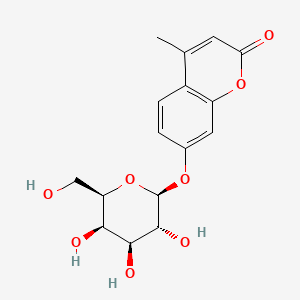
| Name | 4MU-Gal |
| Synonyms | 4-Methylumbelliferyl-β-D-galactopyranoside |
| CAS Number | 6160-78-7 |
| Molecular Formula | C16H18O9 |
| Molecular Weight | 338.31 g/mol |
| Specifications & Purity | 98% (Vacuum foil packaging) |
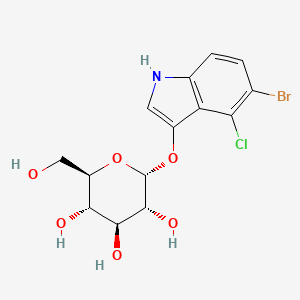
| Name | X-α-Gal |
| Synonyms | 5-Bromo-4-chloro-3-indolyl-α-D-galactopyranoside |
| CAS Number | 107021-85 |
| Molecular Formula | C14H15BrClNO6 |
| Molecular Weight | 408.63 g/mol |
| Specifications & Purity | ≥95% (Vacuum foil packaging) |
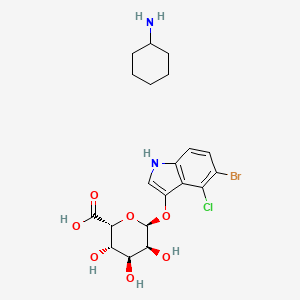
| Name | X-GlcA CHX Salt Monohydrate |
| Synonyms | 5-Bromo-4-chloro-3-indolyl-β-D-glucuronic acid cyclohexylammonium salt monohydrate |
| CAS Number | 114162-0 |
| Molecular Formula | C20H26BrClN2O8 |
| Molecular Weight | 538.0 g/mol |
| Specifications & Purity | ≥95% (Vacuum foil packaging) |
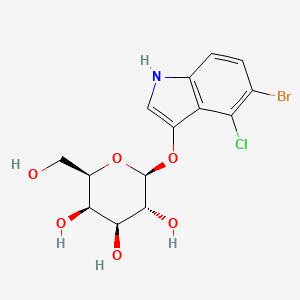
| Name | X-Gal |
| Synonyms | 5-Bromo-4-chloro-3-indolyl-β-D-galactopyranoside |
| CAS Number | 7270-6 |
| Molecular Formula | C14H15BrClNO6 |
| Molecular Weight | 408.63 g/mol |
| Specifications & Purity | ≥95% (Vacuum foil packaging) |




Reviews
There are no reviews yet.