
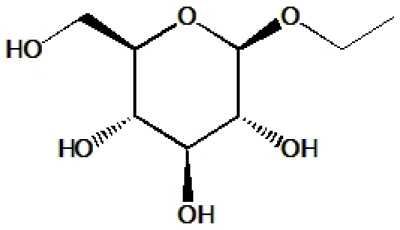


Ethyl β-D-glucopyranoside is a synthetically produced glycoside of D-glucose, where the anomeric hydroxyl group is replaced by an ethyl group in the β-configuration. This compound is a white crystalline solid, prized in carbohydrate chemistry for its enhanced stability, resistance to mutarotation, and suitability as a non-reducing sugar derivative. It has a molecular formula of C8H16O6 and a molecular weight of 208.21 g/mol. The ethyl group at C1 restricts its reactivity, yet the β-D-glucopyranoside ring structure preserves selective recognition by carbohydrate-processing enzymes and proteins. It is usually synthesized by acid-catalyzed glycosylation of D-glucose with ethanol, followed by rigorous purification, ensuring high purity (≥98%) and absence of microbial contamination. Ethyl β-D-glucopyranoside is widely utilized as an intermediate in synthetic oligosaccharide pathways, a substrate or reference for enzyme assays, and a building block for glycomimetics and sugar-based functional materials. Identity is typically confirmed via NMR, MS, and HPLC, and each batch is quality-controlled with COA documentation. The compound’s shelf life is 1–2 years under dry, cool (2–8 °C), and light-protected storage. Applications include chemical synthesis, biochemical research, physiological studies, and carbohydrate-based pharmaceutical development.
IUPAC Name:
Appearance:
Source:
Molecular Weight and Structure:
Sugar Specificity:
Biological Activity:
Purity and Microbial Contamination:
Identity and Quality Control:
Shelf Life and Storage:
Application:
Key Characteristics:
Citations:
Catalog No: A10GD-4825
Cas No: 14897-46-2
Properties: Mol Formula: C13H18O6, Mol Weight: 270.28
IUPAC Name: (2R,3R,4S,5R,6R)-2-(hydroxymethyl)-6-phenylmethoxyoxane-3,4,5-triol
Synonym: Benzyl b-D-galactopyranoside, (2R,3R,4S,5R,6R)-2-(hydroxymethyl)-6-phenylmethoxyoxane-3,4,5-triol, benzyl beta-d-galactopyranoside
10 in stock
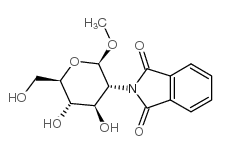
Catalog No: A10GD-4837
Cas No: 76101-14-9
Properties: Mol Formula: C15H17NO7, Mol Weight: 323.3
IUPAC Name: 2-[4,5-dihydroxy-6-(hydroxymethyl)-2-methoxyoxan-3-yl]isoindole-1,3-dione
Synonym: METHYL 2-DEOXY-2-N-PHTHALIMIDO-B-D-GLUCOPYRANOSIDE, 2-((2R,3R,4R,5S,6R)-4,5-Dihydroxy-6-(hydroxymethyl)-2-methoxytetrahydro-2H-pyran-3-yl)isoindoline-1,3-dione, Methyl 2-deoxy-2-phthalimido-b-D-glucopyranoside
10 in stock
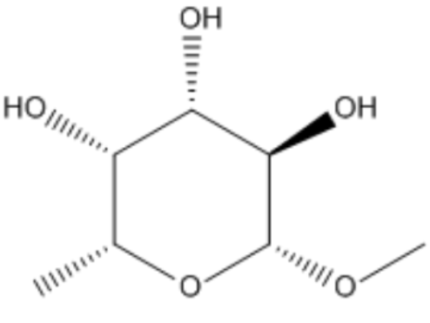
Catalog No: A10GD-4846
Cas No: 1198-82-9
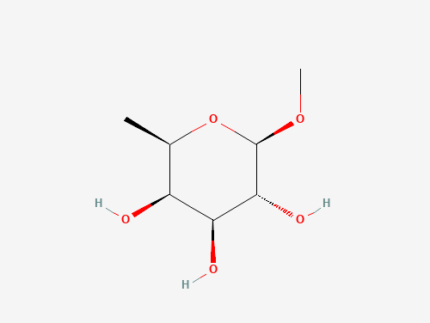
Properties: Mol Formula: C7H14O5, Mol Weight: 178.18
IUPAC Name: (2R,3R,4S,5R,6R)-2-methoxy-6-methyloxane-3,4,5-triol
Synonym: IF9OK8EB3E, (2R,3R,4S,5R,6R)-2-methoxy-6-methyloxane-3,4,5-triol, Methyl 6-deoxy-beta-D-galactopyranoside
10 in stock
Catalog No: A10GD-4822
Cas No: 113566-67-9
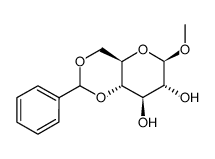
Properties: Mol Formula: C13H16O6, Mol Weight: 268.26
IUPAC Name: (2R,4aR,6S,7R,8R,8aS)-2-phenyl-4,4a,6,7,8,8a-hexahydropyrano[3,2-d][1,3]dioxine-6,7,8-triol
Synonym: (2R,4aR,6S,7R,8R,8aS)-2-Phenylhexahydropyrano[3,2-d][1,3]dioxine-6,7,8-triol, ,
10 in stock





Reviews
There are no reviews yet.