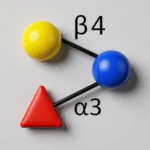
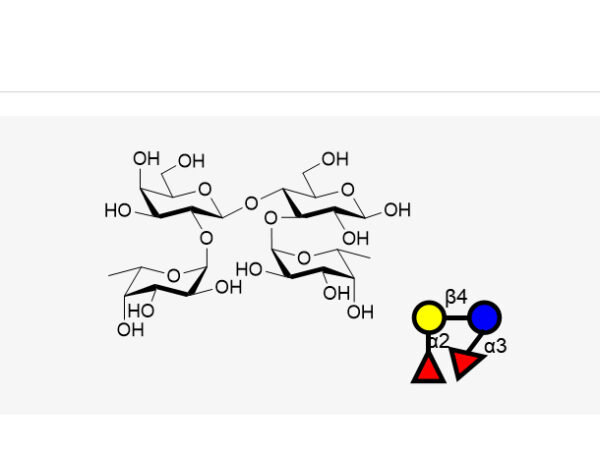

α-Gal Lewis X (Galα1-3Glcβ1-3(Fucα1-4)GlcNAc) is a branched trisaccharide combining α-Gal epitope with Lewis X core, naturally occurring in mammalian glycoconjugates and tumor-associated antigens, synthesized as white powder for xenoantigen research, cancer diagnostics, and immunology. This structure (Gal α1-3 linked to Glc β1-3(Fuc α1-4)GlcNAc) elicits strong anti-Gal antibody binding while mimicking selectin ligands, aiding in studies of inflammation, metastasis, and xenotransplantation rejection; commercially available >90% pure via enzymatic synthesis, stable lyophilized at -20°C for multi-year use, with key roles in pathogen adhesion inhibition and glycan array standards.
Appearance
Source
Molecular Weight and Structure
Sugar Specificity
Biological Activity
Purity and Microbial Contamination
90-95% by NMR/HPLC; endotoxins <10 EU/mg.
Identity and Quality Control
Shelf Life and Storage
Applications
Key Characteristics
Citation Links
| Size | 10 MG, 25 MG, 50 MG, Other |
|---|
10 in stock
10 in stock
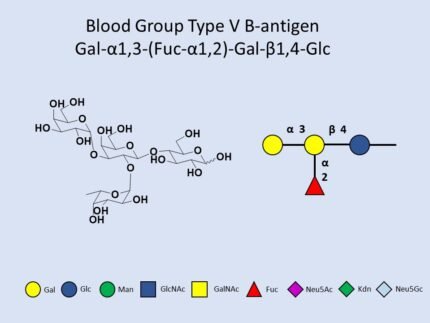
Gal-a1,3-(Fuc-a1,2)-Gal-b1,4-Glc, CAS:59957-92-5, G06873PC
10 in stock
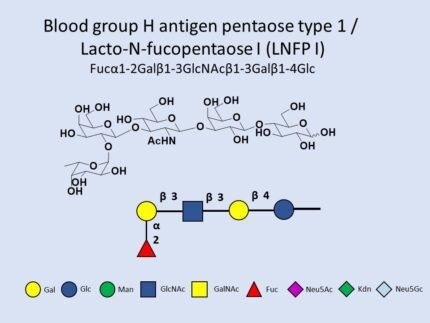
IUPAC:Fuc(a1-2)Gal(b1-3)GlcNAc(b1-3)Gal(b1-4)Glc, G00050MO
10 in stock