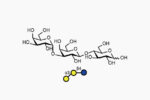
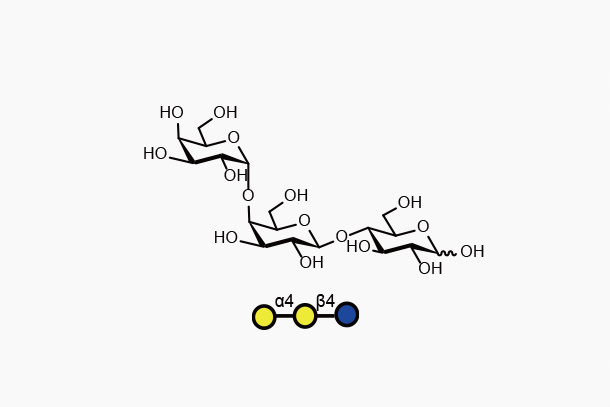

Galα1-4Galβ1-4Glc (α1,4-galactobiose extended lactose, also called globotriaose precursor) represents a blood group B-related trisaccharide and Shiga toxin receptor analog, appearing as a white lyophilized powder essential for bacterial pathogenesis studies and glycan array standards. This linear carbohydrate, featuring rare α1-4 galactosyl linkage on the non-reducing Galβ1-4Glc core, serves as a high-affinity ligand for Shiga-like toxins (SLT-I/II) from E. coli O157:H7, blocking cytotoxicity in vitro; absent in humans but prevalent in porcine/bovine gut epithelium, it is chemoenzymatically synthesized (>98% purity) using α1-4 galactosyltransferase, demonstrating gastric stability, selective E. coli galactosidase hydrolysis, and roles in microbiome modulation, vaccine development against HUS, and cancer glycomimetic design, with multi-year ambient stability.
Appearance
Source
Molecular Weight and Structure
Sugar Specificity
Biological Activity
Purity and Microbial Contamination
Identity and Quality Control
Shelf Life and Storage
Applications
Key Characteristics
Citation Links
| Size | 10 MG, 25 MG, 50 MG, Other |
|---|
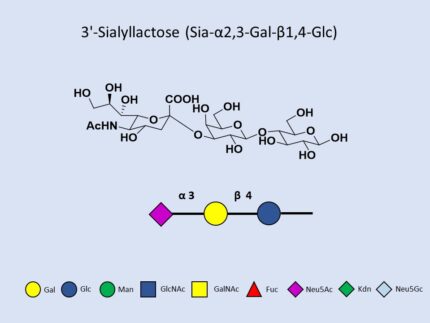
GalNAc-a1,3-(Fuc-a1,2)-Gal-b1,4-Glc, CAS:59957-92-5, G19524AS
10 in stock
10 in stock
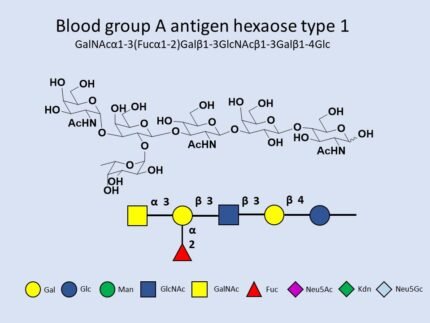
IUPAC:Fuc(a1-2)[GalNAc(a1-3)]Gal(b1-3)GlcNAc(b1-3)Gal(b1-4)b-Glc, G82858KU
10 in stock
10 in stock