Lacto-N-sialyltetraose c (LSTc)

Request a quote

Catalog No : A1GO-2017

CAS NO : 64003-55-0

Formula: C37H62N2O29

Mol.Wt. 998.89

Package mg to g

+

  Share
Guaranteed Safe CheckoutTrust

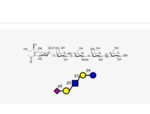
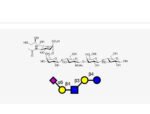
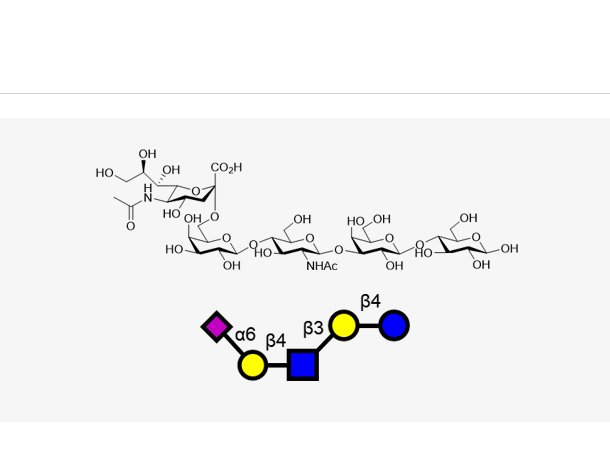
Lacto-N-sialyltetraose c (LSTc, also known as LS-tetrasaccharide c or sialyllacto-N-tetraose c, CAS 64003-55-0) is a sialylated human milk oligosaccharide (HMO) tetrasaccharide prominently found on glycoproteins and glycolipids of mammalian cell surfaces. With the structure Neu5Acα2-6Galβ1-4GlcNAcβ1-3Galβ1-4Glc, it features an α2-6-linked sialic acid (N-acetylneuraminic acid) capping a lacto-N-neotetraose core, distinguishing it from LSTa (α2-3 linkage) and LSTb. LSTc acts as a high-affinity recognition motif for JC polyomavirus (JCV), facilitating viral attachment to host cells via sialic acid-mediated interactions, and holds significant value in virology research for modeling progressive multifocal leukoencephalopathy (PML), glycobiology studies, and HMO therapeutics development. Its free form inhibits JCV infection in glial cells like SVG-A at millimolar concentrations without cytotoxicity, positioning it as a soluble receptor decoy for antiviral screening and glycan array standards.

Appearance

  • White to off-white amorphous powder or lyophilized solid.
  • Hygroscopic; often supplied freeze-dried for handling.

Source

  • Naturally abundant in human milk (0.1-0.5% of total HMOs).
  • Synthesized enzymatically or chemically for commercial/research use; also isolated from colostrum or engineered microbial sources.

Molecular Weight and Structure

  • Molecular formula: C37H62N2O29 (free acid); MW 998.88 g/mol.
  • Sodium salt: C37H61N2O29Na, MW 1020.87 g/mol; linear tetrasaccharide with β1-3/4 and α2-6 glycosidic bonds.

Sugar Specificity

  • Selective for α2-6 sialyl linkages; binds JCV VP1 capsid protein.
  • Differs from LSTa/b by GlcNAcβ1-3Gal branching, avoiding α2-3 sialic acid motifs.

Biological Activity

  • Inhibits JCV infection in SVG-A cells (IC50 ~5 mM) by competitive binding.
  • Receptor mimic for PML studies; modulates glycan-lectin interactions without toxicity up to 10 mM.

Purity and Microbial Contamination

  • ≥95-99% purity by HPLC/NMR; often >90% for analytical refs.
  • Endotoxins <0.1 EU/mg; sterile, <1 CFU/mg bioburden (aerobes/yeast/mold/fungi).

Identity and Quality Control

  • Verified by 1H/13C NMR, HRMS (m/z 999.3 [M-H]-), optical rotation [+specific rotation].
  • HPLC (anion-exchange/IP-RP), sialic acid quantification (DMB-HPLC), heavy metals <10 ppm.

Shelf Life and Storage

  • 2-3 years at -20°C (lyophilized, desiccated); 6-12 months at -80°C.
  • Aqueous solutions stable 1-2 weeks at 4°C; avoid >4 freeze-thaws.

Applications

  • Virology: JCV/PML receptor antagonist assays, glycan arrays.
  • Glycobiology: HMO standards, blood group antigen mimics, prebiotic research.

Key Characteristics

  • Highly water-soluble (>100 mg/mL); JCV-specific ligand.
  • Non-cytotoxic, stable sialyl cap for glycoengineering.

Citation Links

2. MSDS

3. Tech Data Sheets/Manuals

Size

10 MG, 25 MG, 50 MG, Other

My Cart
Close Wishlist
Close Recently Viewed
Categories