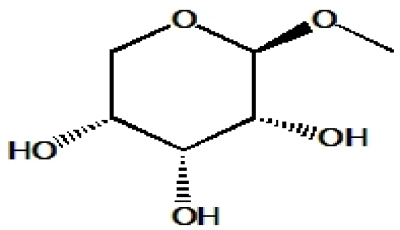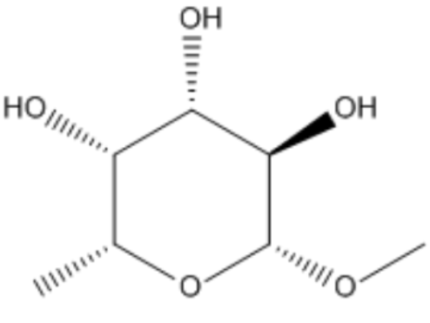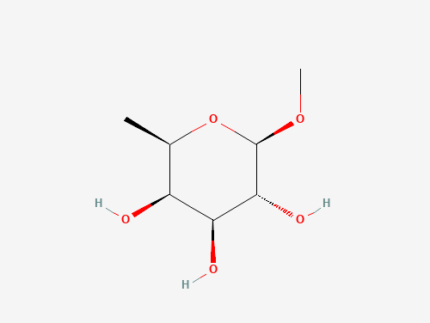
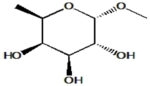
Methyl β-D-ribopyranoside is a chemically synthesized methyl glycoside derivative of D-ribose in which the anomeric hydroxyl group is replaced by a methyl group maintaining the β-configuration of the ribopyranose ring. It is a white crystalline solid widely used as a stable, non-reducing sugar analog in carbohydrate chemistry, glycobiology, and pharmaceutical research. The methylation stabilizes the ring structure, preventing mutarotation and allowing its use as a reliable substrate analog and intermediate for oligosaccharide synthesis, glycomimetics, and enzymatic studies. The molecular formula is C6H12O5 with a molecular weight of approximately 164.16 g/mol. Synthesized through acid-catalyzed glycosylation of D-ribose with methanol, it achieves high purity (≥98%) and is devoid of microbial contamination thanks to strict synthetic protocols. Proper storage involves sealed containers at refrigerated temperatures (2–8 °C) with protection from moisture and light, which extends the shelf life up to two years. Its versatile applications include enzymology, drug design, molecular probes, and carbohydrate-based bioconjugates.
IUPAC Name
- Methyl β-D-ribopyranoside
Appearance
Source
- Acid-catalyzed glycosylation of D-ribose with methanol under controlled laboratory synthesis
- Purification by chromatographic methods to ensure chemical and analytical purity
Molecular Weight and Structure
- Molecular Formula: C6H12O5
- Molecular Weight: 164.16 g/mol
- Structure: β-D-ribopyranose ring with methyl substitution at the anomeric carbon and hydroxyl groups at the remaining positions
- SMILES: COC1C(C(C(C(O1)O)O)O)O
Sugar Specificity
- Specific for the β-D-ribopyranoside form
- Recognized by ribose-binding proteins and enzymes involved in nucleoside metabolism
Biological Activity
- Functions as a stable sugar analog and substrate mimic
- Facilitates studies in enzymology, glycomimetics, and nucleoside analog synthesis
- No direct pharmacological activity but used in medicinal chemistry research
Purity and Microbial Contamination
- Typically greater than 98% purity as verified by NMR and chromatography
- Manufactured through sterile chemical processes minimizing microbial presence
Identity and Quality Control
- Confirmed by 1H and 13C NMR, mass spectrometry, and HPLC
- Certificates of Analysis and Safety Data Sheets issued
- Melting point and optical rotation data are batch-specific QC parameters
Shelf Life and Storage
- Store at 2–8 °C in airtight, moisture-free containers
- Protect from light and humidity
- Shelf life of 1–2 years when stored properly
Application
- Intermediate for synthesis of oligosaccharides, nucleosides, and glycoconjugates
- Used in enzymatic assays and molecular probe design
- Supports drug development and biochemical studies relating to carbohydrate metabolism
Key Characteristics
- Methylated β-D-ribopyranoside, glycoside sugar analog
- CAS number 1143-01-1
- Molecular weight 164.16 g/mol
- White crystalline solid with high purity
- Supports stereoselective and biochemical synthesis
- Full analytic and quality assurance documentation available
- Stable under recommended refrigerated storage
Citations
- AnaxLab chemical profile
- Glentham reagent catalog
- Sigma-Aldrich glycoside references
- PubChem database
- MedChemExpress substrates
- PMC glycoscience literature
- Synthose synthetic intermediates
- Patent literature
- Benchchem catalogue
- ScienceDirect reviews on glycochemistry
Reviews
There are no reviews yet.