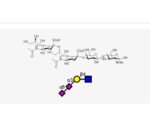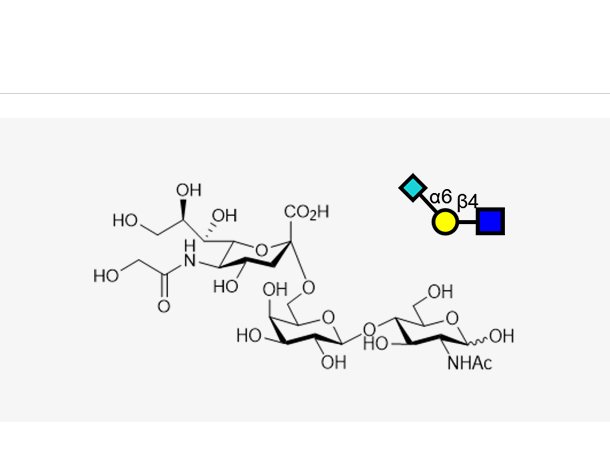

Neu5Gcα2,3Galβ1,4GlcNAc is a sialylated trisaccharide motif featuring N-glycolylneuraminic acid (Neu5Gc) in an α2-3 linkage to galactose β1-4 N-acetylglucosamine, recognized as a nonhuman glycan absent in humans due to a CMAH gene mutation but incorporated via dietary sources like red meat. While not a classical human milk oligosaccharide (HMO)—which exclusively contain Neu5Ac—this structure appears in bovine/porcine milks and serves as a xenogeneic antigen in glycomics research. Neu5Gc’s extra hydroxyl group (vs. Neu5Ac) confers unique immunogenicity, triggering anti-Neu5Gc antibodies in humans that form immune complexes linked to chronic inflammation, cancer progression (“xenosialylation”), and xenograft rejection. In HMOs context, it’s studied for comparative sialylation, microbial sialidase specificity, and as a synthetic analog in prebiotic/glycan array applications mimicking type-2 chain sialyl motifs. This glycan binds selectins/Siglecs, influences gut microbiota adhesion, and holds potential in oncology biomarkers, with synthetic versions aiding immunotherapy design against Neu5Gc-enriched tumors.
Appearance
Source
Molecular Weight and Structure
Sugar Specificity
Biological Activity
Purity and Microbial Contamination
Identity and Quality Control
Shelf Life and Storage
Applications
Key Characteristics
Citation Links
| Size | 10 MG, 25 MG, 50 MG, Other |
|---|
10 in stock
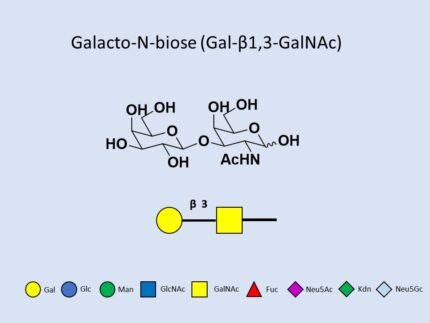
Gal-b1,3-GalNac, CAS:20972-29-6; 3554-90-3, G01534TU
10 in stock
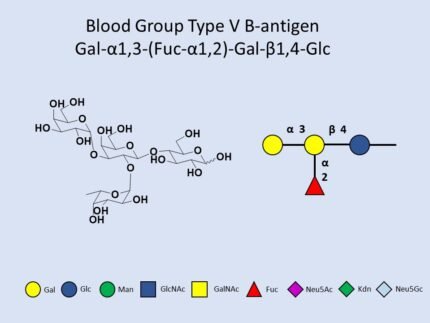
Gal-a1,3-(Fuc-a1,2)-Gal-b1,4-Glc, CAS:59957-92-5, G06873PC
10 in stock
10 in stock