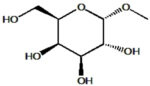



Methyl α-D-galactopyranoside is a chemically synthesized methyl glycoside derivative of D-galactose, where the anomeric hydroxyl group is substituted with a methyl group in the α-configuration. This compound typically appears as a white crystalline solid and is widely used as a stable, non-reducing sugar analog in carbohydrate chemistry and biochemical research. The methylation stabilizes the sugar ring, prevents mutarotation, and enhances its suitability for synthetic glycosylation reactions, oligosaccharide assembly, and glycomimetic design. It exhibits specificity for the α-D-galactopyranose form, making it valuable in enzyme substrate studies and glycobiology investigations. With a molecular formula of C7H14O6 and a molecular weight of approximately 194.18 g/mol, methyl α-D-galactopyranoside is produced through acid-catalyzed glycosylation of D-galactose with methanol. It is supplied with rigorous purity (>98%) and identity verification by NMR and chromatographic methods. Produced under sterile conditions, it has negligible microbial contamination. Proper storage under refrigerated, light-protected conditions ensures stability and a shelf life of 1–2 years. Its applications span synthetic organic chemistry, enzyme assay substrates, drug development, and molecular probe formulation.
IUPAC Name:
Appearance:
Source:
Molecular Weight and Structure:
Sugar Specificity:
Biological Activity:
Purity and Microbial Contamination:
Identity and Quality Control:
Shelf Life and Storage:
Application:
Key Characteristics:
Citations:
Catalog No: A10GD-4839
Cas No: 7465-44-3
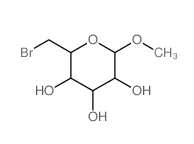
Properties: Mol Formula: C7H13BrO5, Mol Weight: 257.08
IUPAC Name: (2S,3S,4S,5R,6S)-2-(bromomethyl)-6-methoxyoxane-3,4,5-triol
Synonym: NSC403456, 2-(bromomethyl)-6-methoxyoxane-3,4,5-triol, SCHEMBL14266317
10 in stock
Catalog No: A10GD-4830
Cas No: 6988-39-2
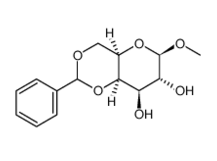
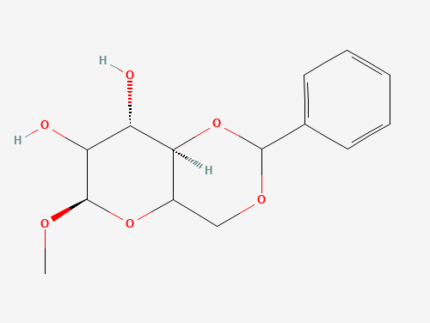
Properties: Mol Formula: C14H18O6, Mol Weight: 282.29
IUPAC Name: (6R,8S,8aR)-6-methoxy-2-phenyl-4,4a,6,7,8,8a-hexahydropyrano[3,2-d][1,3]dioxine-7,8-diol
Synonym: METHYL-4,6-O-BENZYLIDEN-BETA-D-GALACTOPYRANOSIDE, Methyl-4,6-O-benzylidene-beta-D-galactopyranoside, methyl 4,6-o-benzylidene-alpha-d-galactopyranoside
10 in stock
Catalog No: A10GD-4821
Cas No: 53008-63-2
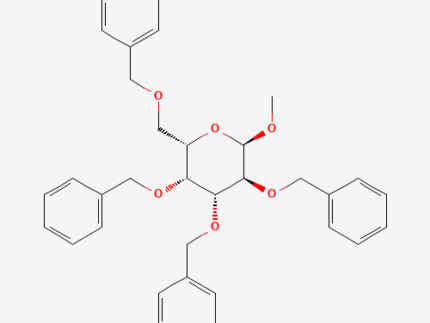
Properties: Mol Formula: C35H38O6, Mol Weight: 554.7
IUPAC Name: (2R,3S,4R,5R,6S)-2-methoxy-3,4,5-tris(phenylmethoxy)-6-(phenylmethoxymethyl)oxane
Synonym: (2R,3S,4S,5R,6S)-3,4,5-Tris(benzyloxy)-2-((benzyloxy)methyl)-6-methoxytetrahydro-2H-pyran, SCHEMBL3065395, Methyl 2,3,4,6-Tetra-O-benzyl-alpha-D-galactopyranoside
10 in stock
Catalog No: A10GD-4848
Cas No: 24333-02-6
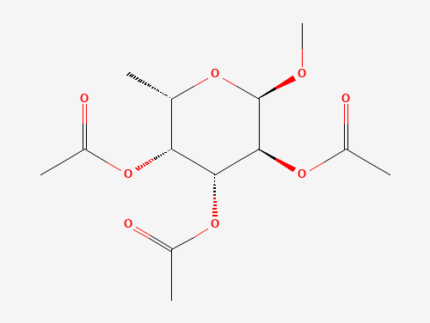
Properties: Mol Formula: C13H20O8, Mol Weight: 304.29
IUPAC Name: [(2S,3R,4R,5S,6R)-4,5-diacetyloxy-6-methoxy-2-methyloxan-3-yl] acetate
Synonym: SCHEMBL8152918, DTXSID901199566, I+/–L-Galactopyranoside, methyl 6-deoxy-, 2,3,4-triacetate
10 in stock





Reviews
There are no reviews yet.