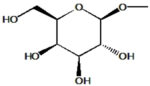
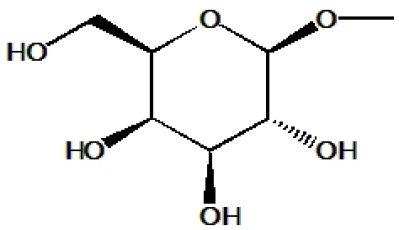


Methyl β-D-galactopyranoside is a chemically synthesized methyl glycoside form of D-galactose with the methyl group attached at the anomeric carbon in the β-configuration. This white crystalline solid is widely used in carbohydrate chemistry and glycobiology as a non-reducing sugar analog, offering increased stability and resistance to mutarotation. Its molecular formula is C7H14O6 with a molecular weight of approximately 194.18 g/mol. The compound is synthesized via acid-catalyzed glycosylation of D-galactose with methanol and purified to a high degree (≥98%). It serves as a substrate analog in enzyme assays and as a building block for glycomimetics, glycoconjugates, and molecular probes in medicinal chemistry and biochemical research. Produced under sterile synthetic conditions, it exhibits negligible microbial contamination. It requires storage in a sealed container at 2–8 °C, protected from moisture and light, maintaining its shelf life for 1–2 years.
IUPAC Name
Appearance
Source
Molecular Weight and Structure
Sugar Specificity
Biological Activity
Purity and Microbial Contamination
Identity and Quality Control
Shelf Life and Storage
Application
Citations
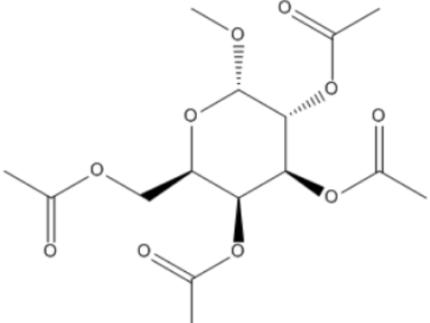
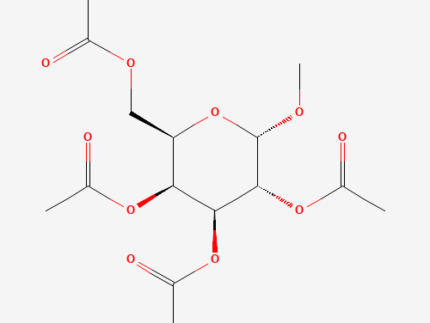
Catalog No: A10GD-4850
Cas No: 5019-22-7
Properties: Mol Formula: C15H22O10, Mol Weight: 362.33
IUPAC Name: [(2R,3S,4S,5R,6S)-3,4,5-triacetyloxy-6-methoxyoxan-2-yl]methyl acetate
Synonym: 5019-22-7, ,
10 in stock
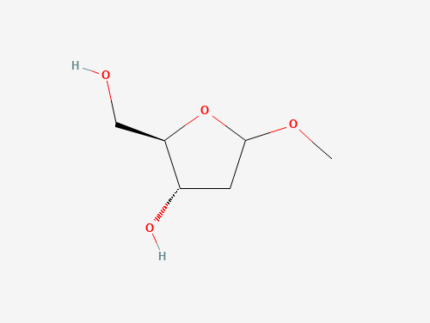
Catalog No: A10GD-4820
Cas No: 60134-26-1
Properties: Mol Formula: C6H12O4, Mol Weight: 148.16
IUPAC Name: (2R,3S)-2-(hydroxymethyl)-5-methoxyoxolan-3-ol
Synonym: (2R,3S)-2-(Hydroxymethyl)-5-methoxytetrahydrofuran-3-ol, Methyl 2-Deoxy-D-ribofuranoside, (2R,3S)-2-(hydroxymethyl)-5-methoxyoxolan-3-ol
10 in stock
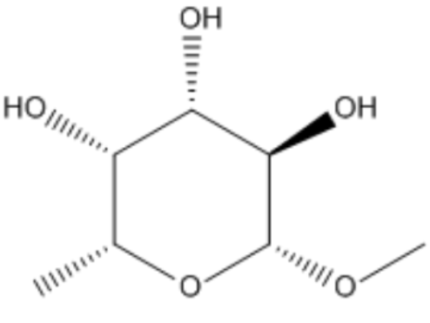
Catalog No: A10GD-4846
Cas No: 1198-82-9
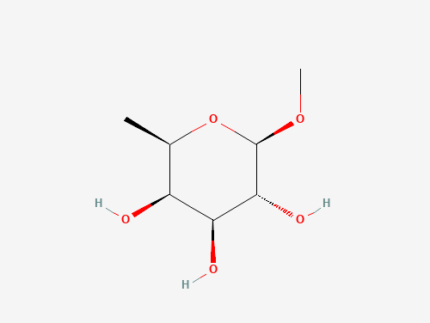
Properties: Mol Formula: C7H14O5, Mol Weight: 178.18
IUPAC Name: (2R,3R,4S,5R,6R)-2-methoxy-6-methyloxane-3,4,5-triol
Synonym: IF9OK8EB3E, (2R,3R,4S,5R,6R)-2-methoxy-6-methyloxane-3,4,5-triol, Methyl 6-deoxy-beta-D-galactopyranoside
10 in stock
Catalog No: A10GD-4821
Cas No: 53008-63-2
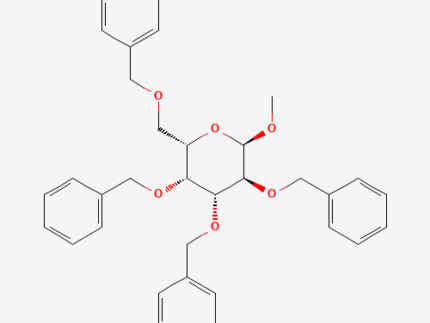
Properties: Mol Formula: C35H38O6, Mol Weight: 554.7
IUPAC Name: (2R,3S,4R,5R,6S)-2-methoxy-3,4,5-tris(phenylmethoxy)-6-(phenylmethoxymethyl)oxane
Synonym: (2R,3S,4S,5R,6S)-3,4,5-Tris(benzyloxy)-2-((benzyloxy)methyl)-6-methoxytetrahydro-2H-pyran, SCHEMBL3065395, Methyl 2,3,4,6-Tetra-O-benzyl-alpha-D-galactopyranoside
10 in stock




Reviews
There are no reviews yet.