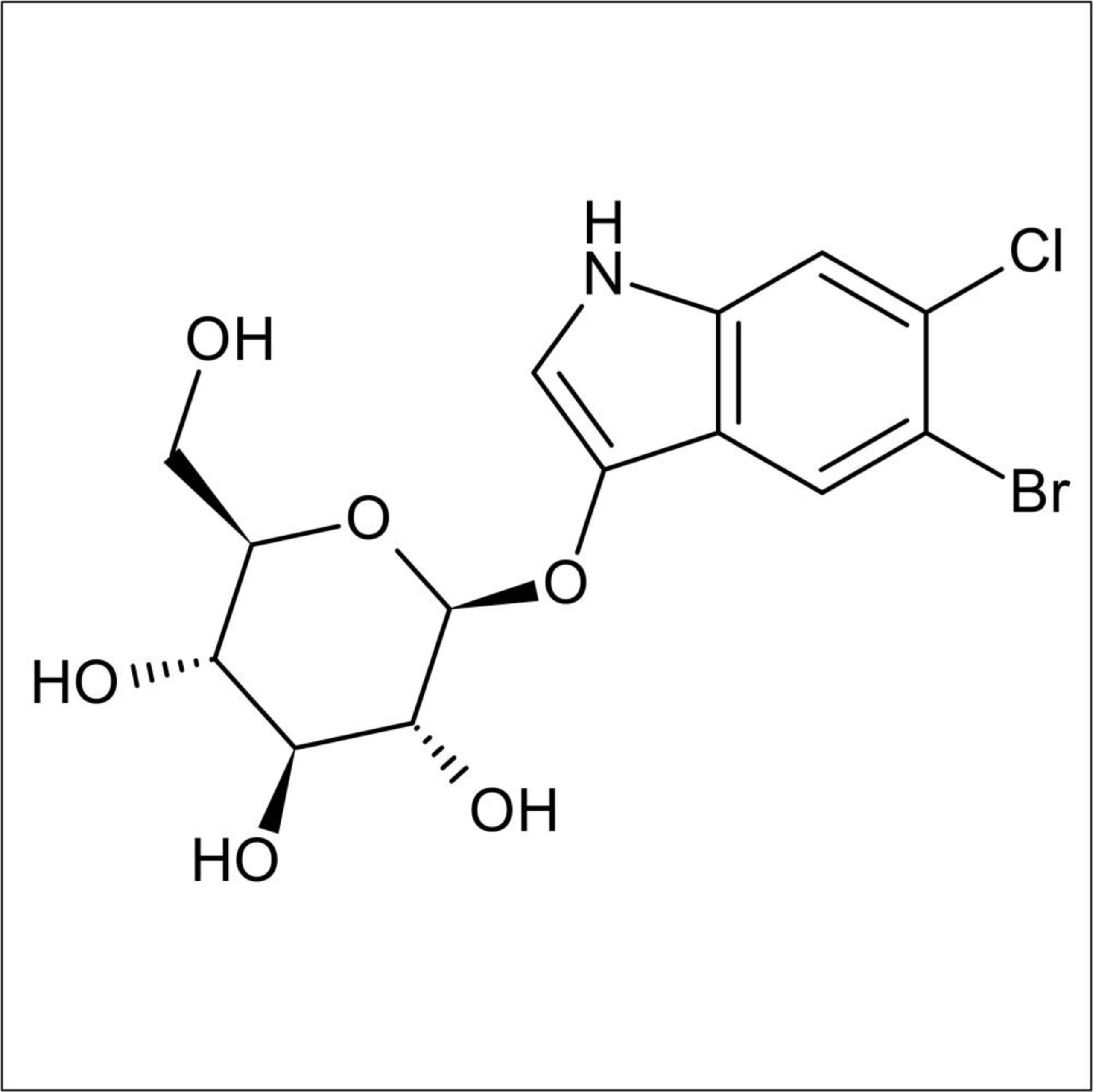

X‑β‑L‑Ara

Product NameX-β-L-Ara
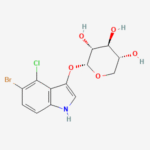
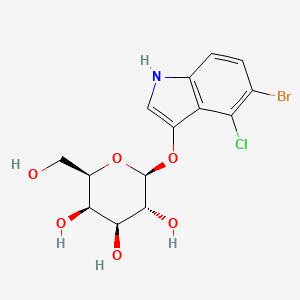
Chemical Name5-Bromo-4-chloro-3-indolyl β-L-arabinopyranoside
CAS NumberNA
Molecular Formula  C13H13BrClNO5
Molecular Weight378.60
Purity98%
PackagingVacuum foil packaging

  Share
Guaranteed Safe CheckoutTrust

X‑β‑L‑Ara is a synthetic β‑L‑arabinosidase‑specific chromogenic substrate in which a 5‑bromo‑4‑chloro‑3‑indolyl aglycone is linked via a β‑glycosidic bond to β‑L‑arabinopyranose. When hydrolyzed by β‑L‑arabinosidases (e.g., GH‑121‑type β‑L‑arabinobiosidases and related β‑L‑arabinoside‑cleaving enzymes), the glycosidic bond is cleaved to release the indole derivative and β‑L‑arabinose; the indole then undergoes aerial oxidation to form a strongly colored magenta‑ or blue‑colored precipitate at the site of enzyme activity. This reaction makes X‑β‑L‑Ara particularly useful for histochemical staining of β‑L‑arabinosidase activity in cells, tissues, and microbial colonies, as well as for high‑throughput screening of enzyme‑expressing clones or recombinant β‑L‑arabinosidases. The compound is typically supplied as a high‑purity, lyophilized or crystalline solid, compatible with standard aqueous or buffer‑based incubation systems. X‑β‑L‑Ara is widely used in glycobiology, plant‑cell‑wall and biomass‑research, and microbiology to visualize β‑L‑arabinosidase‑dependent cleavage of β‑L‑arabinooligosaccharides and arabinosylated glycoproteins, such as those found in hydroxyproline‑rich glycoproteins and plant‑derived carbohydrates. Its design follows the X‑substrate paradigm, where indolyl‑glycosides provide a simple, color‑based readout of glycosidase activity in situ.

Appearance
  • Off‑white to pale yellow crystalline or lyophilized powder.
  • Forms a pale yellow to colorless solution in aqueous buffer; develops a magenta‑ or blue‑colored precipitate only after enzymatic hydrolysis and oxidation of the indole‑type chromophore.
Source / synthesis
  • Synthetically prepared by glycosylation of 5‑bromo‑4‑chloro‑3‑indole with β‑L‑arabinopyranose or a protected β‑L‑arabinoside, followed by deprotection and crystallization from water or mixed solvents.
  • Commercially manufactured by specialist carbohydrate‑ and enzyme‑substrate suppliers (e.g., vendors that supply X‑substrate‑type chromogens) as a research‑grade β‑L‑arabinosidase substrate.
Molecular weight and structure
  • Molecular formula: C13H13BrClNO5C13H13BrClNO5.
  • Molecular weight: 378.60 g/mol.
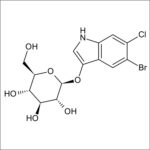
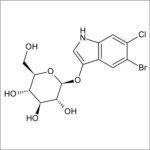
  • Structure: 5‑bromo‑4‑chloro‑3‑indolyl‑β‑L‑arabinopyranoside, with a β‑glycosidic linkage between the indole‑type aglycone and the anomeric carbon of β‑L‑arabinopyranose (stereochemistry inverted at the anomeric center compared to X‑α‑L‑Ara).
Sugar specificity
  • Specifically hydrolyzed by β‑L‑arabinosidases and β‑L‑arabinoside‑cleaving enzymes, including β‑L‑arabinobiosidases that act on β‑linked L‑arabinooligosaccharides in plant‑derived glycans.
  • Frequently used in chromogenic panels and histochemical assays to distinguish β‑L‑arabinosidase activity from α‑L‑arabinosidases and other glycosidases in microbial and plant systems.
Biological activity
  • Serves as a chromogenic reporter whose rate of indole‑derivative release under defined pH and temperature conditions reflects β‑L‑arabinosidase activity.
  • Enables localization and relative quantification of β‑L‑arabinosidase activity in tissue sections, cell cultures, and microbial colonies, supporting studies on β‑L‑arabinosidase‑dependent degradation of β‑L‑arabinooligosaccharides and arabinosylated glycoproteins.
Purity and microbial contamination
  • Typically supplied as a high‑purity, research‑grade solid (often ≥95% purity by HPLC‑type methods) under “non‑sterile” conditions.
  • Suitable for use in stand‑alone enzymatic assays under standard clean‑laboratory or sterile‑handling conditions, depending on the application (e.g., colony‑screening vs. tissue staining).
Identity and quality control
  • Identity inferred from molecular formula C13H13BrClNO5C13H13BrClNO5, molecular weight 378.60 g/mol, and analogy to related X‑substrates (e.g., X‑α‑L‑Ara, X‑Gal).
  • Quality‑control generally includes checks for appearance, solubility, spectral properties, and performance in defined β‑L‑arabinosidase or β‑L‑arabinobiosidase assays (e.g., in microplate‑based or histochemical formats).
Shelf life and storage
  • Shelf life is typically 12–24 months when stored at −20 °C in a tightly sealed, light‑protected container, as the indole‑type chromophore is sensitive to light and oxidation.
  • Aqueous working solutions are best prepared fresh or used immediately; prolonged storage or air‑exposure can cause premature color development or background staining.
Application
  • Histochemical and chromogenic staining of β‑L‑arabinosidase activity in tissue sections, cell cultures, and microbial colonies.
  • Screening of β‑L‑arabinosidase‑expressing clones in recombinant enzyme‑expression or mutagenesis studies.
  • Use in plant‑biology, hydroxyproline‑rich‑glycoprotein research, and microbiology to visualize β‑L‑arabinosidase‑dependent processing of β‑L‑arabinooligosaccharides and related plant‑derived glycans.
Key characteristics
  • Chromogenic readout: release of an indole derivative that oxidizes to a magenta‑ or blue‑colored precipitate, enabling straightforward visual detection of β‑L‑arabinosidase activity.
  • Defined β‑L‑arabinopyranoside linkage providing selectivity for β‑L‑arabinosidases over many α‑glycosidases and other β‑glycosidases.
  • High‑purity, lyophilized solid with the same molecular formula and weight as the α‑L‑arabinoside analog (X‑α‑L‑Ara), adapted for β‑anomeric β‑L‑arabinosidase‑specific assays.
Citations

2. MSDS

3. Tech Data Sheets/Manuals

Based on 0 reviews

0.00 Overall
0%
0%
0%
0%
0%
Be the first to review “X‑β‑L‑Ara”

Your email address will not be published. Required fields are marked *

Write a review

Reviews

There are no reviews yet.

SKU: A22-1088 Category: 
My Cart
Close Wishlist
Close Recently Viewed
Categories