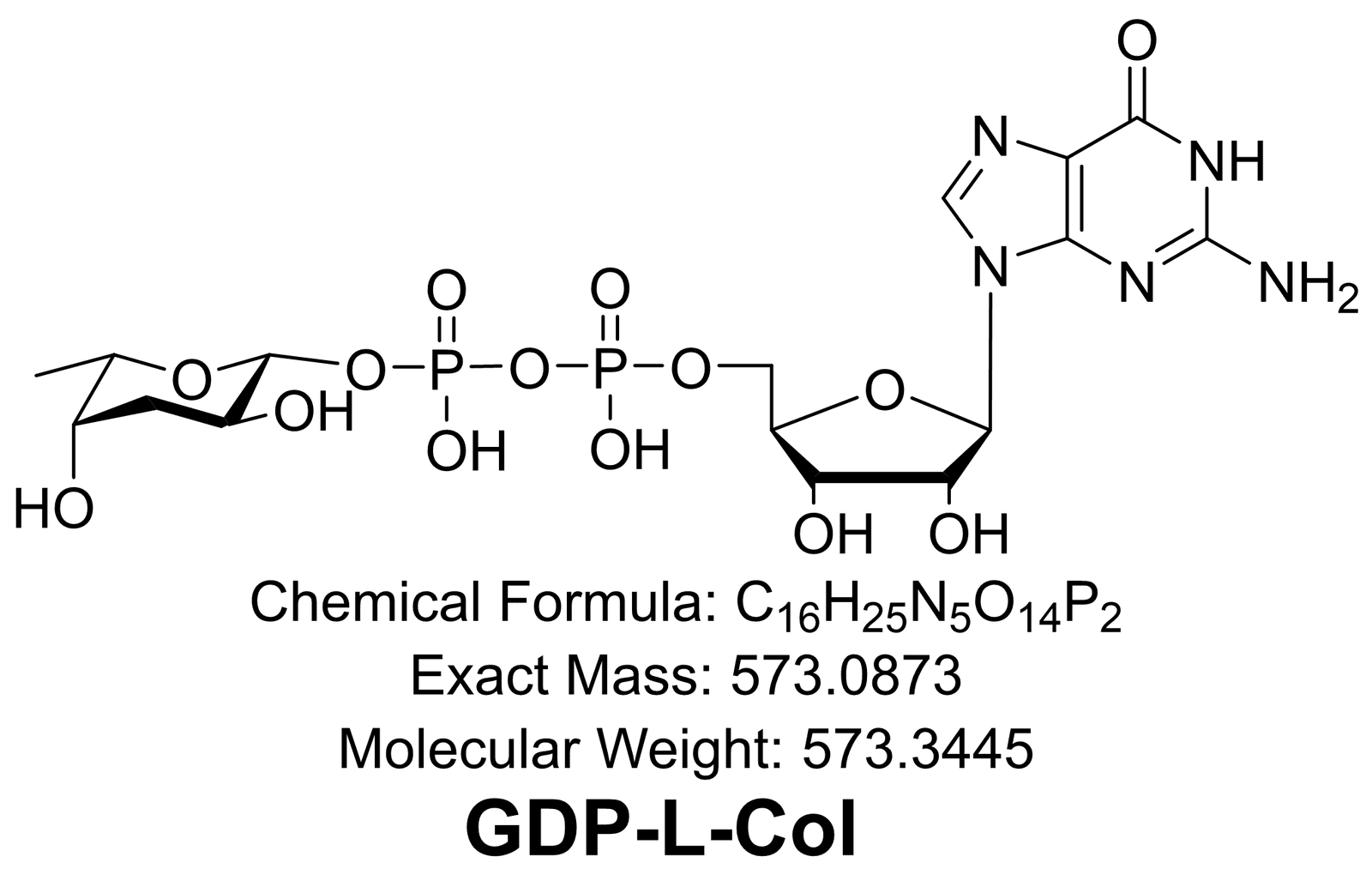
About this product
dTDP-Qui3N (dTDP-3-amino-3,6-dideoxy-D-glucose) is a nucleotide sugar derivative, involved in bacterial glycosylation pathways. This modified sugar nucleotide plays a key role in the biosynthesis of glycans and other glycoconjugates, including lipopolysaccharides (LPS) and capsular polysaccharides in bacteria.
Structure & Properties :
Molecular Weight (MW) : Approximately 547 g/mol (depending on the specific form and substitutions)
Chemical Formula : C16H26N3O13P2
Synonyms : dTDP-3-amino-3,6-dideoxy-D-glucose, dTDP-Qui3N
Functional Groups : This sugar nucleotide is characterized by the presence of an amino group (-NH2) at the 3-position and the absence of hydroxyl groups (-OH) at the 3 and 6 positions on the sugar ring.
Biological Role :
Biosynthesis Pathway : dTDP-Qui3N is synthesized from dTDP-glucose through enzymatic transformations that include amination at the 3-position and removal of the hydroxyl group at the 6-position.
Function : dTDP-Qui3N serves as a substrate in glycosyltransferase-catalyzed reactions, contributing to the formation of specialized glycan structures in bacterial cell walls and surface antigens.
Applications :
Bacterial Glycobiology : dTDP-Qui3N is crucial for the synthesis of complex glycoconjugates that are important for the structural integrity and immune evasion strategies of various bacterial species.
Research in Polysaccharide Biosynthesis : It is used in studies of polysaccharide assembly pathways, particularly in pathogenic bacteria, where these molecules play roles in virulence and resistance to host defenses.
Significance in Research :
Pathogen Biology : dTDP-Qui3N is involved in the construction of bacterial surface glycans, which can affect the bacteria's ability to interact with host tissues and evade immune responses.
Immune Evasion : The modified sugar helps bacteria alter their surface antigens, making it harder for the host immune system to recognize and attack the pathogen.
Key Roles :
Lipopolysaccharide Biosynthesis : dTDP-Qui3N contributes to the synthesis of lipopolysaccharides, which are essential components of the outer membrane of Gram-negative bacteria.
Capsular Polysaccharides : The sugar is also incorporated into capsular polysaccharides, which protect bacteria from desiccation and attack by host immune cells.
Storage and Stability :
Storage : dTDP-Qui3N should be stored at -20°C in a sealed, moisture-free container to maintain stability.
Stability : The molecule is stable under recommended storage conditions but can degrade if exposed to moisture or elevated temperatures.
Research Applications :
Vaccine Development : By targeting the biosynthesis pathways involving dTDP-Qui3N, researchers can develop weakened strains of bacteria that may be used in vaccine formulations.
Antibiotic Discovery : dTDP-Qui3N's role in bacterial cell wall construction makes it a potential target for novel antibiotics aimed at disrupting bacterial growth and survival.
Potential Impact :
Therapeutic Targeting : Inhibitors that block the biosynthesis of dTDP-Qui3N or its incorporation into polysaccharides could weaken bacterial defenses, making pathogens more susceptible to antibiotics or immune responses.
Immune Response Modulation : Research into dTDP-Qui3N and its role in immune evasion could lead to new strategies for boosting host immunity against bacterial infections.
Key Research Areas :
Glycobiology and Glycoconjugates : dTDP-Qui3N is a crucial molecule in understanding how bacteria synthesize glycans that influence their interaction with host organisms.
Enzyme Mechanisms : Studying the enzymes involved in dTDP-Qui3N biosynthesis and glycosylation reactions can reveal potential drug targets for combating bacterial pathogens.
dTDP-Qui3N is an important nucleotide sugar involved in bacterial polysaccharide and glycan biosynthesis, playing a role in bacterial virulence, immune evasion, and structural integrity. Its significance in vaccine development and antibiotic research makes it a valuable molecule in glycobiology and bacterial pathogenesis studies