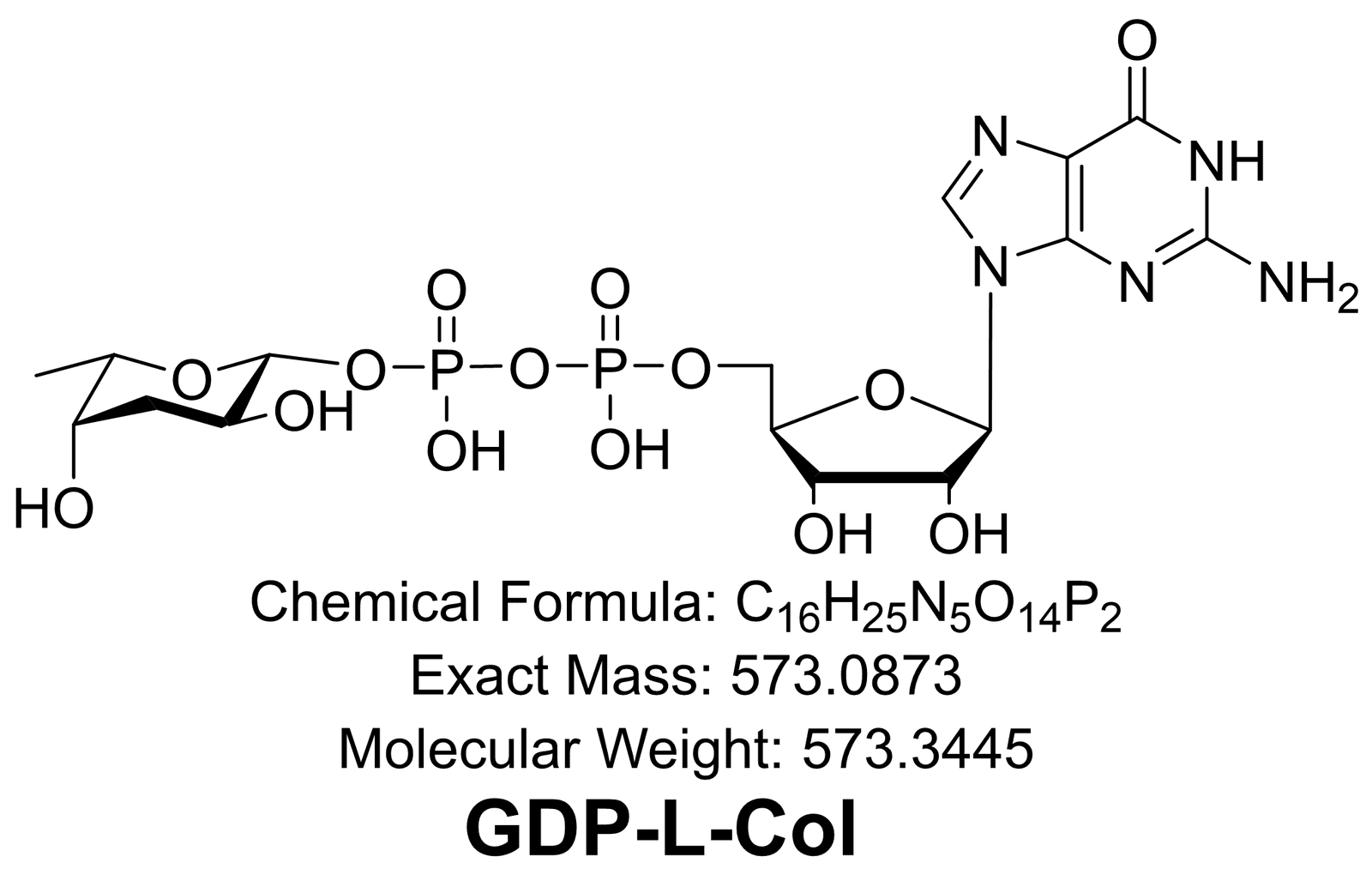
About this product
dTDP-Qui4NAc (also known as dTDP-4-acetamido-4,6-dideoxy-α-D-glucose) is a sugar nucleotide involved in the biosynthesis of glycans. It is a derivative of dTDP-quinovose and is part of a class of nucleotide sugars used as activated donors in enzymatic glycosylation reactions. These sugars are essential in the formation of bacterial polysaccharides, including capsular polysaccharides, and other glycoconjugates.
Structure & Properties :
Molecular Weight (MW) : Approximately 546.4 g/mol
Chemical Formula : C16H26N2O15P2S
Synonyms : dTDP-4-acetamido-4,6-dideoxy-D-glucose, dTDP-QuiNAc, dTDP-4-amino-4,6-dideoxy-D-glucose, dTDP-Quinovosamine
Functional Groups : Contains an acetamido group, a dideoxy modification, and a thymidine diphosphate moiety.
Biological Role :
Biosynthesis Pathway : dTDP-Qui4NAc is synthesized from dTDP-4-amino-4,6-dideoxy-D-glucose via an acetylation reaction. It is part of the biosynthesis pathway for various bacterial glycoconjugates.
Function : This sugar nucleotide serves as an activated form of QuiNAc (4-amino-4,6-dideoxy-D-glucose) used by glycosyltransferases for the transfer of the QuiNAc residue to growing polysaccharide chains in bacteria.
Applications :
Bacterial Glycobiology : dTDP-Qui4NAc is involved in the synthesis of bacterial cell wall polysaccharides and capsular polysaccharides. It is especially important in the biosynthesis of lipopolysaccharides (LPS) and other surface glycoconjugates that contribute to bacterial virulence and immune evasion.
Enzyme Studies : It is used to study the enzymes involved in the modification and transfer of sugar moieties in bacterial glycosylation pathways.
Significance in Research :
Capsule Formation : dTDP-Qui4NAc is a critical precursor in the formation of bacterial capsular polysaccharides, which play a role in bacterial pathogenicity by protecting the bacteria from host immune defenses.
Glycan Diversity : QuiNAc residues contribute to the structural diversity of bacterial glycans, making them relevant in studying bacterial serotypes and developing vaccines targeting specific bacterial strains.
Antibiotic Targets : The enzymes involved in dTDP-Qui4NAc biosynthesis are potential targets for antibiotic development, as disrupting the production of key glycans could render pathogenic bacteria vulnerable to the immune system.
Key Roles :
Polysaccharide Biosynthesis : It is used as a glycosyl donor by glycosyltransferases to incorporate QuiNAc residues into bacterial polysaccharides.
Surface Antigen Formation : dTDP-Qui4NAc contributes to the synthesis of surface antigens, such as O-antigens in Gram-negative bacteria, which are critical for bacterial identification and immune recognition.
Storage and Stability :
Storage : Store at -20°C in a dry, sealed container to prevent degradation.
Stability : Stable under proper storage conditions but should be protected from moisture and light to prevent hydrolysis or decomposition.
Research Applications :
Vaccine Development : Understanding the role of dTDP-Qui4NAc in bacterial capsule formation is essential for developing vaccines against encapsulated bacteria, such as Streptococcus pneumoniae and Neisseria meningitidis .
Drug Development : The enzymes responsible for dTDP-Qui4NAc synthesis and transfer are potential drug targets for disrupting bacterial cell wall synthesis.
Potential Impact :
Antimicrobial Resistance : Disrupting dTDP-Qui4NAc synthesis in pathogenic bacteria can weaken their cell walls, potentially making them more susceptible to antibiotics and immune responses.
Pathogen Identification : dTDP-Qui4NAc is involved in the structural features that differentiate bacterial strains, aiding in the identification of pathogens and the development of diagnostic tools.
This compound is an important building block in bacterial polysaccharide biosynthesis, with implications in immunology, microbiology, and antimicrobial research.