About this product
UDP-2-deoxy-Glucose
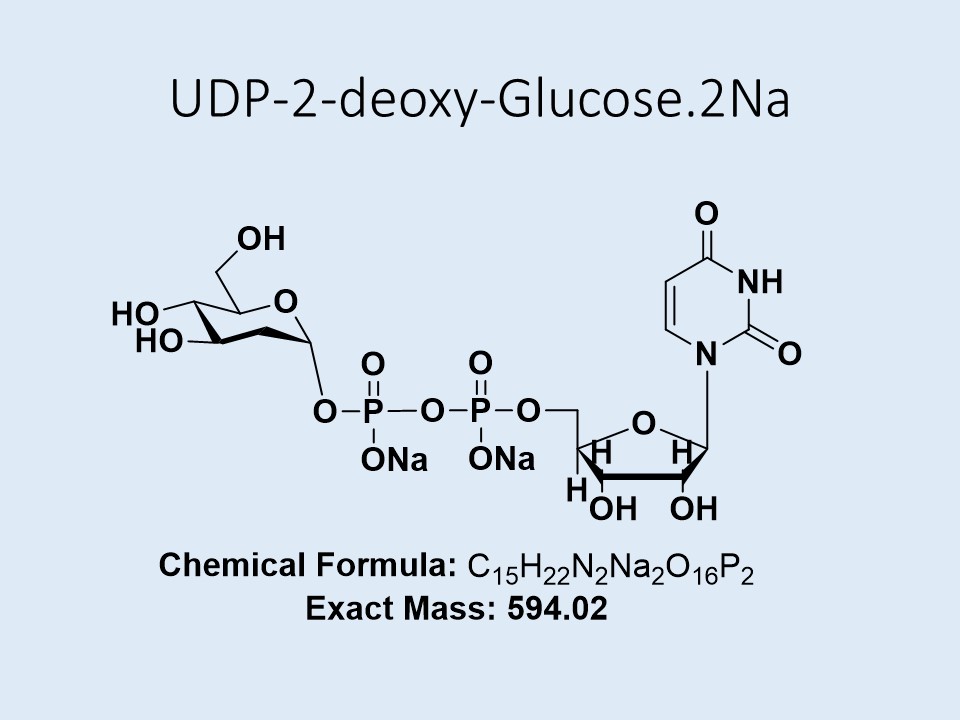
UDP-2-deoxy-Glucose.2Na, Uridine 5?-disphospho-2-deoxy-Glucose disodium salt
UDP-2-deoxy-Glucose.2Na (Uridine Diphosphate 2-deoxy-D-Glucose disodium salt) is a nucleotide sugar where the hydroxyl group at the 2-position of glucose is replaced with a hydrogen atom, resulting in a deoxy sugar. This modification affects the chemical properties of glucose, particularly in its role as a glycosyl donor during enzymatic reactions.
Structure & Properties:
Molecular Weight (MW): Approximately 606 g/mol (depending on the specific form and substitutions)
Chemical Formula: C15H23N2O16P2Na2 (approximate)
Synonyms: UDP-2-deoxy-D-glucose, Uridine Diphosphate 2-deoxy-D-glucose disodium salt
Functional Groups: The 2-deoxy modification removes the hydroxyl group (-OH) from the 2-position of the glucose ring, affecting its chemical reactivity in glycosylation processes.
Biological Role:
Biosynthesis Pathway: UDP-2-deoxy-Glucose is synthesized via enzymatic or chemical modification of UDP-glucose, involving the removal of the hydroxyl group at the 2-position.
Function: It acts as a glycosyl donor in modified glycosylation reactions. The absence of the 2-hydroxyl group changes how the sugar interacts with glycosyltransferases and other enzymes involved in carbohydrate biosynthesis.
Applications:
Glycosylation Research: The 2-deoxy modification is used to study how changes in sugar structure affect glycosylation pathways and enzyme recognition.
Synthetic Biology: UDP-2-deoxy-Glucose is employed in the design and synthesis of novel glycan structures, which may have different biological properties compared to native glycans.
Research Significance:
Enzyme Specificity Studies: This compound is used to investigate the specificity and flexibility of enzymes that participate in glycan assembly, particularly how they respond to deoxy sugars.
Modified Glycosylation Pathways: By introducing 2-deoxy modifications, researchers can explore how structural changes influence the biosynthesis and function of complex carbohydrates.
Storage and Stability:
Storage: UDP-2-deoxy-Glucose should be stored at -20°C in a moisture-free environment.
Stability: The compound is stable under proper storage conditions but may degrade when exposed to heat, moisture, or light.
Research Areas:
Glycosylation Mechanisms: The compound is utilized to study how changes in sugar structure, such as the removal of a hydroxyl group, affect the mechanisms of glycosylation and enzyme activity.
Therapeutic Development: Modified sugars like UDP-2-deoxy-Glucose have potential applications in the development of therapeutics, including the creation of novel glycans for drug targeting and diagnostic purposes.
Conclusion:
UDP-2-deoxy-Glucose.2Na is a chemically modified nucleotide sugar that provides a unique tool for studying glycosylation processes and enzyme specificity. The absence of a hydroxyl group at the 2-position makes it valuable in research aimed at understanding the structural and functional implications of deoxy sugars in glycan biosynthesis.