About this product
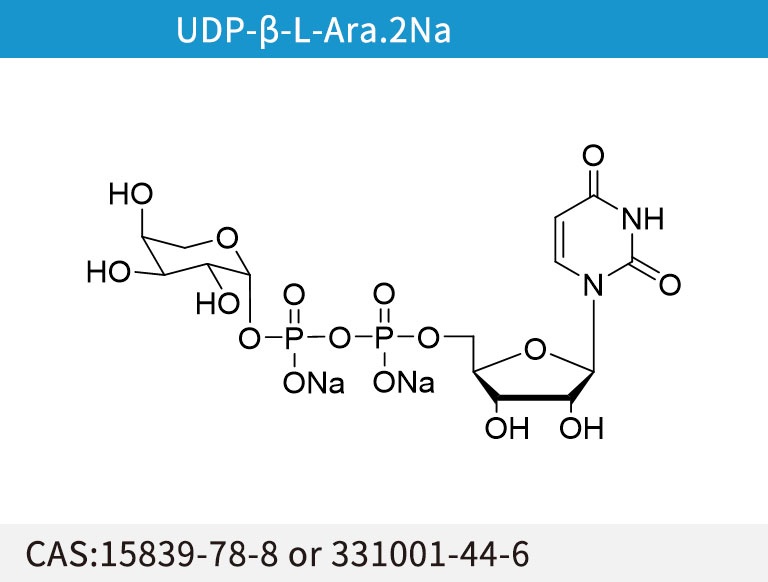
UDP-b-L-Ara.2Na
UDP-B-L-Ara, Uridine 5'diphospho-B-L-arabinose Disodium Salt?
UDP-b-L-Ara.2Na (Uridine Diphosphate beta-L-Arabinose disodium salt) is a nucleotide sugar involved in the biosynthesis of various glycans, including polysaccharides and glycoproteins. Arabinose is a five-carbon sugar that plays a critical role in the structure and function of plant cell walls, as well as in the glycosylation pathways of certain bacteria and fungi.
Structure & Properties:
Molecular Weight (MW): Approximately 582 g/mol (depending on specific form and substitutions)
Chemical Formula: C15H23N2Na2O17P2 (approximate)
Synonyms: UDP-beta-L-arabinose, UDP-L-arabinose disodium salt
Functional Groups: UDP-b-L-Ara consists of uridine diphosphate (UDP) linked to beta-L-arabinose, a sugar unit commonly found in the arabinose form of polysaccharides.
Biological Role:
Biosynthesis Pathway: UDP-b-L-Ara is synthesized from UDP-glucose through a series of enzymatic reactions that convert glucose to arabinose. This sugar nucleotide serves as a donor in the biosynthesis of arabinose-containing glycans, including arabinogalactans, hemicellulose, and other polysaccharides.
Function: It is involved in the transfer of arabinose units to growing polysaccharide chains in the cell walls of plants, bacteria, and fungi. In plants, UDP-b-L-Ara is crucial for the biosynthesis of arabinoxylans and pectins, which are essential for cell wall integrity and function.
Applications:
Plant Cell Wall Biosynthesis: UDP-b-L-Ara is vital for the formation of arabinose-rich polysaccharides in plant cell walls, which contribute to the structural stability, flexibility, and resilience of plants.
Bacterial and Fungal Glycosylation: In certain bacteria and fungi, UDP-b-L-Ara participates in the glycosylation of lipopolysaccharides and other surface glycans, influencing cell wall structure and pathogenicity.
Significance in Research:
Plant Biology and Agriculture: Understanding the role of UDP-b-L-Ara in plant cell wall biosynthesis has important implications for agricultural research, particularly in developing crops with improved structural properties, disease resistance, and biomass production.
Glycobiology: Research into the glycosylation pathways involving UDP-b-L-Ara contributes to our understanding of bacterial and fungal pathogenesis, as well as potential targets for antimicrobial development.
Key Roles:
Plant Cell Wall Formation: UDP-b-L-Ara is essential for the incorporation of arabinose into plant cell wall polysaccharides, such as pectins and hemicellulose, which are critical for cell wall strength, growth, and defense mechanisms.
Microbial Glycoconjugate Biosynthesis: In microorganisms, it plays a role in the construction of glycoconjugates that are important for cell wall structure, biofilm formation, and immune evasion.
Storage and Stability:
Storage: UDP-b-L-Ara should be stored at -20°C in a moisture-free environment for optimal stability.
Stability: The compound is stable under these conditions but may degrade if exposed to heat, moisture, or light.
Research Applications:
Plant Cell Wall Engineering: UDP-b-L-Ara is used in research to manipulate plant cell wall composition, potentially enhancing crop resilience, digestibility, and biomass yield for biofuel production.
Microbial Glycosylation: It is utilized in the study of bacterial and fungal glycosylation pathways to explore new antimicrobial targets by disrupting cell wall synthesis.
Potential Impact:
Agriculture and Bioenergy: Engineering plants with modified arabinose-containing polysaccharides could lead to improved agricultural productivity and biofuel production.
Antimicrobial Strategies: Understanding the role of UDP-b-L-Ara in microbial glycosylation could inform the development of new antimicrobial agents targeting bacterial and fungal cell walls.
Conclusion:
UDP-b-L-Ara.2Na is a key sugar nucleotide involved in the biosynthesis of arabinose-containing glycans, crucial for plant cell wall formation and microbial glycosylation. Its role in these processes makes it a valuable molecule in plant biology, agriculture, and microbial research, with implications for crop improvement, bioenergy production, and the development of antimicrobial therapies.