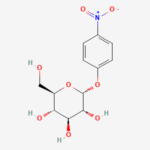
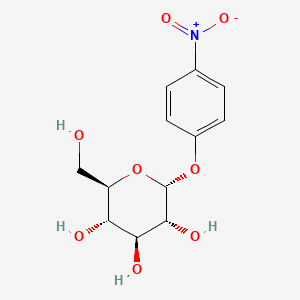
p‑Nitrophenyl‑α‑D‑glucopyranoside (PNP‑α‑Glc, CAS 3767‑28‑0) is a synthetic α‑D‑glucosidase‑specific colorimetric substrate in which a 4‑nitrophenyl group is linked via an α‑glycosidic bond to the anomeric carbon of D‑glucose. When hydrolyzed by α‑D‑glucosidase (EC 3.2.1.20) or other α‑glucoside‑cleaving enzymes, the glycosidic bond is cleaved to release 4‑nitrophenol and α‑D‑glucose. In mildly alkaline conditions, 4‑nitrophenol ionizes to form a yellow‑colored phenolate anion, whose absorbance can be quantified at 400–410 nm, providing a convenient, continuous‑readout assay for enzyme activity. PNP‑α‑Glc is used in kinetic‑parameter determination (Km, Vmax), high‑throughput inhibitor screening, and characterization of glycosidases from microbial, plant, and mammalian sources. The compound is water‑soluble when dissolved in aqueous buffer and is supplied as a high‑purity, crystalline powder suitable for biochemical and enzymatic research.
Appearance
- Off‑white to light yellow crystalline powder.
- Forms a clear, colorless solution in water; develops a yellow color only after enzymatic hydrolysis and alkaline adjustment.
Source / synthesis
- Synthetically produced by coupling 4‑nitrophenol with α‑D‑glucose via glycosylation methods, followed by purification from water, methanol, or ethanol.
- Commercially manufactured by biochemical‑reagent suppliers (e.g., Chemdad, GOLD‑Bio, Sigma‑Aldrich‑type vendors) as a research‑grade substrate for α‑glucosidases.
Molecular weight and structure
- Molecular formula: C12H15NO8C12H15NO8.
- Molecular weight: 301.25 g/mol.
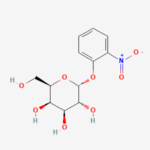
- Structure: 4‑nitrophenyl α‑D‑glucopyranoside, with an α‑(1→1) glycosidic linkage between the aromatic 4‑nitrophenyl moiety and the anomeric oxygen of D‑glucose.
Sugar specificity
- Specifically hydrolyzed by α‑D‑glucosidases (EC 3.2.1.20) and other α‑glucoside‑cleaving enzymes.
- Used as a standard substrate for α‑glucosidase‑inhibitor screening and glycosidase‑specificity profiling; shows higher activity toward α‑glucosidases than toward β‑glycosidases.
Biological activity
- Serves as a chromogenic/UV‑absorbing substrate that reports α‑glucosidase activity through the release of 4‑nitrophenol.
- The rate of 4‑nitrophenol formation under defined pH and temperature conditions reflects enzyme velocity, enabling quantitative kinetic analysis and inhibitor‑IC₅₀ determination.
Purity and microbial contamination
- Typically supplied at ≥97–99% purity as determined by HPLC and elemental analysis, with certificates of analysis from major suppliers.
- Described as non‑sterile, research‑grade material suitable for use in standard enzymatic assays when handled under clean laboratory conditions.
Identity and quality control
- Identity confirmed by molecular formula, molecular weight, UV‑Vis spectral profile (4‑nitrophenol‑type absorbance), and NMR‑type data.
- Quality‑control includes checks for melting point (~210–216 °C), appearance, water solubility, and performance in a defined α‑glucosidase activity assay.
Shelf life and storage
- Shelf life is generally 12–24 months when stored as a dry powder at –20 °C, in a dark, tightly sealed container, protected from moisture.
- Aqueous working solutions should be prepared fresh or stored at 4 °C for only short periods, as alkaline conditions accelerate spontaneous hydrolysis and background absorbance.
Application
- Enzyme‑kinetic assays for α‑D‑glucosidases from yeast, plant, and mammalian sources.
- High‑throughput screening of α‑glucosidase inhibitors for diabetes‑drug‑discovery and glycosidase‑activity‑profiling projects.
- Use in glycosidase‑specificity studies and glycosyl‑transferase‑related workflows (e.g., glucansucrase substrates).
Key characteristics
- Colorimetric readout based on 4‑nitrophenol release, allowing spectrophotometric quantification of enzyme activity.
- Defined α‑D‑glucopyranoside linkage providing selectivity for α‑glucosidases over many other glycosidases.
- Crystalline, stable powder with a known molecular formula and weight, suitable for quantitative enzyme assays and standardized protocols.
Citations
- GOLD‑Bio – p‑Nitrophenyl‑α‑D‑glucopyranoside (PNP‑α‑D‑Glc) product and certificate of analysis (CAT N‑310, CAS 3767‑28‑0): https://www.goldbio.com/pages/coa/012102n310
- ChemicalBook – 4‑Nitrophenyl‑α‑D‑glucopyranoside (CAS 3767‑28‑0, MF C₁₂H₁₅NO₈, MW 301.25): https://www.chemicalbook.com/ChemicalProductProperty_EN_CB6418148.htm
- Chemdad (Chongqing) – 4‑Nitrophenyl‑α‑D‑glucopyranoside technical information (CAS 3767‑28‑0, uses, properties): https://www.chemdad.com/index.php?c=article&id=59145
- CymitQuimica – p‑Nitrophenyl‑α‑D‑glucopyranoside description (CAS 3767‑28‑0): https://cymitquimica.com/cas/3767-28-0/
- PubChem – p‑Nitrophenyl‑α‑D‑glucopyranoside entry (CAS 3767‑28‑0, role as chromogenic compound): https://pubchem.ncbi.nlm.nih.gov/compound/p-nitrophenyl-alpha-D-glucopyranoside
- ScienceDirect – glycon‑specificity profiling of α‑glucosidases using pNP‑α‑d‑glucopyranoside and deoxy analogs: https://www.sciencedirect.com/science/article/abs/pii/S0008621502000265
- Benchchem – Related p‑nitrophenyl‑glucosyl‑disaccharide products (pNP‑Glc‑Glc) for α‑glucosidase and glycosidase‑applications context: https://www.benchchem.com/product/b562150
- Enzymatic‑hydrolysis description for p‑nitrophenyl‑glucoside substrates (general assay principles applicable to PNP‑α‑Glc): https://www.benchchem.com/product/b562166
- GoldBio / supplier‑brand α‑glucosidase‑substrate overview (for assay‑format reference): https://www.goldbio.com/
- General α‑glucosidase‑substrate catalog (PNP‑α‑Glc and related nitrophenyl‑glycosides overview): https://www.chemicalbook.com/ (search for “3767‑28‑0”)




Reviews
There are no reviews yet.