About this product
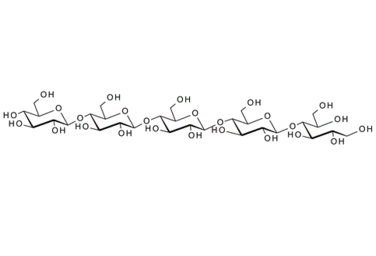
1,4-b-D-Cellopentaitol1,4-B-D-Cellopentaitol is a high purity and custom synthesis sugar. It can be modified with fluorination, glycosylation, methylation, or modification. It has CAS No. 61473-65-2 and is an oligosaccharide with a saccharide backbone consisting of 1,4-linked D-glucopyranosyl units joined by alpha-(1,4) linkages and containing one or more monosaccharides (e.g., glucose) or disaccharides (e.g., cellobiose). The carbohydrate may be in the form of a complex carbohydrate.Definition and Background:1,4-b-D-Cellopentaitol (borohydride reduced cellotetraose) is a five-sugar alcohol that is derived from cellulose. It is also known as sorbitol-cellooligosaccharide. The compound is formed through the reaction of cellulose with sodium borohydride. This process leads to the selective reduction of the carbonyl groups of the glucose units in cellulose, producing the polyol known as 1,4-b-D-Cellopentaitol.Physical and Chemical Properties:
1,4-b-D-Cellopentaitol is a white crystalline powder with a mild, sweet taste. The compound is soluble in water and has a melting point of 106-109 ?C. It is a hygroscopic compound, which means it can absorb moisture from the air.Synthesis and Characterization:
1,4-b-D-Cellopentaitol can be synthesized through the reduction of cellulose with sodium borohydride. The process involves heating the cellulose with a solution of sodium borohydride and water at elevated temperatures. The resulting mixture is then cooled and treated with hydrochloric acid. The product is then purified and characterized using various analytical methods.Analytical Methods:
1,4-b-D-Cellopentaitol can be characterized using a range of analytical methods, including nuclear magnetic resonance (NMR) spectroscopy, high-performance liquid chromatography (HPLC), and mass spectrometry (MS).Biological Properties:
1,4-b-D-Cellopentaitol has been shown to be a non-toxic compound. It is metabolized in the body to sorbitol, which is also a non-toxic compound. Furthermore, 1,4-b-D-Cellopentaitol has been shown to have beneficial effects on intestinal health.Toxicity and Safety in Scientific Experiments:
Studies have shown that 1,4-b-D-Cellopentaitol is non-toxic and safe for use in scientific experiments. However, it is important to ensure that the compound is used and handled in accordance with standard laboratory safety practices.Applications in Scientific Experiments:
1,4-b-D-Cellopentaitol has a variety of applications in scientific experiments. It can be used as a carbohydrate source in cell culture and fermentation studies. The compound is also used as a standard for the analysis of other cellooligosaccharides.Current State of Research:
Research on 1,4-b-D-Cellopentaitol is ongoing, with scientists exploring its potential applications in various fields of research and industry.Potential Implications in Various Fields of Research and Industry:
1,4-b-D-Cellopentaitol has the potential to be used in a variety of applications in fields such as biotechnology, food industry, and material sciences. In biotechnology, 1,4-b-D-Cellopentaitol can be used as a carbohydrate source in the production of various biochemicals. In the food industry, the compound can be used as a sweetener and a humectant. In the material sciences, it can be used as a building block for the synthesis of biodegradable polymers.Limitations and Future Directions:
Despite its potential applications, 1,4-b-D-Cellopentaitol has some limitations. The compound is relatively expensive to produce, which limits its industrial-scale applications. In addition, further research is needed to explore the full potential of 1,4-b-D-Cellopentaitol in various fields of research and industry.Future Directions:
1. Optimization of the synthesis process to reduce the cost of production.2. Investigation of the potential of 1,4-b-D-Cellopentaitol in the production of biofuels.3. Exploration of the use of 1,4-b-D-Cellopentaitol in the production of biodegradable plastics.4. Investigation of the potential of 1,4-b-D-Cellopentaitol in cosmetic formulations.5. Development of new analytical methods for the detection and quantification of 1,4-b-D-Cellopentaitol.CAS Number61473-65-2Product Name1,4-b-D-Cellopentaitol (borohydride reduced cellotetraose)IUPAC Name(2S,3R,4R,5R)-4-[(2S,3R,4R,5S,6R)-5-[(2S,3R,4R,5S,6R)-5-[(2S,3R,4R,5S,6R)-3,4-dihydroxy-6-(hydroxymethyl)-5-[(2S,3R,4S,5S,6R)-3,4,5-trihydroxy-6-(hydroxymethyl)oxan-2-yl]oxyoxan-2-yl]oxy-3,4-dihydroxy-6-(hydroxymethyl)oxan-2-yl]oxy-3,4-dihydroxy-6-(hydroxymethyl)oxan-2-yl]oxyhexane-1,2,3,5,6-pentolMolecular FormulaC30H54O26Molecular Weight830.7 g/molInChIInChI=1S/C30H54O26/c31-1-7(37)13(39)23(8(38)2-32)53-28-20(46)16(42)25(10(4-34)50-28)55-30-22(48)18(44)26(12(6-36)52-30)56-29-21(47)17(43)24(11(5-35)51-29)54-27-19(45)15(41)14(40)9(3-33)49-27/h7-48H,1-6H2/t7-,8+,9+,10+,11+,12+,13+,14+,15-,16+,17+,18+,19+,20+,21+,22+,23+,24+,25+,26+,27-,28-,29-,30-/m0/s1InChI KeyMEHNNNGMBRWNEY-YIQJLYQHSA-NSMILESC(C1C(C(C(C(O1)OC2C(OC(C(C2O)O)OC3C(OC(C(C3O)O)OC4C(OC(C(C4O)O)OC(C(CO)O)C(C(CO)O)O)CO)CO)CO)O)O)O)OCanonical SMILESC(C1C(C(C(C(O1)OC2C(OC(C(C2O)O)OC3C(OC(C(C3O)O)OC4C(OC(C(C4O)O)OC(C(CO)O)C(C(CO)O)O)CO)CO)CO)O)O)O)OIsomeric SMILESC([C@@H]1[C@H]([C@@H]([C@H]([C@@H](O1)O[C@@H]2[C@H](O[C@H]([C@@H]([C@H]2O)O)O[C@@H]3[C@H](O[C@H]([C@@H]([C@H]3O)O)O[C@@H]4[C@H](O[C@H]([C@@H]([C@H]4O)O)O[C@H]([C@@H](CO)O)[C@@H]([C@H](CO)O)O)CO)CO)CO)O)O)O)O