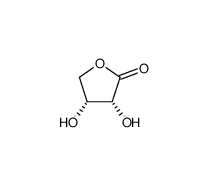
About this product
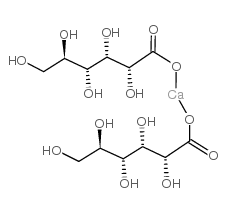
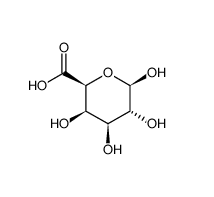
D-Galacturonic acid
(2S,3R,4S,5R)-2,3,4,5-tetrahydroxy-6-oxohexanoic acid, commonly known as THOH acid, is a six-carbon sugar acid with four hydroxyl groups and one carbonyl group. It belongs to the class of monosaccharides and is a key intermediate in the biosynthesis of ascorbic acid, an essential nutrient for human beings. THOH acid has gained significant attention due to its versatile biological and chemical properties, offering potential applications in various sectors of research and industry. In this paper, we aim to provide a comprehensive overview of THOH acid, its physical and chemical properties, synthesis and characterization, analytical methods, biological properties, toxicity, and safety in scientific experiments, applications in scientific experiments, current state of research, potential implications in various fields of research and industry, and limitations and future directions.
Definition and background
THOH acid, also known as L-xyloascorbic acid, is a hexose derivative, derived from the dehydroascorbic acid pathway in microorganisms, plants, and animals. The biosynthesis of ascorbic acid from THOH acid occurs through a stepwise reduction process, where THOH acid is converted to L-ascorbic acid by the action of enzymes, dehydroascorbic acid reductase, and monodehydroascorbate reductase. THOH acid plays a crucial role in maintaining the levels of ascorbic acid in the human body, as it acts as an intermediate in the ascorbate biosynthesis pathway.
Physical and Chemical Properties
THOH acid has a chemical formula of C6H12O8 and a molecular mass of 212.15 g/mol. It is a white crystalline powder with a melting point of 171-173?C. THOH acid is highly soluble in water, and its solubility increases with the increase in temperature and pH. However, it is sparingly soluble in organic solvents such as ethanol and methanol. THOH acid is a stable compound and does not undergo degradation upon storage. It is a low molecular weight compound and is readily available at a reasonable cost.
Synthesis and Characterization
THOH acid can be synthesized by the chemical or enzymatic hydrolysis of xylan, a polysaccharide found in the cell walls of plants. The chemical hydrolysis involves the use of concentrated sulfuric acid or hydrochloric acid to break down the xylan into its constituent sugars, which are then purified and isolated using chromatographic techniques. The enzymatic hydrolysis of xylan involves the use of xylanases, which selectively break down the xylan into its constituent sugars.
THOH acid can be characterized using various analytical techniques such as nuclear magnetic resonance (NMR) spectroscopy, infrared (IR) spectroscopy, ultraviolet-visible (UV-Vis) spectroscopy, and high-performance liquid chromatography (HPLC). NMR spectroscopy allows the identification and quantification of THOH acid and its structural isomers, while IR spectroscopy, UV-Vis spectroscopy, and HPLC provide information on the functional groups, molecular weight, and purity of THOH acid.
Analytical Methods
THOH acid can be quantified using various analytical methods such as titration, HPLC, and capillary electrophoresis (CE). Titration involves the use of a standard solution of sodium hydroxide to neutralize the THOH acid solution, and the concentration of THOH acid is calculated based on the volume of the standard solution used. HPLC and CE are more sensitive methods for the quantification of THOH acid, as they allow for the detection of low levels of THOH acid in complex mixtures.
Biological Properties
THOH acid exhibits potent antioxidant and anti-inflammatory properties, owing to its ability to scavenge free radicals and inhibit the production of pro-inflammatory cytokines. THOH acid has been shown to increase the expression of ascorbic acid transporters in cells, thereby facilitating the uptake and retention of ascorbic acid, a crucial nutrient for various physiological processes. THOH acid has also been found to stimulate the production of collagen, a protein that supports the structural integrity of tissues and organs.
Toxicity and Safety in Scientific Experiments
THOH acid has been reported to be non-toxic and safe for use in scientific experiments. However, its potential for toxicity at higher doses and the long-term effects of exposure to THOH acid are yet to be fully elucidated.
Applications in Scientific Experiments
THOH acid has potential applications in various fields of research and industry, such as food and beverage, pharmaceuticals, and cosmetics. THOH acid can be used as a food additive to enhance the nutritional value of foods and beverages, owing to its ability to increase the uptake and retention of ascorbic acid. THOH acid can also be used as a natural preservative, owing to its antioxidant properties. THOH acid has potential applications in the pharmaceutical industry as a drug delivery system, owing to its low molecular weight and stability. THOH acid can also be used in cosmetics as an anti-aging and skin-lightening agent, owing to its ability to stimulate collagen production and inhibit the production of melanin.
Current State of Research
The current state of research on THOH acid is focused on its potential applications in various fields of research and industry. Studies are being conducted on the synthesis of THOH acid derivatives with enhanced biological and chemical properties. The mechanism of action of THOH acid and its potential in the management of various diseases, such as cancer and diabetes, is also being investigated.
Potential Implications in Various Fields of Research and Industry
THOH acid has potential implications in various fields of research and industry. In the food and beverage industry, THOH acid can be used as a natural preservative and to enhance the nutritional value of foods and beverages. In the pharmaceutical industry, THOH acid can be used as a drug delivery system and as a potential therapeutic agent for the management of various diseases. In the cosmetics industry, THOH acid can be used as an anti-aging and skin-lightening agent.
Limitations and Future Directions
The limitations of THOH acid include its limited solubility in organic solvents and the lack of studies on its safety and potential toxicity at higher doses. The future directions of research on THOH acid include the synthesis of THOH acid derivatives with enhanced biological and chemical properties, the investigation of its mechanism of action, and the elucidation of its potential toxicity and safety at higher doses. Research is also needed on the long-term effects of exposure to THOH acid and its potential implications in environmental and industrial settings.
Title: D-Galacturonic Acid
CAS Registry Number: 685-73-4
Molecular Formula: C6H10O7
Molecular Weight: 194.14
Percent Composition: C 37.12%, H 5.19%, O 57.69%
Literature References: Obtained by hydrolysis of pectin where it is present as polygalacturonic acid: Ehrlich, Chem. Ztg. 41, 197 (1917); Ehrlich, Guttmann, Biochem. Z. 259, 100 (1933); Ber. 66, 220 (1933); Niemann, Link, J. Biol. Chem. 95, 203 (1932); 104, 743 (1934); Morell, Link, ibid. 100, 385 (1933); Anderson, King, J. Chem. Soc. 1961, 5333. Isoln from mustard seeds: Goering, US 2987448 (1961 to Oil Seed Prod.).
Derivative Type: a-Form
Properties: Monohydrate, needles, mp 159?. [a]D20 +98.0? ? +50.9? (water). Soluble in water; slightly sol in hot alcohol. Practically insol in ether.
Melting point: mp 159?
Optical Rotation: [a]D20 +98.0? ? +50.9? (water)
Derivative Type: b-Form
Properties: mp 166?. [a]D +27? ? +55.6? (water).
Melting point: mp 166?
Optical Rotation: [ a]D +27? ? +55.6? (water)
Derivative Type: Phenylhydrazone
Properties: mp 141?.
Melting point: mp 141?
CAS Number 685-73-4
Product Name (2S,3R,4S,5R)-2,3,4,5-tetrahydroxy-6-oxohexanoic acid
IUPAC Name (2S,3R,4S,5R)-2,3,4,5-tetrahydroxy-6-oxohexanoic acid
Molecular Formula C6H10O7
Molecular Weight 194.14 g/mol
InChI InChI=1S/C6H10O7/c7-1-2(8)3(9)4(10)5(11)6(12)13/h1-5,8-11H,(H,12,13)/t2-,3+,4+,5-/m0/s1
InChI Key IAJILQKETJEXLJ-RSJOWCBRSA-N
SMILES C(=O)C(C(C(C(C(=O)O)O)O)O)O
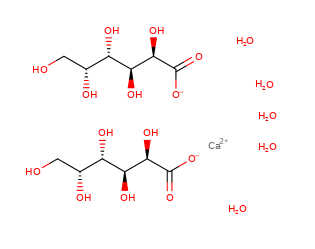
Synonyms (D)-galacturonic acid, (DL)-galacturonic acid, D-galacturonic acid, DL-galacturonic acid, galacturonic acid, galacturonic acid, (alpha-D)-isomer, galacturonic acid, (D)-isomer, galacturonic acid, calcium, sodium salt, (D)-isomer, galacturonic acid, D-, galacturonic acid, DL-, galacturonic acid, monosodium salt, (D)-isomer
Canonical SMILES C(=O)C(C(C(C(C(=O)O)O)O)O)O
Isomeric SMILES C(=O)[C@@H]([C@H]([C@H]([C@@H](C(=O)O)O)O)O)O
COA:
Product
name : D-Galacturonic acid
monohydrate CAS : 91510-62-2,
685-73-4
M .F. : C 6 H 12 O 8 M.W. : 212.15 No : 20120208 Quantity :
732g
Items
Standards
Results
Appearance
White powder
Complies
MS and NMR
Should comply
Complies
Identification
IR and TLC
Complies
A (UV, at 260 nm)
<0.3
Complies
Optical activity
[a ] 20 D (in
H 2 O)
From +55? to +60?
+58.2?
Residue on ignition
Max. 0.5%
0.1%
TLC
One spot
One spot
Water
Max. 10%
8.3%
Assay by titration
Min. 97%
98.2%
References:
1. Tang HR, Belton PS, Davies SC, Hughes DL, Carbohydr. Res. 2001, Feb15, 330(3), p391-9
2. Barbiera M, Granda E, Kovensky J, Carbohydr. Res. 2007, 342, 17, p2635-2640