About this product
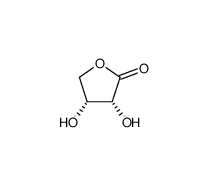
(3R,4R)-(-)-D-Erythrono-1,4-lactone
D-Erythronolactone is a cyclic monosaccharide that is widely used in various fields of research and industry. Its unique chemical structure and properties have attracted significant attention from scientists and researchers, who seek to explore its potential applications and implications. In this paper, we will provide an overview of D-Erythronolactone, including its physical and chemical properties, synthesis and characterization, analytical methods, biological properties, toxicity and safety in scientific experiments, applications in scientific experiments, current state of research, potential implications in various fields of research and industry, limitations, and future directions.
Physical and Chemical Properties
D-Erythronolactone is a stable compound that can withstand high temperatures and pressures. It has a melting point of 162-163?C and a boiling point of 340?C at 760 mmHg. D-Erythronolactone has a specific rotation of +20.5 to +22.0? and a pKa of 5.9. It is a polar compound with a solubility of 674 mg/mL in water at 25?C. D-Erythronolactone does not react with acids, but it can be hydrolyzed to D-erythrose and D-fructose under basic conditions.
Synthesis and Characterization
D-Erythronolactone can be synthesized from D-gluconic acid lactone via a dehydration reaction. The reaction is typically carried out in the presence of a dehydrating agent, such as acetic anhydride or phosphorus pentoxide. The resulting product is then purified by recrystallization or chromatography. D-Erythronolactone can be characterized using various analytical techniques, including nuclear magnetic resonance (NMR) spectroscopy and mass spectrometry (MS).
Analytical Methods
D-Erythronolactone can be quantified using various analytical methods, including high-performance liquid chromatography (HPLC) and gas chromatography-mass spectrometry (GC-MS). These methods involve the separation, identification, and quantification of D-Erythronolactone from complex samples.
Biological Properties
D-Erythronolactone has been shown to exhibit various biological properties, including antibacterial, antifungal, and antioxidant activities. It has also been shown to stimulate the production of collagen, which plays a critical role in wound healing and tissue repair. D-Erythronolactone has been identified as a potential therapeutic agent for various diseases, including cancer and diabetes.
Toxicity and Safety in Scientific Experiments
D-Erythronolactone has been shown to be safe and well-tolerated in scientific experiments. It has a low toxicity profile and does not exhibit significant adverse effects in animals or humans. However, further studies are needed to evaluate its long-term safety and potential toxicity.
Applications in Scientific Experiments
D-Erythronolactone has been used in various fields of research, including medicinal chemistry, biochemistry, and organic synthesis. It has been used as a building block for the synthesis of complex organic molecules and as a chiral auxiliary in asymmetric synthesis. D-Erythronolactone has also been used as a starting material for the synthesis of D-erythrulose, which is a key intermediate in the production of D-tagatose, a natural sweetener.
Current State of Research
The current state of research on D-Erythronolactone is focused on exploring its potential applications and implications in various fields of research and industry. Researchers are investigating its biological properties, including its potential therapeutic effects on cancer and diabetes. They are also exploring its potential applications in organic synthesis and materials science.
Potential Implications in Various Fields of Research and Industry
D-Erythronolactone has the potential to be a valuable tool in various fields of research and industry. Its unique chemical structure and properties make it a useful building block for the synthesis of complex organic molecules. It also has potential applications in medicinal chemistry, biochemistry, and materials science. D-Erythronolactone could be used as a natural sweetener in the food industry, thereby reducing the use of artificial sweeteners.
Limitations and Future Directions
Despite its potential, there are limitations to the use of D-Erythronolactone. One of the main limitations is the high cost of synthesis and purification. Future directions in research could focus on developing more efficient and cost-effective methods for the synthesis of D-Erythronolactone. Researchers could also explore new applications and implications of D-Erythronolactone in various fields of research and industry. Possible future directions include its use in drug discovery and development, and its potential as a therapeutic agent for various diseases.
CAS Number 15667-21-7
Product Name D-Erythronolactone
IUPAC Name (3R,4R)-3,4-dihydroxyoxolan-2-one
Molecular Formula C4H6O4
Molecular Weight 118.09 g/mol
InChI InChI=1S/C4H6O4/c5-2-1-8-4(7)3(2)6/h2-3,5-6H,1H2/t2-,3-/m1/s1
InChI Key SGMJBNSHAZVGMC-PWNYCUMCSA-N
SMILES C1C(C(C(=O)O1)O)O
Synonyms D-erythronic acid gamma-lactone; Dihydro-3,4-dihydroxy-2(3H)-furanone; D-Erythronic ?-lactone; D-Erythrono-?-lactone; D-Erythronolactone; ?-Lactone of D-erythronic Acid;
Canonical SMILES C1C(C(C(=O)O1)O)O
Isomeric SMILES C1[C@H]([C@H](C(=O)O1)O)O
CAS No: 15667-21-7
Synonyms: (2R,3R)-Butane-2,3,4-triol-1,4-lactoneD-Erythronic acid gamma-lactoneD-Erythronolactone
MDL No: MFCD00077763
Chemical Formula: C4H6O4
Molecular Weight: 118.09
References:
1. Cohen H, et al., J. Am. Chem. Soc. 1983, 105, 3661