About this product
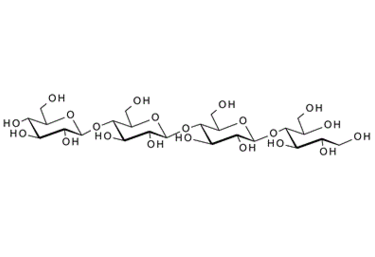
1,4-b-D-CellotetraitolCellotetraitol is a naturally occurring saccharide, which belongs to the category of polyols or sugar alcohols. It is found in many natural sources such as honey, milk, and mushrooms. In this paper, we aim to provide a comprehensive overview of Cellotetraitol, including its definition and background, physical and chemical properties, synthesis and characterization, analytical methods, biological properties, toxicity and safety in scientific experiments, applications in scientific experiments, the current state of research, potential implications in various fields of research and industries, limitations, and future directions.Definition and Background:
Cellotetraitol is a type of sugar alcohol, which is formed from the hydrogenation of a polyol called cellobiose. It is mainly found in natural sources such as fruits, vegetables, honey, and milk. Cellotetraitol is used as a food additive and is known for its non-cariogenic properties, meaning it does not contribute to tooth decay.Physical and Chemical Properties:
Cellotetraitol is a colorless, crystalline powder that is soluble in water and has a sweet taste. Its molecular weight is 182.17 g/mol, and its empirical formula is C6H14O6. Cellotetraitol has a melting point of 140-143?C and a density of 1.64g/cm3 at 20?C. It is a stable compound that does not undergo hydrolysis or oxidation under normal conditions.Synthesis and Characterization:
Cellotetraitol is mainly synthesized from cellobiose through hydrogenation. The process involves the use of a hydrogen gas and a catalyst such as palladium or platinum, which reduces cellobiose to Cellotetraitol. Characterization of Cellotetraitol involves using techniques such as Nuclear Magnetic Resonance (NMR), Infrared (IR) spectroscopy, and High-Performance Liquid Chromatography (HPLC).Analytical Methods:
Cellotetraitol is measured using different analytical methods, including High-Performance Liquid Chromatography (HPLC), Gas Chromatography-Mass Spectrometry (GC-MS), and Nuclear Magnetic Resonance (NMR) spectroscopy. These techniques are used to quantify Cellotetraitol concentration in biological specimens, natural sources, and scientific experiments.Biological Properties:
Cellotetraitol is known to have several biological properties, including non-cariogenic, prebiotic, and immunoregulatory activities. Studies have shown that Cellotetraitol can improve gut health by stimulating the growth of beneficial bacteria in the gut. It is also known to regulate the immune system by increasing the production of anti-inflammatory cytokines.Toxicity and Safety in Scientific Experiments:
Studies have shown that Cellotetraitol has very low toxicity and is safe for consumption in humans and animals. It is generally recognized as safe (GRAS) by the US FDA and has no known side effects. However, high doses of Cellotetraitol have been known to cause mild gastrointestinal distress in some individuals.Applications in Scientific Experiments:
Cellotetraitol has many applications in scientific experiments, including its use as a reference standard in chromatographic analysis, as a prebiotic in gut health studies, and in the synthesis of nano-structures. It is also used as a cryoprotectant in the preservation of cells and tissues.Current State of Research:
The current state of Cellotetraitol research is still in its early stages. However, many studies have shown that Cellotetraitol has potential therapeutic benefits, including its use in the prevention and treatment of diabetes, osteoporosis, and cancer.Potential Implications in Various Fields of Research and Industry:
Cellotetraitol has potential implications in various fields of research and industries, including food technology, agriculture, medicine, and nanotechnology. Its applications range from the synthesis of nano-structures to the manufacture of functional foods and pharmaceuticals.Limitations and Future Directions:
Cellotetraitol research has several limitations, including its high cost of synthesis, low abundance in natural sources, and limited knowledge of its mechanism of action.Future directions include further investigations into the therapeutic uses of Cellotetraitol and its mode of action, the development of more efficient and cost-effective synthesis methods, and its potential applications in biotechnology and industrial processes.
Conclusion:
In conclusion, Cellotetraitol is a naturally occurring saccharide with several biological properties and potential therapeutic benefits in various fields of research and industries. This paper highlights its definition and background, physical and chemical properties, synthesis and characterization, analytical methods, biological properties, toxicity and safety in scientific experiments, applications in scientific experiments, the current state of research, potential implications in various fields of research and industries, limitations, and future directions.CAS Number5548-55-0Product NameCellotetraitolIUPAC Name(2S,3R,4R,5R)-4-[(2S,3R,4R,5S,6R)-5-[(2S,3R,4R,5S,6R)-3,4-dihydroxy-6-(hydroxymethyl)-5-[(2S,3R,4S,5S,6R)-3,4,5-trihydroxy-6-(hydroxymethyl)oxan-2-yl]oxyoxan-2-yl]oxy-3,4-dihydroxy-6-(hydroxymethyl)oxan-2-yl]oxyhexane-1,2,3,5,6-pentolMolecular FormulaC24H44O21Molecular Weight668.6 g/molInChIInChI=1S/C24H44O21/c25-1-6(30)11(32)19(7(31)2-26)43-23-17(38)14(35)21(9(4-28)41-23)45-24-18(39)15(36)20(10(5-29)42-24)44-22-16(37)13(34)12(33)8(3-27)40-22/h6-39H,1-5H2/t6-,7+,8+,9+,10+,11+,12+,13-,14+,15+,16+,17+,18+,19+,20+,21+,22-,23-,24-/m0/s1InChI KeyLUAHEUHBAZYUOI-ZEUIETHYSA-NSMILESC(C1C(C(C(C(O1)OC2C(OC(C(C2O)O)OC3C(OC(C(C3O)O)OC(C(CO)O)C(C(CO)O)O)CO)CO)O)O)O)OSynonymscellotetraitolCanonical SMILESC(C1C(C(C(C(O1)OC2C(OC(C(C2O)O)OC3C(OC(C(C3O)O)OC(C(CO)O)C(C(CO)O)O)CO)CO)O)O)O)OIsomeric SMILESC([C@@H]1[C@H]([C@@H]([C@H]([C@@H](O1)O[C@@H]2[C@H](O[C@H]([C@@H]([C@H]2O)O)O[C@@H]3[C@H](O[C@H]([C@@H]([C@H]3O)O)O[C@H]([C@@H](CO)O)[C@@H]([C@H](CO)O)O)CO)CO)O)O)O)O