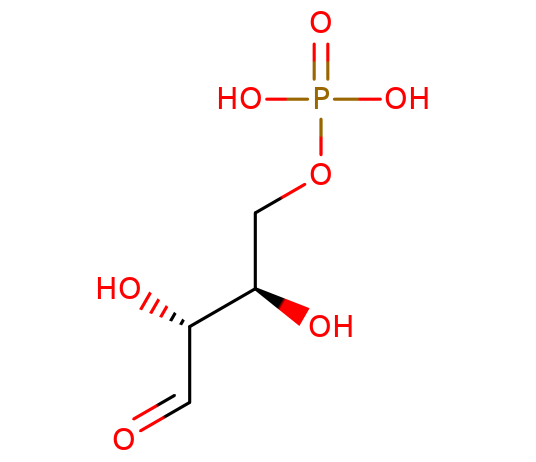
About this product
2,3:4,5-Di-o-isopropylidene-D-arabinose (DIpA) is a derivative of arabinose, which is a 5-carbon monosaccharide (sugar) found in various natural sources such as fruits, vegetables, and gums. DIpA is formed by the condensation of two molecules of isopropylidene (2,3-propanediol) with arabinose, resulting in the formation of a cyclic acetal structure. DIpA is a colorless, odorless, and crystalline powder, which is soluble in water and organic solvents.
Synthesis and Characterization:
DIpA can be synthesized by the reaction of arabinose with isopropylidene in the presence of acid catalysts such as sulfuric acid or p-toluenesulfonic acid. The reaction takes place under reflux conditions, and the product is isolated by crystallization. The purity of DIpA can be determined by various techniques such as melting point determination, elemental analysis, and NMR spectroscopy.
Analytical Methods:
The analysis of DIpA can be done by various analytical techniques such as HPLC (High-Performance Liquid Chromatography), GC (Gas Chromatography), IR (Infrared Spectroscopy), and NMR (Nuclear Magnetic Resonance) spectroscopy.
Biological Properties:
DIpA is a non-toxic compound and has no harmful effects on human health. It has no significant biological activity, and it is not known to have any therapeutic or nutritional properties.
Toxicity and Safety in Scientific Experiments:
DIpA is a generally recognized as safe (GRAS) compound and is approved by the FDA for use in food and pharmaceutical industries. It has no known toxicity or safety hazards when used in scientific experiments.
Applications in Scientific Experiments:
DIpA is widely used in organic synthesis as a protecting group for various functional groups such as alcohols, phenols, and amines. It is also used in carbohydrate chemistry, glycopeptide synthesis, and the synthesis of artificial sweeteners.
Current State of Research:
DIpA is a well-known chemical compound, and its properties, synthesis, and applications are well-established. However, there is ongoing research on its potential as a renewable resource and its use in the synthesis of novel biomaterials.
Potential Implications in Various Fields of Research and Industry:
DIpA has potential implications in various fields of research and industry, such as organic synthesis, carbohydrate chemistry, and the development of renewable resources. It can be used in the production of biodegradable polymers, natural sweeteners, and biofuels.
Limitations and Future Directions:
One of the limitations of DIpA is its limited solubility in water, which restricts its use in aqueous-based reactions. Future research can focus on improving its solubility using various methods such as chemical modification or the use of ionic liquids. Further research can also explore its potential in the development of new biomaterials and its use as a renewable resource for various applications.
Future Directions:
- Exploring the use of DIpA in the synthesis of novel biomaterials.
- Enhanced modification of DIpA structure to enhance its solubility in water.
- Developing new synthetic routes and methods for the preparation of DIpA.
- Optimization of reaction conditions to improve yield and purity of DIpA.
- Investigating the potential use of DIpA as a natural sweetener or food additive.
Conclusion:
2,3:4,5-Di-o-isopropylidene-d-arabinose is a well-known compound with various applications in organic synthesis and carbohydrate chemistry. Its physical and chemical properties, synthesis, characterization, analytical methods, and biological properties have been well-established. Potential implications in various fields of research and industry, along with limitations, have been discussed. Further research on various aspects of DIpA can lead to new discoveries and applications in many fields, making it a subject of continued interest in the scientific community.
CAS Number
13039-93-5
Product Name
2,3:4,5-Di-o-isopropylidene-d-arabinose
IUPAC Name
(4S,5R)-5-[(4R)-2,2-dimethyl-1,3-dioxolan-4-yl]-2,2-dimethyl-1,3-dioxolane-4-carbaldehyde
Molecular Formula
C11H18O5
Molecular Weight
230.26 g/mol
InChI
InChI=1S/C11H18O5/c1-10(2)13-6-8(15-10)9-7(5-12)14-11(3,4)16-9/h5,7-9H,6H2,1-4H3/t7-,8-,9+/m1/s1
InChI Key
VFGWJIQTAFPNQZ-HLTSFMKQSA-N
SMILES
CC1(OCC(O1)C2C(OC(O2)(C)C)C=O)C
Canonical SMILES
CC1(OCC(O1)C2C(OC(O2)(C)C)C=O)C
Isomeric SMILES
CC1(OC[C@@H](O1)[C@@H]2[C@H](OC(O2)(C)C)C=O)C
CAS No: 13039-93-5 MDL No: MFCD15144988 Chemical Formula: C11H18O5 Molecular Weight: 230.26