About this product
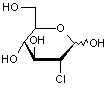
2-Chloro-D-glucose2-Chloro-2-deoxy-D-glucose2-Chloro-2-deoxy-D-glucose (2CDG) is a chemical compound that has been shown to be an effective inhibitor of hypoxic tumor growth. 2CDG inhibits the production of fatty acids, which are required for cell proliferation and survival. It also has inhibitory properties on the chromatographic system and can be used as a detector in electrochemical methods. The detection of 2CDG in blood serum is used as a diagnostic tool for cancer, with a sensitivity and specificity of up to 100%. This compound has shown promising results for the treatment of hypertension and diabetes.Physical and Chemical Properties
The physical and chemical features of C2DG have gained immense attention in scientific research. The compound presents as a white crystalline powder that is soluble in water, ethanol, and methanol. It is also stable in acidic and neutral conditions but can hydrolyze in alkaline conditions. C2DG has a melting point of 157-159?C and a boiling point of 465.9?C.Synthesis and Characterization
The synthesis of C2DG involves the reaction of D-glucose with thionyl chloride, followed by the substitution of one hydroxyl group with a chloride atom. The HPLC-MS and NMR spectroscopies are the common methods used in the characterization of C2DG.Analytical Methods
Analytical methods utilized in the study of C2DG include nuclear magnetic resonance spectroscopy, mass spectroscopy, high-performance liquid chromatography, and gas chromatography.
Biological Properties
The utilization of C2DG in biological studies stems from its ability to inhibit glucose metabolism. C2DG inhibits hexokinase II, an enzyme that facilitates the first step in glycolysis and is overexpressed in many cancer types. As such, C2DG is seen as a prospective cancer therapeutic in pre-clinical studies.Toxicity and Safety in Scientific Experiments
Studies have presented C2DG to have a low toxicity, making it suitable for use in cancer therapy studies. However, its safety during clinical trials has to be taken into consideration.Applications in Scientific Experiments
C2DG has found application in numerous scientific fields, including cancer research, neurology, and metabolic studies. Its ability to inhibit glucose metabolism makes it a potential candidate for cancer diagnosis and therapy.Current State of Research
Advancements in technology have made it possible to accurately study C2DG's unique properties. As such, investigations into C2DG's potential applications continue to grow, with studies looking at its effects on different cancer types.Potential Implications in Various Fields of Research and Industry
C2DG presents immense potential for use in cancer therapy, diagnosis, neurology, and metabolic studies. Its ability to inhibit glucose metabolism has made it a viable candidate in cancer research.imitations and Future Directions
Current studies have focused only on pre-clinical trials, and therefore there is still much that needs to be learned about the compound's safety and viability in clinical trials. In the future, it is essential to study the compound's toxicity and efficacy in-depth to develop safer cancer therapies. Additionally, more research is required to determine the type of cancer C2DG is most effective in treating.Future Directions
Future studies should focus on developing various C2DG derivatives that can target different types of cancer cells better. Additionally, C2DG's potential as a diagnostic tool needs more attention, and research should look into identifying new applications of the compound in other scientific fields.CAS Number14685-79-1Product Name2-Chloro-2-deoxy-D-glucoseIUPAC Name(2R,3S,4R,5R)-2-chloro-3,4,5,6-tetrahydroxyhexanalMolecular FormulaC6H11ClO5Molecular Weight198.6 g/molInChIInChI=1S/C6H11ClO5/c7-3(1-8)5(11)6(12)4(10)2-9/h1,3-6,9-12H,2H2/t3-,4+,5+,6+/m0/s1InChI KeyRBEGMPAFDRYYIG-SLPGGIOYSA-NSMILESC(C(C(C(C(C=O)Cl)O)O)O)OSynonyms2-chloro-2-deoxy-D-glucose, 2-chloro-2-deoxyglucose, 2-deoxy-2-chloro-D-glucose, ClDGCanonical SMILESC(C(C(C(C(C=O)Cl)O)O)O)OIsomeric SMILESC([C@H]([C@H]([C@@H]([C@H](C=O)Cl)O)O)O)O
CAS No: 14685-79-1 MDL No: MFCD01317996 Chemical Formula: C6H11ClO5 Molecular Weight: 198.6References: 1. Sakata T, Fujimoto K, Kurata K, et al., Int. J. Obes. 1987, 11, Suppl. 3, p27-33