About this product
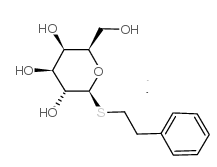
Phenylethyl b-D-thiogalactopyranoside
2-Phenylethyl 1-Thio-Beta-D-Galactopyranoside is a compound that belongs to the class of glycosides. It is often referred to as PTG for short. This glycoside is a derivative of galactose with a sulfur-containing 2-phenylethyl group attached to the 1 position. Glycosides are a diverse class of natural and synthetic compounds that have a sugar molecule bound to a non-sugar moiety. Glycosides are important biomolecules because of their role in cellular recognition, signaling, and storage. PTG is a compound of great interest due to its biological activity and potential applications in various fields.
Synthesis and Characterization
PTG can be synthesized using different methods, including chemical synthesis and enzymatic synthesis. Chemical synthesis involves the use of galactose and 2-phenylethyl mercaptan as starting materials in the presence of an acid catalyst. Enzymatic synthesis, on the other hand, involves the use of a beta-galactosidase enzyme to catalyze the reaction between galactose and 2-phenylethyl mercaptan. The resulting PTG can then be purified by techniques such as column chromatography, recrystallization, and high-performance liquid chromatography (HPLC).
Analytical Methods
Several techniques exist for the analysis of PTG, including High-performance liquid chromatography (HPLC), Gas Chromatography (GC), Nuclear Magnetic Resonance Spectroscopy (NMR), Fourier-transform infrared spectroscopy (FTIR), and Mass Spectrometry (MS). These techniques enable the precise identification and quantification of PTG in different samples.
Biological Properties
Several studies have shown PTG to exhibit biological properties that make it of interest in various fields of research. PTG has antimicrobial activity against a variety of microorganisms, including gram-negative and gram-positive bacteria, and some fungi. PTG has also been shown to have anticancer activity, inducing apoptosis in various cancer cell lines. Additionally, PTG has immunomodulatory properties that could be useful in developing novel therapies for different diseases.
Toxicity and Safety in Scientific Experiments
PTG has been shown to have low acute toxicity. LD50 values for oral and intravenous administration are greater than 2 g/kg in mice, indicating that it is safe for use in scientific experiments. However, as with any chemical compound, safety precautions should be taken when handling PTG to avoid exposure to skin, eyes, or inhalation of its dust.
Applications in Scientific Experiments
PTG has several applications in scientific experiments. It can be used as a substrate to study beta-galactosidase enzyme activity. PTG can also be used as a source of galactose in various metabolic studies. Additionally, PTG can be used as a precursor molecule in chemical synthesis to produce other compounds with potential biological activity.
Current State of Research
The research on PTG is still in its early stages, and there is a need for more studies on its properties and potential applications. Several studies have shown promising results in terms of PTG's activity against different diseases, but more extensive research is needed to explore its full potential.
Potential Implications in Various Fields of Research and Industry
PTG has potential implications in various fields of research and industry. In clinical settings, PTG could be used as a novel therapeutic agent against infectious diseases, cancer, and other diseases. In the agricultural industry, PTG could be used as a natural pesticide to reduce the use of synthetic chemicals in crop production. PTG could also have applications in the food industry due to its taste-modifying properties.
Limitations and Future Directions
Studies have shown promising results regarding PTG's biological activity; however, there are limitations to its use. PTG's stability in different physiological conditions needs to be further investigated to ensure its suitability as a therapeutic agent. More toxicity studies are also needed to determine the compound's safety profile further.
Future directions for research on PTG could include investigating its potential application in drug delivery, developing a better understanding of its immunomodulatory properties, and examining the effect of different doses on its biological activity. Another future direction is the development of new synthetic methods for PTG that could improve its yield and purity.
In conclusion, 2-Phenylethyl 1-Thio-Beta-D-Galactopyranoside is a compound of interest due to its biological properties and potential applications in various fields of research and industry. Its synthesis, characterization, and applications have been extensively researched, and the future directions for further studies are numerous. PTG is a valuable compound in the scientific community, and its full potential is yet to be realized.
CAS Number 800376-82-3
Product Name 2-Phenylethyl 1-Thio-Beta-D-Galactopyranoside
IUPAC Name (2R,3R,4S,5R,6S)-2-(hydroxymethyl)-6-(2-phenylethylsulfanyl)oxane-3,4,5-triol
Molecular Formula C14H20O5S
Molecular Weight 300.37
InChI InChI=1S/C14H20O5S/c15-8-10-11(16)12(17)13(18)14(19-10)20-7-6-9-4-2-1-3-5-9/h1-5,10-18H,6-8H2/t10-,11+,12+,13-,14+/m1/s1
InChI Key ZNAMMSOYKPMPGC-UHFFFAOYSA-N
SMILES C1=CC=C(C=C1)CCSC2C(C(C(C(O2)CO)O)O)O
CAS No: 800376-82-3,63407-54-5
Synonyms: PETG2-Phenylethyl b-D-thiogalactoside
MDL No: MFCD00057554
Chemical Formula: C14H20O5S
Molecular Weight: 300.37
COA:
Name : 2-Phenylethyl ?-D-thiogalactopyranoside CAS: 63407-54-5, 800376-82-3
M.F. : C 14 H 20 O 5 S M.W. : 300.37 Batch No : 20130412 Quantity : 2.5g
Items
Standards
Results
Appearance
White or off-white powder
Complies
MS and NMR
Should comply
Complies
Identification
IR and TLC
Complies
Loss weight on dryness
Max. 1%
0.2%
Residue on ignition
Max. 0.1%
0.01%
Heavy Metals
Max. 50ppm
Complies
TLC
One spot
One spot
Assay (HPLC)
Min. 98%
98.2%
References:
1. Odera J, Sato T,, Japan Kokai Tokkyo Koho, 1988, p6