About this product
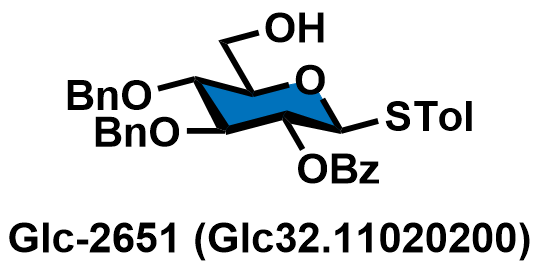
4-Methylphenyl 2-O-benzoyl-3,4-di-O-benzyl-1-thio-β-D-glucopyranoside
4-Methylphenyl 2-O-benzoyl-3,4-di-O-benzyl-1-thio-β-D-glucopyranoside is a thioglycoside derivative widely used in carbohydrate chemistry for its stability, reactivity, and utility as a glycosyl donor. The compound features a carefully arranged set of protective groups that enhance its functionality in glycosylation reactions and oligosaccharide synthesis.
Chemical Identity
Molecular Formula : C₃₂H₃₂O₆S
Molecular Weight : ~544.66 g/mol
Key Functional Groups :
Thioether linkage at the anomeric position for enhanced stability and controlled activation.
2-O-Benzoyl group for electron-withdrawing effects and neighboring-group participation.
3,4-di-O-Benzyl groups for hydroxyl protection and steric control.
4-Methylphenyl aglycone for hydrophobicity and increased reactivity in organic solvents.
Structural Features
Thioether Linkage at Anomeric Position :
The sulfur atom replaces the typical oxygen in glycosides, forming a thioglycoside. This substitution makes the compound more stable under various reaction conditions while allowing selective activation using promoters like NIS/TfOH.
Protective Groups :
The 2-O-benzoyl group serves as an electron-withdrawing group, which can stabilize reaction intermediates and facilitate stereoselective glycosylations through neighboring-group participation.
The 3,4-di-O-benzyl groups protect the hydroxyl groups while maintaining flexibility for further functionalization after deprotection.
4-Methylphenyl Aglycone :
The aromatic methyl-substituted aglycone contributes to the compound's hydrophobicity and enhances solubility in organic solvents like dichloromethane or chloroform.
Applications
This compound is particularly valuable in synthetic carbohydrate chemistry due to its reactivity and protective group arrangement:
Glycosylation Reactions : Used as a glycosyl donor in stereoselective synthesis of oligosaccharides and glycoconjugates. Its thioether linkage allows precise activation under mild conditions, making it suitable for complex synthesis schemes.
Intermediate for Complex Molecules : Serves as a precursor in the synthesis of biologically active natural products, glycolipids, and glycoproteins.
Orthogonal Protection Strategy : The benzoyl and benzyl groups can be selectively removed under specific conditions (e.g., acidic or hydrogenolytic deprotection), enabling stepwise functionalization.
Reactivity Profile
The compound's reactivity is influenced by its protective groups:
The benzoyl group at O-2 facilitates stereoselective glycosylation by participating in the reaction mechanism as a neighboring group.
The benzyl-protected hydroxyls at O-3 and O-4 ensure stability during reactions but can be selectively deprotected when needed.
Physical Properties
Appearance : Likely a crystalline solid or powder.
Solubility : Soluble in common organic solvents such as dichloromethane or chloroform due to its hydrophobic protective groups.
This compound exemplifies advanced design in carbohydrate chemistry, offering tailored reactivity for constructing complex oligosaccharides and glycoconjugates with applications in medicinal chemistry and materials science.
Citations:
https://pmc.ncbi.nlm.nih.gov/articles/PMC5301963/
https://onlinelibrary.wiley.com/doi/10.1002/9783527618255.ch4
https://pmc.ncbi.nlm.nih.gov/articles/PMC2677192/
https://pmc.ncbi.nlm.nih.gov/articles/PMC2661424/
https://pubs.rsc.org/en/content/articlehtml/2023/ob/d3ob00817g
https://pmc.ncbi.nlm.nih.gov/articles/PMC11370891/
https://onlinelibrary.wiley.com/doi/abs/10.1002/9783527697014.ch3
https://onlinelibrary.wiley.com/doi/10.1002/ajoc.201900397