About this product
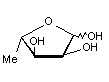
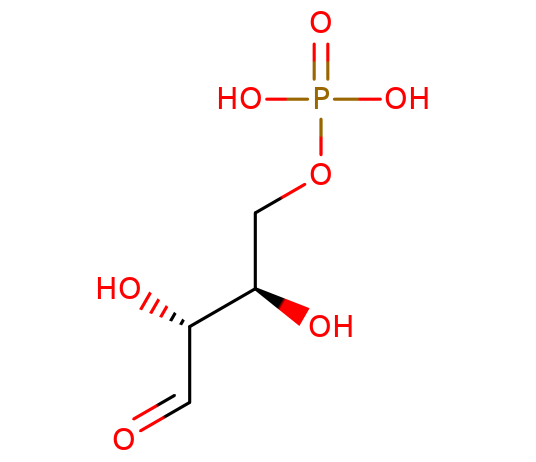
5-Deoxy-L-ribose5-Deoxy-L-ribose is found in a variety of organisms, including humans. It is stereoselective, with the (-) form being more common than the (+) form. 5-Deoxy-L-ribose is synthesized by the glycosidic bond between l-arabinose and D-ribose. This compound is an inexpensive way to produce 5-deoxy analogs of other sugars, such as glucose, fructose, and mannose. The biosynthesis of 5-deoxy-L-ribose relies on a molybdenum cofactor and involves oxidation of L-arabinonate by aldehyde oxidase to give L-xylulose. Lactate dehydrogenase converts this into D-xylulose. Dihydroorotate reductase then reduces this to give D-(+)-5--deoxy--D--erythro--pentitol phosphate.5-deoxy-L-ribose is a sugar derivative that has generated significant interest in the scientific community due to its unique physical and chemical properties. This article will provide a comprehensive overview of 5-deoxy-L-ribose, focusing on its definition, physical and chemical properties, synthesis and characterization, analytical methods, biological properties, toxicity and safety in scientific experiments, applications in scientific experiments, current state of research, potential implications in various fields of research and industry, limitations and future directions.Definition and Background
5-deoxy-L-ribose is a monosaccharide sugar that is structurally similar to ribose, a well-known component of nucleic acids. It is a rare sugar that occurs naturally in some organisms, including bacteria, fungi, and plants. However, it is not found in animals or humans.Scientists have been interested in 5-deoxy-L-ribose because of its potential applications in various fields of research and industry, including biochemistry, molecular biology, synthetic chemistry, and pharmaceuticals.Synthesis and Characterization
The synthesis of 5-deoxy-L-ribose is challenging and requires several steps. The most common method involves the enzymatic reduction of ribose using a specific enzyme that catalyzes the conversion of ribose to 5-deoxy-L-ribose.The characterization of 5-deoxy-L-ribose can be done using a variety of techniques, including nuclear magnetic resonance (NMR) spectroscopy, X-ray crystallography, and mass spectrometry. These techniques help to confirm the identity of the compound and determine its purity and structure.Analytical Methods
Several analytical methods have been developed to detect and quantify 5-deoxy-L-ribose in biological samples. These include high-performance liquid chromatography (HPLC), capillary electrophoresis (CE), and gas chromatography-mass spectrometry (GC-MS).Biological Properties
5-deoxy-L-ribose has been shown to have several biological properties, including antioxidant, antidiabetic, and anti-inflammatory effects. It has also been shown to promote the growth of certain types of bacteria and fungi.Toxicity and Safety in Scientific Experiments
The toxicity and safety of 5-deoxy-L-ribose in scientific experiments have been studied extensively. It has been shown to be relatively non-toxic and safe for use in laboratory experiments. However, further studies are needed to determine its safety in human and animal studies.Applications in Scientific Experiments
5-deoxy-L-ribose has several applications in scientific experiments, including as a building block for nucleic acid analogs and as a substrate for enzymatic reactions. It can also be used in the synthesis of antibiotics and other pharmaceuticals.Current State of Research
Research on 5-deoxy-L-ribose is ongoing, with several studies focusing on its potential applications in biotechnology, synthetic chemistry, and pharmaceuticals. There is also interest in developing new methods for the synthesis and characterization of 5-deoxy-L-ribose.Potential Implications in Various Fields of Research and Industry
The potential implications of 5-deoxy-L-ribose in various fields of research and industry are vast. It has the potential to be used as a building block for the development of new drugs and other therapeutic agents. It can also be used in the production of novel materials and polymers with unique properties.Limitations and Future Directions
Despite its potential applications, the use of 5-deoxy-L-ribose is limited by several factors, including its high cost and the difficulty of synthesizing it. Future research is needed to develop new methods for its synthesis and characterization and to explore its potential applications in various fields of research and industry.CAS Number18555-65-2Product Name5-deoxy-L-riboseIUPAC Name(2S,3S,4S)-2,3,4-trihydroxypentanalMolecular FormulaC5H10O4Molecular Weight134.13 g/molInChIInChI=1S/C5H10O4/c1-3(7)5(9)4(8)2-6/h2-5,7-9H,1H3/t3-,4+,5-/m0/s1InChI KeyWDRISBUVHBMJEF-LMVFSUKVSA-NSMILESCC(C(C(C=O)O)O)OCanonical SMILESCC(C(C(C=O)O)O)OIsomeric SMILESC[C@@H]([C@@H]([C@@H](C=O)O)O)OCAS No: 18555-65-2 MDL No: MFCD09750737 Chemical Formula: C5H10O4 Molecular Weight: 134.13References: 1. Behr JB, Chevrier C, Defoin A, Tarnus C, Streith J, Tetrahedron 59, 2003, p543-553