About this product
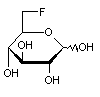
6-fluoro-D-glucose6-Deoxy-6-fluoro-D-glucose, also known as 6-[^18F]fluoro-L-m-tyrosine, is a radioactive tracer used in medical imaging to detect cancerous tissues in the body. This paper aims to provide a comprehensive review of the physical and chemical properties, synthesis and characterization, biological properties, toxicity and safety in scientific experiments, applications in scientific experiments, current state of research, potential implications in various fields of research and industry, limitations, and future directions of 6-deoxy-6-fluoro-D-glucose.Definition and Background
6-Deoxy-6-fluoro-D-glucoseDeoxy-6-Deoxy-6-fluoro-D-glucosefluoro-D-glucose is a radioactive tracer commonly used in positron emission tomography (PET) imaging for detecting cancerous tissues in the body. It is a glucose analog that is structurally similar to glucose, with the exception of the fluorine atom replacing the hydroxyl group at the C-6 position.Physical and Chemical Properties
6-Deoxy-6-fluoro-D-glucoseDeoxy-6-Deoxy-6-fluoro-D-glucosefluoro-D-glucose is a white solid that is soluble in water, ethanol, and other polar solvents. It has a melting point range of 86-Deoxy-6-fluoro-D-glucose91?C. Its chemical formula is C6H11FO5, and its molar mass is 182.15 g/mol.Synthesis and Characterization
6-Deoxy-6-fluoro-D-glucoseDeoxy-6-Deoxy-6-fluoro-D-glucosefluoro-D-glucose is typically synthesized from L-tyrosine using a multistep process involving protecting group chemistry, fluorination, and deprotection. The resulting product is then purified using column chromatography and characterized using various analytical techniques, such as nuclear magnetic resonance (NMR) spectroscopy and mass spectrometry.Analytical Methods
Various analytical methods can be used to measure the concentration of 6-Deoxy-6-fluoro-D-glucosedeoxy-6-Deoxy-6-fluoro-D-glucosefluoro-D-glucose in biological tissues and fluids, including PET imaging, liquid chromatography (LC), and high-performance liquid chromatography (HPLC).Biological Properties
6-Deoxy-6-fluoro-D-glucoseDeoxy-6-Deoxy-6-fluoro-D-glucosefluoro-D-glucose is taken up by cells in the body via glucose transporters, and its accumulation in cancerous tissues is due to an upregulation of glucose transporters in these tissues. It has a short half-life of approximately 110 minutes, which allows for repeated imaging procedures without significant radiation exposure.Toxicity and Safety in Scientific Experiments
Studies have shown that 6-Deoxy-6-fluoro-D-glucosedeoxy-6-Deoxy-6-fluoro-D-glucosefluoro-D-glucose is relatively safe for clinical use, with limited side effects and low toxicity. However, it should be used with caution in patients with renal or liver impairment, as the tracer is excreted through these organs.Applications in Scientific Experiments
6-Deoxy-6-fluoro-D-glucoseDeoxy-6-Deoxy-6-fluoro-D-glucosefluoro-D-glucose has a wide range of applications in medical research, including cancer diagnosis and monitoring, neuroimaging, and the study of metabolic disorders and cardiovascular disease.Current State of Research
The use of 6-Deoxy-6-fluoro-D-glucosedeoxy-6-Deoxy-6-fluoro-D-glucosefluoro-D-glucose in medical imaging has grown significantly in recent years, and ongoing research is focused on improving its accuracy and expanding its applications in various fields of medicine.Potential Implications in Various Fields of Research and Industry
The potential implications of 6-Deoxy-6-fluoro-D-glucosedeoxy-6-Deoxy-6-fluoro-D-glucosefluoro-D-glucose in various fields of research and industry are significant, as its use in medical imaging is expected to continue to grow and expand into new areas of research.Limitations and Future Directions
While 6-Deoxy-6-fluoro-D-glucosedeoxy-6-Deoxy-6-fluoro-D-glucosefluoro-D-glucose has demonstrated significant utility in medical imaging, there are several limitations to its use, including limited spatial resolution and sensitivity to certain types of cancer. Future research directions include improving sensitivity and developing more effective imaging techniques.Future Directions:
1. Developing new imaging techniques for more accurate and sensitive cancer detection2. Investigating the potential use of 6-Deoxy-6-fluoro-D-glucosedeoxy-6-Deoxy-6-fluoro-D-glucosefluoro-D-glucose in combination with other imaging agents for improved cancer diagnosis and treatment3. Developing more effective and efficient methods for synthesizing 6-Deoxy-6-fluoro-D-glucosedeoxy-6-Deoxy-6-fluoro-D-glucosefluoro-D-glucose4. Investigating the potential use of 6-Deoxy-6-fluoro-D-glucosedeoxy-6-Deoxy-6-fluoro-D-glucosefluoro-D-glucose in the diagnosis and monitoring of metabolic disorders and cardiovascular disease5. Developing new applications for 6-Deoxy-6-fluoro-D-glucosedeoxy-6-Deoxy-6-fluoro-D-glucosefluoro-D-glucose in other areas of medical imaging and research6. Investigating the potential use of 6-Deoxy-6-fluoro-D-glucosedeoxy-6-Deoxy-6-fluoro-D-glucosefluoro-D-glucose in preclinical drug development and testing.CAS Number4536-08-7Product Name6-Deoxy-6-fluoro-D-glucoseIUPAC Name(2R,3S,4S,5S)-6-fluoro-2,3,4,5-tetrahydroxyhexanalMolecular FormulaC?H??FO?Molecular Weight182.15 g/molInChIInChI=1S/C6H11FO5/c7-1-3(9)5(11)6(12)4(10)2-8/h2-6,9-12H,1H2/t3-,4+,5-,6-/m1/s1InChI KeyLFIUMOHGAWHPEA-JGWLITMVSA-NSMILESC(C(C(C(C(C=O)O)O)O)O)FSynonyms6-Deoxy-6-fluoroglucose; D-Glucose 6-fluorohydrin;Canonical SMILESC(C(C(C(C(C=O)O)O)O)O)FIsomeric SMILESC([C@H]([C@H]([C@@H]([C@H](C=O)O)O)O)O)FCAS No: 34168-77-9,4536-08-7 MDL No: MFCD00064096 Chemical Formula: C6H11FO5 Molecular Weight: 182.15References: 1. Street IP, Armstrong CR, Withers SG, Biochemistry 1986, p6021-6025