About this product
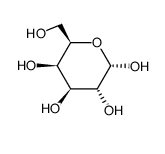
a-D-galactopyranose,a-D-?????D-Galactose, also known as alpha-D-gal or alpha D-galactose, belongs to the class of organic compounds known as hexoses. These are monosaccharides in which the sugar unit is a is a six-carbon containing moeity. D-Galactose exists as a solid, soluble (in water), and a very weakly acidic compound (based on its pKa). D-Galactose has been found in human brain, prostate and liver tissues, and has also been detected in most biofluids, including cerebrospinal fluid, feces, breast milk, and blood. Within the cell, D-galactose is primarily located in the lysosome, mitochondria and cytoplasm. D-Galactose exists in all eukaryotes, ranging from yeast to humans. D-Galactose participates in a number of enzymatic reactions. In particular, Galactosylceramide (D18:1/16:0) and D-galactose can be converted into galabiosylceramide (D18:1/22:0) through its interaction with the enzyme Alpha-galactosidase a. Furthermore, D-Galactose and sorbitol can be converted into melibiitol; which is mediated by the enzyme Alpha-galactosidase a. Finally, D-Galactose can be converted into galactose 1-phosphate; which is catalyzed by the enzyme galactokinase. In humans, D-galactose is involved in the lactose intolerance pathway, the sphingolipid metabolism pathway, the nucleotide sugars metabolism pathway, and the globoid cell leukodystrophy pathway. D-Galactose is also involved in several metabolic disorders, some of which include the gaucher disease pathway, the galactosemia pathway, the fabry disease pathway, and the galactosemia II (galk) pathway. Outside of the human body, D-galactose can be found in a number of food items such as nectarine, pepper (c. pubescens), caraway, and common verbena. This makes D-galactose a potential biomarker for the consumption of these food products. D-Galactose has been found to be associated with the diseases known as patent ductus venosus; d-galactose has also been linked to several inborn metabolic disorders including galactosemia type 1 and galactose-1-phosphate uridyltransferase deficiency.Alpha-D-galactose is d-Galactopyranose having alpha-configuration at the anomeric centre. It has a role as a mouse metabolite. It is an enantiomer of an alpha-L-galactose.CAS Number3646-73-9Product NameGalactoseIUPAC Name(2S,3R,4S,5R,6R)-6-(hydroxymethyl)oxane-2,3,4,5-tetrolMolecular FormulaC6H12O6Molecular Weight180.16 g/molInChIInChI=1S/C6H12O6/c7-1-2-3(8)4(9)5(10)6(11)12-2/h2-11H,1H2/t2-,3+,4+,5-,6+/m1/s1InChI KeyWQZGKKKJIJFFOK-PHYPRBDBSA-NSMILESC(C1C(C(C(C(O1)O)O)O)O)OSolubilitySoluble in DMSOSynonymsLevovist, SH-TA-508, SHU 508, SHU 508 A, SHU-508Canonical SMILESC(C1C(C(C(C(O1)O)O)O)O)OIsomeric SMILESC([C@@H]1[C@@H]([C@@H]([C@H]([C@H](O1)O)O)O)O)O