About this product
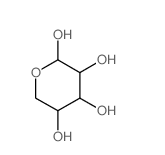
a-D-Ribopyranose ,a-D-????Alpha-D-Ribopyranose is a monosaccharide, a type of simple sugar, which is used in the fields of chemistry and biochemistry. It is a circular structure with five carbon atoms and a six-membered oxygen ring. This paper intends to outline the definition and background, physical and chemical properties, synthesis and characterization, analytical methods, biological properties, toxicity and safety in scientific experiments, applications in scientific experiments, current state of research, potential implications in various fields of research and industry, limitations, and future directions of alpha-D-ribopyranose.Definition and Background
Alpha-D-Ribopyranose is a five-carbon monosaccharide, also known as D-ribose. It is a component of the nucleotides found in RNA (ribonucleic acid) and is essential for the synthesis of ATP (adenosine triphosphate), the body's primary source of energy. Moreover, D-ribose is the precursor to several important biomolecules, including DNA (deoxyribonucleic acid), coenzymes, and flavin adenine dinucleotide.Physical and Chemical Properties
Alpha-D-Ribopyranose is a white crystalline solid with a melting point of 91-92?C. It has a molecular weight of 150.13 g/mol and a density of 1.55 g/cm?. It is a water-soluble monosaccharide with a solubility of 555 g/L at 20?C. It is also slightly soluble in methanol, ethanol, and acetone.Synthesis and Characterization
Alpha-D-Ribopyranose is synthesized via a multi-step process involving the isomerization of glucose, a six-carbon sugar, which results in the formation of ribose. The synthesis of alpha-D-ribopyranose can be achieved via various methods, including the catalytic hydrogenation of ribose, the reduction of furfural, and the condensation of formaldehyde with glyceraldehyde.Characterization of alpha-D-ribopyranose is essential for its identification and purity determination. Several spectroscopic techniques, including IR (infrared) spectroscopy, NMR (nuclear magnetic resonance) spectroscopy, and MS (mass spectrometry), can be used for its characterization.Analytical Methods
Various analytical methods, including HPLC (high-performance liquid chromatography), TLC (thin-layer chromatography), and GC (gas chromatography), can be used for the separation and detection of alpha-D-ribopyranose. These techniques are widely used in laboratories for the analysis of carbohydrates and their derivatives.Biological Properties
Alpha-D-Ribopyranose has demonstrated several biological properties, including antioxidant, anti-inflammatory, and cytoprotective activities. Moreover, alpha-D-ribopyranose has shown to enhance the recovery of ischemic tissues and improve glucose tolerance.Toxicity and Safety in Scientific Experiments
Alpha-D-Ribopyranose has shown low toxicity and is generally considered safe for scientific experiments. However, high doses or prolonged exposure to alpha-D-ribopyranose can cause adverse effects, including gastrointestinal distress, nausea, and diarrhea.Applications in Scientific Experiments
Alpha-D-Ribopyranose has diverse applications in scientific experiments. It is used as a substrate for several enzymatic and metabolic reactions, including glycolysis, respiration, and fermentation. Moreover, it is utilized in the synthesis of several pharmaceuticals, including antiviral and anti-inflammatory agents.Current State of Research
Alpha-D-Ribopyranose is a widely studied molecule, and its properties and applications are continually being investigated. The current state of research mainly focuses on its potential implications in drug discovery and the development of new therapies for several diseases, including cancer and diabetes.Potential Implications in Various Fields of Research and Industry
The potential implications of alpha-D-ribopyranose in various fields of research and industry are vast. It can be utilized in the development of new pharmaceuticals, the synthesis of biomaterials, and the production of biofuels. Moreover, it can be used in various in vitro and in vivo experiments for its biochemical and physiological effects.Limitations and Future Directions
Despite its diverse applications and potential implications, alpha-D-ribopyranose has several limitations. One of the significant limitations is its low stability, as it tends to undergo cleavage reactions under mild acidic or alkaline conditions. Moreover, its low solubility and low bioavailability limit its use in pharmaceutical applications.Future directions for research on alpha-D-ribopyranose include the development of novel synthesis methods, improving its stability and solubility, investigating its biological activities, and exploring its potential applications in drug delivery and regenerative medicine.
Conclusion
Alpha-D-Ribopyranose is a multifunctional monosaccharide with diverse applications in chemistry, biochemistry, and pharmaceuticals. Its properties, synthesis, characterization, analytical methods, biological properties, toxicity and safety in scientific experiments, applications in scientific experiments, current state of research, potential implications in various fields of research and industry, limitations, and future directions have been outlined in this paper. Alpha-D-ribopyranose is continually being researched and has numerous potential applications in various fields, including the development of new therapies for several diseases.CAS Number7296-59-5Product Namealpha-D-ribopyranoseIUPAC Name(2S,3R,4R,5R)-oxane-2,3,4,5-tetrolMolecular FormulaC5H10O5Molecular Weight150.13 g/molInChIInChI=1S/C5H10O5/c6-2-1-10-5(9)4(8)3(2)7/h2-9H,1H2/t2-,3-,4-,5+/m1/s1InChI KeySRBFZHDQGSBBOR-AIHAYLRMSA-NSMILESC1C(C(C(C(O1)O)O)O)OCanonical SMILESC1C(C(C(C(O1)O)O)O)OIsomeric SMILESC1[C@H]([C@H]([C@H]([C@H](O1)O)O)O)O