About this product
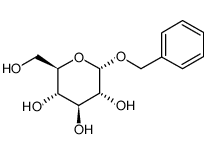
Benzyl alpha-D-glucopyranoside (BAG) is a white crystalline powder made up of benzyl alcohol and alpha-D-glucopyranoside. It has a sweet odor, similar to most carbohydrate derivatives. BAG is used as a building block for various natural products and as a chiral auxiliary in the synthesis of optically active compounds. It is also commonly used in laboratory experiments to protect hydroxyl groups.
Synthesis and Characterization
BAG can be synthesized through several methods, including direct reaction between alpha-D-glucopyranoside and benzyl alcohol, direct benzylation of alpha-D-glucopyranoside, or through protection and deprotection of hydroxyl groups. The purity and structure of BAG can be characterized using various analytical techniques, such as nuclear magnetic resonance spectroscopy, infrared spectroscopy, and mass spectrometry.
Analytical Methods
Several analytical methods are used to detect and quantify BAG in various matrices, including high-performance liquid chromatography (HPLC), gas chromatography-mass spectrometry (GC-MS), and capillary electrophoresis. These techniques provide high sensitivity, specificity, and reproducibility for the analysis of BAG.
Biological Properties
Studies have shown that BAG exhibits various biological properties, including antitumor, antiviral, and immunomodulatory activities. BAG has been shown to inhibit the growth of cancer cells, particularly those of lung, liver, and colon cancers. It has also been found to inhibit the entry of certain viruses into cells, such as the Zika virus. Additionally, BAG has been shown to modulate the immune system by increasing the production of cytokines that promote the differentiation of immune cells.
Toxicity and Safety in Scientific Experiments
Despite its promising biological activities, the toxicity and safety of BAG need to be evaluated before its clinical use. Several toxicity studies have been conducted, including acute toxicity, subacute toxicity, and teratogenicity tests. These studies have shown that BAG has low toxicity and no teratogenic effects.
Applications in Scientific Experiments
BAG is widely used in scientific experiments as a protecting agent for hydroxyl groups, particularly in carbohydrate chemistry. It is also used as a chiral auxiliary in the asymmetric synthesis of optically active compounds. Additionally, BAG has been used to improve the bioavailability of poorly soluble drugs.
Current State of Research
Numerous studies have been conducted on BAG, particularly in the areas of organic synthesis and medicinal chemistry. However, more research is needed to fully understand its properties and potential applications.
Potential Implications in Various Fields of Research and Industry
BAG has potential applications in various fields of research and industry, including pharmaceuticals, cosmetics, and food. Its biological activities make it a promising compound for the development of antitumor and antiviral drugs. BAG can also be used as a natural ingredient in cosmetics and as an additive in food to improve its taste and nutritional value.
Limitations and Future Directions
One limitation of BAG is its low solubility in organic solvents, which limits its applications in organic synthesis. Future research should focus on developing more efficient synthetic strategies for BAG and improving its solubility. Additionally, further studies are needed to fully understand the mechanism of action of BAG and its potential therapeutic applications.
Future Directions:
1. Development of more efficient synthetic strategies for BAG
2. Improving the solubility of BAG in organic solvents
3. Identification of the mechanism of action of BAG in cancer cells
4. Identification of the molecular targets of BAG in antiviral activity
5. Investigation of the effects of BAG on the microbiome
6. Synthesis of BAG derivatives with improved biological activities
7. Development of BAG-based drug delivery systems
8. Investigation of the pharmacokinetics of BAG in animals and humans
9. Use of BAG as a natural ingredient in cosmetics and as a food additive
10. Investigation of the potential use of BAG in regenerative medicine.
CAS Number 25320-99-4
Product Name Benzyl alpha-D-glucopyranoside
IUPAC Name (2R,3S,4S,5R,6S)-2-(hydroxymethyl)-6-phenylmethoxyoxane-3,4,5-triol
Molecular Formula C13H18O6
Molecular Weight 270.27 g/mol
InChI InChI=1S/C13H18O6/c14-6-9-10(15)11(16)12(17)13(19-9)18-7-8-4-2-1-3-5-8/h1-5,9-17H,6-7H2/t9-,10-,11+,12-,13+/m1/s1
InChI Key GKHCBYYBLTXYEV-LBELIVKGSA-N
SMILES C1=CC=C(C=C1)COC2C(C(C(C(O2)CO)O)O)O
Canonical SMILES C1=CC=C(C=C1)COC2C(C(C(C(O2)CO)O)O)O
Isomeric SMILES C1=CC=C(C=C1)CO[C@@H]2[C@@H]([C@H]([C@@H]([C@H](O2)CO)O)O)O
COA:
Product name: Benzyl-alpha-D-glucopyranoside CAS: 25320-99-4
M.F. : C 13 H 18 O 6 M.W. : 270.27 Batch No : 090528 Quantity : 20g
Items
Standards
Results
MS and NMR
Should comply
Complies
Identification
IR and TLC
Complies
TLC
Should be one spot
one spot