About this product
Chitosan
Chitosan is a biopolymer derived from chitin, which is found in the exoskeletons of crustaceans such as shrimp and crabs. It is a white to off-white, odorless powder that is soluble in acidic solutions. Chitosan has gained significant attention for its versatile applications across various fields, including medicine, agriculture, and environmental science.
Chemical Identity
CAS Number : 9012-76-4
MDL Number : MFCD00149018
Catalog Number : A1212044
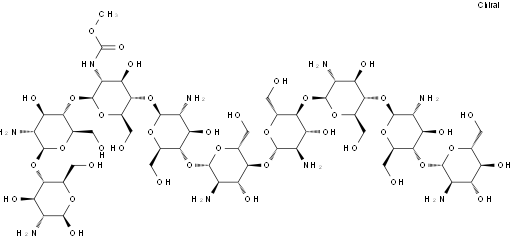
Molecular Formula : C₅₆H₁₃₉N₉O₃₉
Molecular Weight : 1,526.45 g/mol
Physical Properties
Appearance : White to off-white powder
Melting Point : Not explicitly listed; typically stable under standard laboratory conditions.
Boiling Point : Not explicitly listed; expected to be stable at elevated temperatures.
Density : Not specified but generally around 0.5 to 1.0 g/cm³ for similar biopolymers.
Solubility : Soluble in dilute acids (pH < 6.5); insoluble in neutral or alkaline solutions.
Structural Features
Chitosan is characterized by:
A linear polysaccharide structure composed of glucosamine and N-acetylglucosamine units linked by β(1→4) glycosidic bonds.
The presence of amino groups (-NH₂) and hydroxyl groups (-OH) that provide reactivity for further chemical modifications.
Biological Properties
Chitosan exhibits several beneficial biological properties:
Biocompatibility : Non-toxic and well-tolerated by biological systems.
Biodegradability : Naturally decomposes into non-toxic products, making it environmentally friendly.
Antimicrobial Activity : Effective against a variety of bacteria and fungi, making it suitable for wound healing and food preservation.
Applications
Chitosan has a wide range of applications across various fields:
Medicine
Drug Delivery : Utilized as a carrier for controlled drug release due to its mucoadhesive properties.
Wound Dressings : Employed in the formulation of dressings that promote healing and reduce infection risk.
Antimicrobial Agents : Used in formulations to inhibit microbial growth.
Agriculture
Biopesticides : Acts as a natural pesticide to protect crops from pathogens.
Seed Treatment : Enhances seed germination and plant growth by improving nutrient uptake and resistance to stress.
Soil Health : Improves soil quality and promotes beneficial microbial activity.
Environmental Applications
Water Treatment : Used for removing heavy metals, dyes, and other pollutants from wastewater through coagulation and flocculation processes.
Filtration Systems : Incorporated into filtration media to improve water clarity and remove contaminants.
Food Industry
Preservative : Acts as a natural preservative due to its antimicrobial properties.
Food Packaging : Used in biodegradable packaging materials that extend shelf life.
Biotechnology
Gene Delivery Systems : Explored for use in delivering genetic material due to its ability to form complexes with DNA.
Safety and Handling
Chitosan is generally regarded as safe when used appropriately; however, standard laboratory precautions should be observed:
Avoid inhalation and contact with eyes.
Store in a cool, dry place away from moisture.
Regulatory Information
Chitosan is approved for use in food and pharmaceutical applications by various regulatory agencies, including the FDA and EFSA, due to its safety profile and biocompatibility.
Chitosan represents a versatile biopolymer with numerous applications across different sectors, making it a valuable material in both research and industrial contexts.
Citations:
https://en.wikipedia.org/wiki/Chitosan
https://www.ottokemi.com/polymers/chitosane.aspx
https://www.sigmaaldrich.com/IN/en/product/aldrich/448869
https://www.scbt.com/p/chitosan-9012-76-4
https://www.glentham.com/en/products/product/GC9009/
https://haihangchem.com/products/chitosan-cas-9012-76-4/
https://pubchem.ncbi.nlm.nih.gov/compound/Chitosan
https://www.sarchemlabs.com/product/chitosan/