About this product
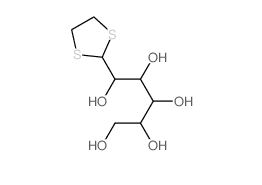
D-Glucose ethylenedithioacetal
D-Glucose ethylenedithioacetal (GATA) is a derivative of glucose that has been used in various scientific experiments as a reducing agent and sulfur source. It was first synthesized in 1935 by Fischer and Dreo, and has since been extensively studied for its chemical and biological properties.
Synthesis and Characterization:
GATA can be synthesized in various ways, including the reaction of ethylene dithiol with glucose in the presence of a catalyst, or the reaction of glucose with carbon disulfide followed by the addition of hydrogen sulfide. GATA can be characterized using various analytical methods, including NMR spectroscopy, infrared spectroscopy, and X-ray crystallography.
Analytical Methods:
Analytical methods used to quantify GATA include high-performance liquid chromatography (HPLC) and gas chromatography (GC). These methods are used to determine the purity of GATA and its derivatives.
Biological Properties:
GATA has been found to possess antioxidant and anti-inflammatory properties, and has been shown to protect against DNA damage caused by free radicals. It has also been investigated as a potential treatment for diabetes and cancer.
Toxicity and Safety in Scientific Experiments:
Studies have shown that GATA has low toxicity and is generally safe for use in scientific experiments. However, caution should be exercised when handling GATA, as it can irritate the eyes and skin.
Applications in Scientific Experiments:
GATA has been used in various scientific experiments, including the synthesis of metal nanoparticles, the preparation of sulfur-containing polymers, and the production of organic semiconductors.
Current State of Research:
Currently, research on GATA is focused on its potential applications in the fields of biomedicine, materials science, and catalysis. Studies are also being conducted to better understand its mechanisms of action and potential side effects.
Potential Implications in Various Fields of Research and Industry:
The unique properties of GATA make it a promising candidate for various applications in research and industry. For example, GATA could be used in the development of new drugs, biodegradable polymers, and advanced electronic devices.
Limitations and Future Directions:
One limitation of current research on GATA is the lack of understanding of its mechanisms of action and potential side effects. Future research should focus on addressing these issues, as well as exploring new applications for this promising compound. Possible future directions include its use as a reducing agent in organic synthesis or as an antioxidant in food preservation.
In conclusion, GATA is a promising compound with a wide range of potential applications in various fields of research and industry. Further research is required to fully understand its properties, mechanisms of action, and potential side effects, but the current state of research suggests that GATA could play an important role in the development of new materials, drugs, and other innovative products.
CAS Number 3650-65-5
Product Name D-Glucose ethylenedithioacetal
IUPAC Name (1R,2S,3R,4R)-1-(1,3-dithiolan-2-yl)pentane-1,2,3,4,5-pentol
Molecular Formula C8H16O5S2
Molecular Weight 256.34 g/mol
InChI InChI=1S/C8H16O5S2/c9-3-4(10)5(11)6(12)7(13)8-14-1-2-15-8/h4-13H,1-3H2/t4-,5-,6+,7-/m1/s1
InChI Key LOVIILREBFKRIA-MVIOUDGNSA-N
SMILES C1CSC(S1)C(C(C(C(CO)O)O)O)O
Canonical SMILES C1CSC(S1)C(C(C(C(CO)O)O)O)O
Isomeric SMILES C1CSC(S1)[C@@H]([C@H]([C@@H]([C@@H](CO)O)O)O)O
CAS No: 3650-65-5
MDL No: MFCD00051981
Chemical Formula: C8H16O5S2
Molecular Weight: 256.34