About this product
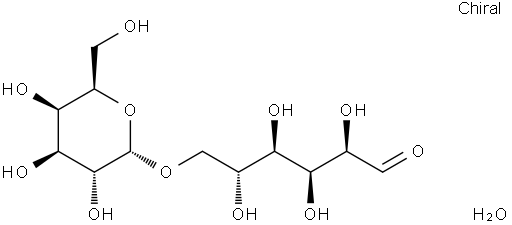
D-(+)-Melibiose
D-(+)-Melibiose is a disaccharide composed of one galactose and one glucose unit linked by an α(1→6) glycosidic bond. It is a reducing sugar that plays a significant role in various biological processes and is commonly used in microbiological studies.
Chemical Properties
CAS Number : 585-99-9
MDL No. : MFCD00198191
Catalog Number : A831945
EINECS : 209-568-6
Molecular Formula : C₁₂H₂₄O₁₂
Molecular Weight : 360.31 g/mol
Boiling Point : 662.8 ± 55.0 °C at 760 mmHg
Melting Point : 182 °C (dec.) (lit.)
Flash Point : 354.6 ± 31.5 °C
Density : Not specified (typically around 1.68 g/cm³)
Appearance : White powder
Storage Conditions : Store at 2–8 °C for long-term stability (months).
Refractivity : 1.652
Physical Characteristics
Melibiose appears as a white crystalline powder and is soluble in water, making it suitable for various laboratory applications . Its melting point of approximately 182°C indicates its thermal stability, while its high boiling point suggests that it can withstand elevated temperatures without decomposing.
Biological Significance
Microbial Metabolism:
Melibiose serves as a carbon source for certain bacteria, particularly Saccharomyces pastorianus , which can metabolize melibiose, differentiating it from other species like Saccharomyces cerevisiae that cannot.
Role in Gene Regulation
It acts as an effector molecule that can activate the lac operon by binding to the repressor protein, facilitating the expression of genes involved in lactose metabolism.
Prebiotic Potential :
Melibiose may have prebiotic effects, promoting the growth of beneficial gut bacteria and contributing to gut health.
Research Applications :
Used in studies investigating carbohydrate interactions and the effects of sugar on microbial growth and metabolism.
Synthesis and Purification
D-(+)-Melibiose can be synthesized enzymatically or extracted from natural sources. It can be purified through crystallization techniques, often involving water or ethanol to achieve high purity levels.
Safety Profile
While D-(+)-melibiose is generally regarded as safe for laboratory use, standard safety protocols should be followed when handling this compound. Personal protective equipment (PPE) should be used to minimize exposure.
Conclusion
D-(+)-Melibiose (CAS No. 585-99-9) is an important disaccharide with applications in microbiology, biochemistry, and nutrition. Its role as a substrate for specific microorganisms and its function in gene regulation make it valuable for research and industrial applications.
Citations:
https://www.chemicalbook.com/ChemicalProductProperty_EN_CB1322130.htm
https://goldbio.com/product/7158/d-melibiose-monohydrate
https://pubchem.ncbi.nlm.nih.gov/compound/Melibiose
https://pubchem.ncbi.nlm.nih.gov/compound/440658
https://en.wikipedia.org/wiki/Melibiose
https://omanchem.com/product/D-MELIBIOSE-PURISS-99
https://www.medchemexpress.com/d-melibiose.html
https://www.lobachemie.com/Carbohydrates-04545/D-MELIBIOSE-CASNO-66009-10-7.aspx
FAQs about Melibiose:
Is melibiose a disaccharide?
Yep! It’s a tag team made of galactose and glucose. Two sugars, one bond—classic disaccharide vibes.
Is melibiose a reducing sugar?
It is! One of its sugar units still has a free end (an aldehyde group) that can react, which officially puts it in the “reducing sugar” club. Not all disaccharides get that honor.