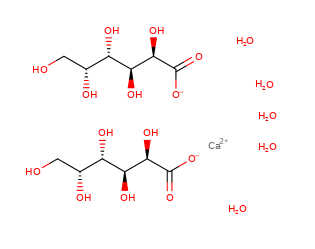
About this product
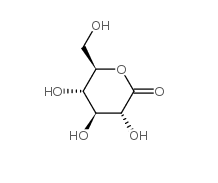
D-Glucono-1,5-lactone
D-Glucono-1,5-lactone is a chemical compound that is a member of the class of compounds known as diketones. It can be used in chemical biology and polymer chemistry to probe hydrogen bonding interactions, polymer compositions, and redox potentials. D-Glucono-1,5-lactone has been shown to inhibit the growth of cells in culture by inhibiting DNA synthesis. This inhibition is due to its ability to bind with high affinity to nucleic acids and prevent the formation of the enzyme complexes required for transcription and replication. The effects are reversible.
Gluconolactone (GL) is a cyclic ester that belongs to the family of polyhydroxy acids. It is commonly used as an ingredient in various skincare and cosmetic products due to its ability to enhance skin hydration and reduce hyperpigmentation. In recent years, research has also focused on GL's potential applications in various scientific fields such as agriculture, food, and biotechnology. This paper provides an overview of GL's definition and background, physical and chemical properties, synthesis and characterization, analytical methods, biological properties, toxicity and safety in scientific experiments, applications in scientific experiments, current state of research, potential implications in various fields of research and industry, limitations, and future directions.
Definition and Background
GL is a white crystalline solid that has a chemical formula of C6H10O6. It is a cyclic ester formed by the intramolecular esterification of gluconic acid. GL is a naturally occurring substance found in honey, fruits, and wine. It is also produced commercially by the fermentation of glucose using molds such as Aspergillus niger. GL is considered a safe and non-toxic compound that is readily biodegradable and does not harm the environment.
Physical and Chemical Properties
GL has a molecular weight of 178.14 g/mol and a melting point of 152-157?C. It is soluble in water, methanol, and ethanol but insoluble in organic solvents such as benzene and toluene. GL is a weak acid with a pKa value of 3.86. Its aqueous solution is mildly acidic with a pH of 3-4. GL can undergo hydrolysis in the presence of water to produce gluconic acid, which is a stronger acid than GL.
Synthesis and Characterization
GL is synthesized by the cyclization of gluconic acid, which is produced by the oxidation of glucose using enzymes such as glucose oxidase. The reaction involves the condensation of the carboxylic acid group with the hydroxyl group to form a cyclic ester. GL can be characterized using various spectroscopic techniques such as nuclear magnetic resonance (NMR) spectroscopy, infrared (IR) spectroscopy, and mass spectrometry (MS). These techniques are used to identify the chemical structure and purity of GL.
Analytical Methods
GL can be quantified using various chromatographic techniques such as high-performance liquid chromatography (HPLC) and gas chromatography (GC). These techniques are used to separate GL from other compounds and determine its concentration in a sample. GL can also be detected using enzymatic assays that measure the activity of enzymes such as gluconolactonase, which catalyzes the hydrolysis of GL to gluconic acid.
Biological Properties
GL has been shown to exhibit various biological activities such as antioxidant, antimicrobial, and anti-inflammatory effects. It also has the ability to enhance the skin's barrier function and reduce transepidermal water loss. GL has been used in various skincare products such as moisturizers, exfoliants, and anti-aging creams due to its ability to improve skin texture and tone. GL has also been shown to have potential applications in wound healing and tissue regeneration.
Toxicity and Safety in Scientific Experiments
GL is considered safe for use in cosmetic and skincare products. Toxicity studies have shown that GL has low acute toxicity and does not cause skin irritation or sensitization. GL is also biocompatible and has been shown to be non-toxic to human cells. However, some studies have shown that GL can cause eye irritation and should be used with caution around the eyes.
Applications in Scientific Experiments
GL has potential applications in various scientific fields such as agriculture, food, and biotechnology. In agriculture, GL can be used as a fertilizer additive to improve soil quality and plant growth. GL has the ability to chelate metal ions, which can enhance the uptake of nutrients by plants. In the food industry, GL can be used as a natural preservative due to its antimicrobial properties. It can also be used as a sweetener, especially in low-calorie and diabetic foods. In biotechnology, GL can be used as a substrate for the production of various enzymes such as gluconolactonase and glucose oxidase.
Current State of Research
Research on GL has been increasing in recent years, with a particular focus on its potential applications in skincare and cosmetic products. Studies have shown that GL can improve skin hydration, reduce hyperpigmentation, and enhance the skin's barrier function. GL has also been shown to have potential applications in wound healing and tissue regeneration. However, more research is needed to fully understand the mechanisms underlying GL's biological activities and its potential applications in other scientific fields.
Potential Implications in Various Fields of Research and Industry
GL has the potential to revolutionize various fields of research and industry due to its unique properties and diverse applications. In agriculture, GL can be used to improve crop yields and reduce the use of chemical fertilizers. In the food industry, GL can be used as a natural preservative and sweetener, which can improve the safety and taste of foods. In biotechnology, GL can be used as a substrate for enzyme production and as a biomaterial for tissue engineering. In the skincare and cosmetic industry, GL can be used to develop new and innovative products that are safe, effective, and environmentally friendly.
Limitations and Future Directions
Despite its promising applications, GL also has some limitations that need to be addressed in future research. One limitation is its limited water solubility, which can affect its bioavailability and efficacy. Another limitation is its degradation under acidic conditions, which can reduce its stability and shelf life. Future research should aim to overcome these limitations and explore new methods for enhancing the properties and applications of GL. Some potential future directions for GL research include:
- Developing new methods for synthesizing GL that are more efficient and sustainable.
- Investigating the potential of GL for enhancing plant growth and reducing the use of chemical fertilizers in agriculture.
- Developing new formulations of GL for use in skincare and cosmetic products that are more effective and long-lasting.
- Exploring the potential of GL for tissue engineering and regenerative medicine.
- Conducting further studies on GL's safety and toxicity in different applications and environments.
- Investigating the potential of GL as a natural preservative and sweetener in the food industry.
Conclusion
GL is a versatile and promising compound that has the potential to revolutionize various scientific fields and industries. Its diverse applications and unique properties make it an attractive option for use in agriculture, food, biotechnology, and skincare and cosmetic products. However, more research is needed to fully understand GL's mechanisms of action and potential limitations. With continued research and innovation, GL could lead to new and transformative discoveries that benefit society and the environment.
Title: Gluconolactone
CAS Registry Number: 90-80-2
CAS Name: D-Gluconic acid d-lactone
Additional Names: glucono delta lactone; delta gluconolactone
Trademarks: Fujiglucon (Fujisawa)
Molecular Formula: C6H10O6
Molecular Weight: 178.14
Percent Composition: C 40.45%, H 5.66%, O 53.89%
Literature References: Prepn by oxidation of glucose with bromine water: Isbell, Pigman, J. Res. Natl. Bur. Stand. 10, 337 (1933); by oxidation of glucose in Acetobacter suboxydans: King, Cheldelin, Biochem. J. 68, 31P (1958). Structure: J. Stan?k et al., The Monosaccharides (Academic Press, New York, 1963) p 271.
Properties: Crystals, dec 153?. Sweet taste (different from gluconic acid). [a]D20 +61.7? (c = 1). Soly in water 59 g/100 ml; in alc about 1 g/100 g. Insol in ether. Hydrolyzed to gluconic acid by water. A freshly prepd 1% aq soln has a pH of 3.6 changing to pH 2.5 within 2 hrs.
Optical Rotation: [a]D20 +61.7? (c = 1)
Use: Component of many cleaning cmpds because of the sequestering ability of the gluconate radical which remains active in alk solns; in the dairy industry to prevent milkstone; in breweries to prevent beerstone; as latent acid catalyst for acid colloid resins, particularly in textile printing; as a coagulant for tofu.
CAS Number 90-80-2
Product Name Gluconolactone
IUPAC Name (3R,4S,5S,6R)-3,4,5-trihydroxy-6-(hydroxymethyl)oxan-2-one
Molecular Formula C?H??O?
Molecular Weight 178.14 g/mol
InChI InChI=1S/C6H10O6/c7-1-2-3(8)4(9)5(10)6(11)12-2/h2-5,7-10H,1H2/t2-,3-,4+,5-/m1/s1
InChI Key PHOQVHQSTUBQQK-KLVWXMOXSA-N
SMILES C(C1C(C(C(C(=O)O1)O)O)O)O
Solubility 590000 mg/L (at 25 ?C) 3.31 M Freely soluble in water. Sparingly soluble in ethanol 590 mg/mL at 25 ?C 1 gram in 100 grams alcohol; insoluble in ether and acetone. In water, 5.9X10+5 mg/L at 25 ?C 590.0 mg/mL
Synonyms D-Gluconic acid ?-Lactone; D-Gluconic Acid Lactone; D-Gluconic Acid ?-Lactone; 1,5-Gluconolactone; D-(+)-Gluconic acid ?-lactone; D-(+)-Glucono-1,5-lactone; D-(+)-Glucono-?-lactone; D-Gluconic acid 1,5-Lactone; D-Glucono-?-lactone; E 575; Fujiglucon
Canonical SMILES C(C1C(C(C(C(=O)O1)O)O)O)O
Isomeric SMILES C([C@H]1[C@@H]([C@H]([C@@H](C(=O)O1)O)O)O)O
COA:
Product name: D-Glucono-1,5-lactone CAS: 90-80-2
M.F. : C 6 H 10 O 6 M.W. : 178.14 Batch No : 20121211
Items
Standards
Results
Appearance
White powder
Complies
MS and NMR
Should comply
Complies
TLC
One spot
One spot
Assay
Min. 98%
98.8%
Reducing Substances
?0.5%
Complies
Arsenic
?2PPM
Complies
Heavy Metals
?0.002%
Complies
Chloride
?0.02%
Complies
Lead
?0.001%
Complies
Sulfate
?0.03%
Complies
Loss on drying
?1.0%
0.15%
References:
1. Banon S, Hardy J, Journal of Dairy Science 1992