About this product
1,4-Dithioerythritol
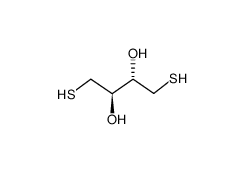
1,4-Dithioerythritol (DTE) is a strong reducing agent. It is used in buffers during the isolation and purification of proteins. DTE is a reagent for the quantitative reduction of disulfide groups and cleavage of disulphide bridges in proteins. A sulfur containing sugar, it is derived from the corresponding 4-carbon monosaccharide erythrose. It is an epimer (stereoisomer pair) of dithiothreitrol (DTT) and is often used in applications in combination with DTT.
Dithioerythritol (DTE) is an organic compound that belongs to the thiol family. It is used as a reducing agent in various chemical and biological experiments. Dithioerythritol has important properties such as its ability to reduce disulfide bonds and to protect proteins from oxidation. This paper aims to provide an insight into the properties, synthesis, characterization, analytical methods, biological properties, toxicity and safety in scientific experiments, applications, current research, potential implications, limitations and future directions of Dithioerythritol.
Definition and Background
Dithioerythritol is a thiol designed by the substitution of two hydroxyl groups of erythritol with thiol groups. Dithioerythritol is commonly used for its reducing properties, which are similar to those of dithiothreitol (DTT). Dithioerythritol solutions can be stored for long periods of time without degradation or loss of activity. Dithioerythritol is also known to protect proteins from oxidation, which allows researchers to study protein structure and function under reducing conditions.
Synthesis and Characterization
Dithioerythritol can be synthesized from erythritol through the substitution of the hydroxyl groups with thiol groups. The synthesis of Dithioerythritol typically involves the reaction of erythritol with hydrogen sulfide gas (H2S) or thiol-containing reagents such as thiourea, cysteamine, or thiolactic acid.
The resulting product is then purified through crystallization or chromatography. The identity of dithioerythritol can be confirmed using various analytical techniques, including nuclear magnetic resonance (NMR) spectroscopy, X-ray diffraction (XRD), and mass spectrometry (MS).
Analytical Methods
Dithioerythritol can be quantified and characterized using various analytical techniques such as high-performance liquid chromatography (HPLC), capillary electrophoresis (CE), and gas chromatography (GC). The concentration of Dithioerythritol can be determined using absorbance measurements at 280 nm.
Biological Properties
Dithioerythritol is an important reducing agent used in biochemical and biophysical studies. Dithioerythritol is known to protect proteins from oxidation, which allows researchers to study protein structure and function under reducing conditions. Dithioerythritol also has antioxidant properties that make it useful for preventing protein oxidation and lipid peroxidation in cells and tissues.
Toxicity and Safety in Scientific Experiments
Dithioerythritol has low toxicity and is generally considered safe for use in scientific experiments. However, precautions should be taken when handling Dithioerythritol to avoid ingestion, inhalation, and skin exposure. Dithioerythritol should be stored in a cool, dry place away from light.
Applications in Scientific Experiments
Dithioerythritol is commonly used in various scientific experiments for its reducing and antioxidant properties. Dithioerythritol is primarily used in the study of protein structure and function. Additionally, Dithioerythritol can be used as a reducing agent in the synthesis of nanoparticles and as an antioxidant in cell and tissue culture experiments.
Current State of Research
Currently, research on Dithioerythritol focuses on its application in the study of protein folding and its potential use as an antioxidant in disease prevention. Furthermore, research is being conducted to develop new synthetic methods for Dithioerythritol and its related compounds.
Potential Implications in Various Fields of Research and Industry
Dithioerythritol has potential implications in various fields of research and industry, including biotechnology, pharmaceuticals, food processing, and cosmetics. In biotechnology, Dithioerythritol's unique properties make it useful for studying protein structure and function. In pharmaceuticals, Dithioerythritol can be used as a reducing agent in the synthesis of drugs and as an antioxidant in drug formulation. In food processing, Dithioerythritol can be used as a natural sweetener, and in cosmetics, it can be used as an antioxidant and reducing agent in skin care products.
Limitations and Future Directions
The primary limitation of Dithioerythritol is its reactivity towards air and moisture. Therefore, its use requires careful handling and storage. Future directions of research on Dithioerythritol include the development of new synthetic methods, the study of its application in nanotechnology, and its potential use as an antioxidant in disease prevention.
Other future directions for Dithioerythritol include its application in the treatment of oxidative stress-related diseases like Alzheimer's, cancer, and cardiovascular diseases. Additionally, research is required to explore the potential use of Dithioerythritol as a reducing agent in polymer synthesis. To fully utilize the benefits of Dithioerythritol, research into its synthesis and applications should continue.
Conclusion
Dithioerythritol is an important reducing agent commonly used in scientific experiments. Dithioerythritol has advantageous properties such as its ability to protect proteins from oxidation and its antioxidant properties. Its low toxicity makes it ideal for use in scientific experiments. However, limitations like its reactivity towards air and moisture must be taken into consideration. Future research on Dithioerythritol may reveal its implications in combating several oxidative stress-related diseases and the development of new methods of synthesis and applications, including its potential use in polymer synthesis, cosmetics, and nanotechnology.
CAS Number 6892-68-8
Product Name Dithioerythritol
IUPAC Name (2R,3S)-1,4-bis(sulfanyl)butane-2,3-diol
Molecular Formula C4H10O2S2
Molecular Weight 154.25 g/mol
InChI InChI=1S/C4H10O2S2/c5-3(1-7)4(6)2-8/h3-8H,1-2H2/t3-,4+
InChI Key VHJLVAABSRFDPM-ZXZARUISSA-N
SMILES C(C(C(CS)O)O)S
Synonyms Dithioerythritol;1,4-Dithioerythritol;DTE;(2R,3S)-1,4-DIMERCAPTOBUTANE-2,3-DIOL;6892-68-8;erythro-1,4-Dimercapto-2,3-butanediol;erythro-2,3-Dihydroxy-1,4-butanedithiol;(2R,3S)-1,4-disulfanylbutane-2,3-diol;CHEBI:17456;(2R*,3S*)-1,4-dimercapto-2,3-butanediol;(2R,3S)-1,4-bis(sulfanyl)butane-2,3-diol;Clelandsreagent;DTU;C4H10O2S2;2,3-Dihydroxybutane-1,4-dithiol;ERYTHRITOL,1,4-DITHIO-;EINECS229-998-8;BRN1719756;2,3-DIHYDROXY-1,4-DITHIOBUTANE;(R*,S*)-1,4-Dimercapto-2,3-butanediol;(R*,S*)-1,4-Dimercaptobutane-2,3-diol;AmbotzRL-1019;2,3-Butanediol,1,4-dimercapto-,(theta,S)-;SCHEMBL78921;1,4-Dithioerythritol(DTE)
Canonical SMILES C(C(C(CS)O)O)S
Isomeric SMILES C([C@H]([C@H](CS)O)O)S
CAS No: 6892-68-8
Synonyms: Clelands reagentDTE2,3-Dihydroxy-1,4-butanedithiol1,4-Dimercapto-2,3-butanediol MDL No: MFCD00065459
Chemical Formula: C4H10O2S2
Molecular Weight: 154.25