About this product
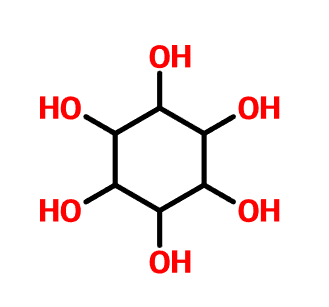
InositolMembrane phospholipid component. Structural component of secondary messengers in eukaryotic cells. Shows chemopreventive, antioxidant and immunomodulatory effects in vivo. Orally active.Inositol is a natural sugar found in cell membrane phospholipids, plasma lipoproteins, and (as the phosphate form) in the nucleus with potential chemopreventive properties. As one of a number of intracellular phosphate compounds, inositol is involved in cell signaling and may stimulate tumor cell differentiation. (NCI04)Inositol is a collection of nine different stereoisomers but the name is usually used to describe only the most common type of inositol, myo-inositol. Myo-inositol is the cis-1,2,3,5-trans-4,6-cyclohexanehexol and it is prepared from an aqueous extract of corn kernels by precipitation and hydrolysis of crude phytate. These molecules have structural similarities to glucose and are involved in cellular signaling. It is considered a pseudovitamin as it is a molecule that does not qualify to be an essential vitamin because even though its presence is vital in the body, a deficiency in this molecule does not translate into disease conditions. Inositol can be found as an ingredient of OTC products by Health Canada but all current product whose main ingredient is inositol are discontinued. By the FDA, inositol is considered in the list of specific substances affirmed as generally recognized as safe (GRAS).Myo-inositol is an inositol having myo- configuration. It has a role as a member of compatible osmolytes, a nutrient, an EC 3.1.4.11 (phosphoinositide phospholipase C) inhibitor, a human metabolite, a Daphnia magna metabolite, a Saccharomyces cerevisiae metabolite, an Escherichia coli metabolite and a mouse metabolite.CAS Number6917-35-7Product NameInositolIUPAC Namecyclohexane-1,2,3,4,5,6-hexolMolecular FormulaC6H12O6Molecular Weight180.16 g/molInChIInChI=1S/C6H12O6/c7-1-2(8)4(10)6(12)5(11)3(1)9/h1-12HInChI KeyCDAISMWEOUEBRE-UHFFFAOYSA-NSMILESC1(C(C(C(C(C1O)O)O)O)O)OSolubilitySoluble in DMSOSynonyms(1R,2R,3R,4R,5R,6R)-1,2,3,4,5,6-cyclohexanehexol, AZD-103, ELND005, quercinitol, scyllitol, scyllo-inositolCanonical SMILESC1(C(C(C(C(C1O)O)O)O)O)O