About this product
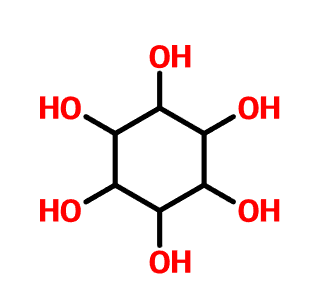
Myo-inositol is an important component of the phosphatidylinositol family, which is a major component of cell membranes. Myo-inositol is found in high concentrations in the human brain and has been shown to be involved in a number of cellular processes such as signal transduction, protein synthesis, and gene expression. It also has been shown to inhibit the growth of ovarian cancer cells. This drug inhibits the release of calcium from intracellular stores by binding to the cytosolic Ca2+ channels and inhibiting their activity. Myo-inositol also binds to guanine nucleotide-binding proteins and inhibits polymerase chain reactions. The analytical method for myo-inositol involves measuring its concentration using p-nitrophenyl phosphate (PNPP) as a substrate in an enzymatic reaction that produces PNP.Title:?InositolCAS Registry Number:?87-89-8CAS Name:?myo-InositolAdditional Names:?meso-inositol; i-inositol; hexahydroxycyclohexane; cyclohexanehexol; cyclohexitol; meat sugar; inosite; mesoinosite; phaseomannite; dambose; nucite; bios I; rat antispectacled eye factor; mouse antialopecia factorMolecular Formula:?C6H12O6Molecular Weight:?180.16Percent Composition:?C 40.00%, H 6.71%, O 53.28%Literature References:?Widely distributed in plants and animals. Growth factor for animals and microorganisms. Isoln from heart muscle: Scherer, Ann. 73, 322 (1850); from liver: Woolley, J. Biol. Chem. 139, 29 (1941). Synthesis: Wieland, Wishart, Ber. 47, 2082 (1914); Anderson, Wallis, J. Am. Chem. Soc. 70, 2931 (1948). Obtained commercially from corn steep liquor, since inositol is present as phytic acid in corn: Bartow, Walker, Ind. Eng. Chem. 30, 300 (1938); US 2112553 (1938); Hoglan, Bartow, J. Am. Chem. Soc. 62, 2397 (1940); Elkin, Meadows, US 2414365 (1947); GB 601273 (1948 to Corn Prod. Refining). Nine possible stereoisomers: Seven are optically inactive or meso. Two optically active forms, the racemic form, and several cis,trans-isomers occur naturally. The prevalent natural form is cis-1,2,3,5-trans-4,6-cyclohexanehexol which is described here. Reviews: R. Beckmann, m-Inosit (Editio Cantor, Aulendorf, 1953); several authors in The Vitamins vol. 2,, W. H. Sebrell, Jr., R. S. Harris, Eds. (Academic Press, New York, 1954) pp 321-386; ibid. vol. 3 (2nd ed., 1971) pp 340-415.Properties:?Anhydr, non-hygroscopic crystals from water or acetic acid above 80?. Sweet taste. d 1.752. mp 225-227?. Optically inactive. Soly in water at 25?: 14 g/100 ml soln; at 60?: 28 g/100 ml soln. Slightly sol in alc. Practically insol in ether and other common organic solvents. Aq solns are neutral to litmus.Melting point:?mp 225-227?Density:?d 1.752?Derivative Type:?DihydrateProperties:?Efflorescent crystals from water below 50?. d 1.524. mp 218?. Becomes anhydr at 100?.Melting point:?mp 218?Density:?d 1.524?Derivative Type:?MonophosphateCAS Registry Number:?573-35-3Molecular Formula:?C6H13O9PMolecular Weight:?260.14Percent Composition:?C 27.70%, H 5.04%, O 55.35%, P 11.91%Literature References:?Prepn: Posternak, Posternak, Helv. Chim. Acta 12, 1165 (1929); McCormick, Carter, Biochem. Prep. 2, 65 (1952).Properties:?Crystals from water + alcohol, dec 195-197?. Titrates as a dibasic acid. Freely soluble in water (1 g dissolves in 3 ml H2O). Practically insol in abs ethanol, ether. Remarkably resistant to hydrolysis by boiling with strong alkali. May be hydrolyzed by boiling with 6N HCl for 14 hrs.?Therap-Cat:?Vitamin B complex; lipotropic.Keywords:?Lipotropic; Vitamin/Vitamin Source.CAS Number87-89-8Product NameInositolIUPAC Name(1R,2r,3S,4R,5s,6S)-cyclohexane-1,2,3,4,5,6-hexaolMolecular FormulaC6H12O6Molecular Weight180.16 g/molInChIInChI=1S/C6H12O6/c7-1-2(8)4(10)6(12)5(11)3(1)9/h1-12H/t1-,2-,3-,4+,5-,6-InChI KeyCDAISMWEOUEBRE-GPIVLXJGSA-NSMILES[C@@H]1([C@@H]([C@H]([C@@H]([C@H]([C@H]1O)O)O)O)O)OSolubilitySoluble in DMSOSynonyms(1R,2R,3R,4R,5R,6R)-1,2,3,4,5,6-cyclohexanehexol, AZD-103, ELND005, quercinitol, scyllitol, scyllo-inositolCanonical SMILESC1(C(C(C(C(C1O)O)O)O)O)O
CAS No: 87-89-8 Synonyms: meso-InositolMyoinositol MDL No: MFCD00077932 Chemical Formula: C6H12O6 Molecular Weight: 180.17