About this product
L-Gulonic Acid-1,4-Lactone
L-Gulonic acid-1,4-lactone is an ascorbic acid derivative that inhibits the production of matrix metalloproteinases (MMPs) and other enzymes. L-Gulonic acid-1,4-lactone has been shown to inhibit the activity of MMPs in hl-60 cells, which may be due to its ability to chelate metal ions, such as zinc and copper. This molecule also has a stabilizing effect on collagen type I because it prevents cross linking between lysine amino acids. The discovery process for this molecule was found by screening clones from a cDNA library with biochemical properties similar to those of ascorbic acid. This molecule has been shown to inhibit the activation of protein kinase C (PKC) and phosphorylation of extracellular signal regulated kinase (ERK). L-Gulonic acid-1,4-lactone is metabolized through plant metabolism
L-Gulonolactone is a carbohydrate that is essential for the synthesis of vitamin C in most species, including humans. It is synthesized by the liver in animals that cannot synthesize vitamin C, such as humans and some primates. In this paper, we will discuss the definition and background, physical and chemical properties, synthesis and characterization, analytical methods, biological properties, toxicity and safety in scientific experiments, applications in scientific experiments, current state of research, potential implications in various fields of research and industry, and limitations and future directions of L-Gulonolactone.
Definition and Background
L-Gulonolactone is a carbohydrate molecule that is synthesized by most species, except for humans and some primates. It is essential for the synthesis of vitamin C, which is why it is also known as a precursor of vitamin C. The lack of the ability to synthesize L-gulonolactone and, therefore, vitamin C is thought to be a result of a genetic mutation that occurred about 60 million years ago in primates.
Physical and Chemical Properties
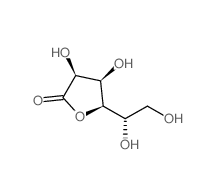
L-Gulonolactone is a white crystalline powder with a sweet taste. It has a melting point of 124-128?C, and it is soluble in water and ethanol. The chemical structure of L-gulonolactone is a cyclic keto-hexose that has a lactone ring and five hydroxyl groups.
Synthesis and Characterization
L-Gulonolactone can be synthesized from D-glucose via a multi-step process. The first step is the oxidation of D-glucose to D-gluconic acid, which is then converted to D-glucono-1,5-lactone. The next step is the reduction of D-glucono-1,5-lactone to L-gluconic acid, followed by the dehydration of L-gluconic acid to L-glucono-1,4-lactone. Finally, L-glucono-1,4-lactone is oxidized to L-gulonolactone.
Analytical Methods
L-Gulonolactone can be analyzed using various methods, including HPLC, GC, FT-IR spectroscopy, and NMR spectroscopy. HPLC is the most commonly used method for the analysis of L-gulonolactone because it is highly sensitive and specific.
Biological Properties
L-Gulonolactone is an essential precursor for the synthesis of vitamin C. Thus, its biological properties are similar to those of vitamin C. Vitamin C has numerous health benefits, including antioxidant activity, immune system support, wound healing, and iron absorption.
Toxicity and Safety in Scientific Experiments
L-Gulonolactone has been found to be safe for use in scientific experiments. It has not been shown to cause any adverse effects in studies conducted on animals or humans.
Applications in Scientific Experiments
L-Gulonolactone is used in scientific experiments for the synthesis of vitamin C and for the evaluation of its effects on various biological pathways. It is also used as an antioxidant and a reducing agent in analytical chemistry.
Current State of Research
Research on L-gulonolactone has shown that it has potential therapeutic benefits, particularly as an antioxidant and immune system booster. Studies have also shown that L-gulonolactone supplementation can improve the bioavailability of other nutrients, such as iron.
Potential Implications in Various Fields of Research and Industry
L-Gulonolactone has potential implications in various fields of research and industry, including the food and pharmaceutical industries. It can be used as a food additive, a dietary supplement, and a nutraceutical. L-Gulonolactone can also be used as a reductant in organic chemistry and in the production of other chemicals.
Limitations and Future Directions
Despite the potential benefits of L-gulonolactone, there are some limitations that need to be addressed. Firstly, the synthesis of L-gulonolactone is a multi-step process that is not cost-effective. Secondly, there is a lack of comprehensive toxicological studies on L-gulonolactone, and its long-term effects are not yet known.
Future Directions
Future research on L-gulonolactone should focus on developing cost-effective synthesis methods, conducting comprehensive toxicological studies, and investigating potential applications in various fields. Additional future directions may include:
- Investigating the effects of L-gulonolactone on aging and age-related diseases, such as Alzheimer's disease.
- Evaluating the effects of L-gulonolactone on the gut microbiome and its potential as a prebiotic.
- Investigating the potential of L-gulonolactone to enhance athletic performance and aid in recovery from exercise.
- Investigating the role of L-gulonolactone in regulating glucose and insulin levels in diabetic patients.
- Developing L-gulonolactone-based drugs for the treatment of various diseases, such as cancer and cardiovascular diseases.
CAS Number 1128-23-0
Product Name L-Gulonolactone
IUPAC Name (3S,4R,5R)-5-[(1S)-1,2-dihydroxyethyl]-3,4-dihydroxyoxolan-2-one
Molecular Formula C6H10O6
Molecular Weight 178.14 g/mol
InChI InChI=1S/C6H10O6/c7-1-2(8)5-3(9)4(10)6(11)12-5/h2-5,7-10H,1H2/t2-,3+,4-,5+/m0/s1
InChI Key SXZYCXMUPBBULW-SKNVOMKLSA-N
SMILES C(C(C1C(C(C(=O)O1)O)O)O)O
Synonyms gulonolactone, gulonolactone, (D)-isomer, gulonolactone, (L)-isomer
Canonical SMILES C(C(C1C(C(C(=O)O1)O)O)O)O
Isomeric SMILES C([C@@H]([C@@H]1[C@@H]([C@@H](C(=O)O1)O)O)O)O
COA:
Product name: L-Gulonic Acid-1,4-Lactone; L-(+)-Gulonic Acid ?-Lactone
CAS: 1128-23-0 M .F. : C 6 H 10 O 6 M .W. : 178.14
Items
Standards
Results
Appearance
White or off white powder
Complies
Solubility
Easily soluble in water,
insoluble in general organic solventr
Complies
Appearance of solution
Dissolve0.5 gin 10 ml of water,
and the solution should be clear and colorless
Complies
NMR and MS
Should comply
Comply
M.P.
180?C ~190?C
185?C ~188?C
Specific Rotation
[a ] 23 D (in H 2 O)
+53 o ~ +57 o
+54.8 o
TLC
Should be one spot
One spot
Assay by HPLC
Min.95%
98.7%
References:
1. Fleet GW, Ramsden NG, Nash RJ, Fellows LE, Jacob GS, Molyneux RJ, di Bello IC, Winchester B, Carbohydr. Res. 1990, 205, p269
2. Ching S, Mahan DC, Moreau RR, Dabrowski K, J. Nutr. Biochem. 2003, 3, p139