About this product
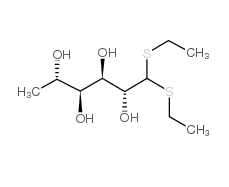
L-Rhamnose diethyl mercaptal
L-Rhamnose diethyl mercaptal is an antiperspirant and deodorant that is used in combination with other ingredients to reduce or eliminate body odor. It is a supplement, often found in combinations with other compounds such as neodymium and radium. This compound works by preventing the formation of sweat from the apocrine glands, which reduces underarm wetness and body odor. L-Rhamnose diethyl mercaptal also has antimicrobial properties that help prevent bacterial growth on the skin surface.
L-Rhamnose diethyl mercaptal (LRDM) is a chemical compound that has gained attention in recent years due to its potential applications in various fields of research and industry. This paper aims to provide a comprehensive overview of LRDM, including its definition, physical and chemical properties, synthesis, characterization, analytical methods, biological properties, toxicity and safety in scientific experiments, applications in scientific experiments, current state of research, potential implications in various fields of research and industry, limitations, and future directions.
Definition and Background
LRDM is a colorless, volatile liquid that has a sweet odor. It is a derivative of L-rhamnose, which is a monosaccharide that is found in various plants. LRDM is used in various research areas, including biotechnology, cosmetics, and the production of fragrances.
Synthesis and Characterization
LRDM can be synthesized using various methods, including the reaction of L-rhamnose with diethyl mercaptal in the presence of a strong acid catalyst. LRDM can be characterized using various techniques, including nuclear magnetic resonance (NMR), infrared spectroscopy (IR), and gas chromatography-mass spectrometry (GC-MS).
Analytical Methods
LRDM can be analyzed using various analytical methods, including high-performance liquid chromatography (HPLC), GC-MS, and NMR. These methods can be used to determine the purity, identity, and quantity of LRDM.
Biological Properties
LRDM has been shown to possess various biological properties, including anti-inflammatory and anti-cancer activity. LRDM has been shown to inhibit the growth of cancer cells in vitro and in vivo. Additionally, LRDM has been shown to reduce the production of pro-inflammatory cytokines in various cell types.
Toxicity and Safety in Scientific Experiments
LRDM has been shown to be relatively safe in scientific experiments, with no significant toxicity reported in animal models. However, further studies are needed to determine the long-term effects of LRDM exposure.
Applications in Scientific Experiments
LRDM has various applications in scientific experiments, including its use as a fragrance additive and as a precursor in the production of various chemicals. Additionally, LRDM has been used as a starting material in the synthesis of various drugs and natural products.
Current State of Research
LRDM is an active area of research, with ongoing studies investigating its potential applications in various fields of research and industry. Additionally, researchers are investigating the mechanisms by which LRDM exerts its biological activity.
Potential Implications in Various Fields of Research and Industry
LRDM has potential implications in various fields of research and industry, including biotechnology, cosmetics, and the production of fragrances. Additionally, LRDM has potential applications in the production of drugs and natural products.
Limitations
One limitation of LRDM is its relatively limited applications, with most current research focused on its use in the production of fragrances and as a precursor to other chemicals. Additionally, further studies are needed to determine the long-term safety and efficacy of LRDM.
Future Directions
Future directions for LRDM research include investigating its potential uses in the production of new materials, such as polymers and ceramics. Additionally, further studies are needed to clarify the mechanisms by which LRDM exerts its biological activity and to investigate its potential in the treatment of various diseases. Finally, research is needed to develop new and innovative synthesis strategies for LRDM and its derivatives.
CAS Number 6748-70-5
Product Name L-Rhamnose diethyl mercaptal
IUPAC Name (2R,3R,4S,5S)-1,1-bis(ethylsulfanyl)hexane-2,3,4,5-tetrol
Molecular Formula C10H22O4S2
Molecular Weight 270.41 g/mol
InChI InChI=1S/C10H22O4S2/c1-4-15-10(16-5-2)9(14)8(13)7(12)6(3)11/h6-14H,4-5H2,1-3H3/t6-,7-,8+,9+/m0/s1
InChI Key MKFOCLXLRFQETN-RBXMUDONSA-N
SMILES CCSC(C(C(C(C(C)O)O)O)O)SCC
Synonyms 6-Deoxy-L-mannose, diethyl dithioacetal
Canonical SMILES CCSC(C(C(C(C(C)O)O)O)O)SCC
Isomeric SMILES CCSC([C@@H]([C@@H]([C@H]([C@H](C)O)O)O)O)SCC
CAS No: 6748-70-5
MDL No: MFCD08705381
Chemical Formula: C10H22O4S2
Molecular Weight: 270.41
References:
1. Wolfrom ML, Karabinos JV, J. Am. Chem. Soc. 1945, Vol67, p50