
GlycoDepot
GlycoDepot

L-Threose, CAS:95-44-3

L-ThreoseL-Threose is a sugar molecule that is used as a structural component of DNA and RNA. It is also an important part of the energy metabolism in cells. L-…
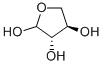
L-Threose,  CAS:95-44-3
Pricing
Request a quote

Size

Quantity

  • ISO 9001:2015 facilities · CoA + batch tracking with every shipment
  • Worldwide shipping · dry-ice option for thermolabile reagents
  • Research Use Only — not for human or veterinary clinical use

About this product

L-ThreoseL-Threose is a sugar molecule that is used as a structural component of DNA and RNA. It is also an important part of the energy metabolism in cells. L-Threose can be enzymatically inactivated by glycosidases, which are enzymes that hydrolyze glycosidic bonds. The inhibition of glycosidases by L-threose may be useful for the prevention or treatment of diseases associated with enzyme activity, such as diabetes mellitus type II. L-Threose has been shown to have inhibitory properties against sephadex G-100, a membrane protein found in bacteria. L-Threose may be useful as a control agent for research into the response element of polymerase chain reaction (PCR).Title:?L-ThreoseCAS Registry Number:?95-44-3CAS Name:?(2R,3S)-2,3,4-TrihydroxybutanalMolecular Formula:?C4H8O4Molecular Weight:?120.10Percent Composition:?C 40.00%, H 6.71%, O 53.29%Literature References:?By degradation of?L-xylose through the oxime and tetraacetyl-L-xylononitrile to?L-threose diacetamide: Hockett?et al.,?J. Am. Chem. Soc.?60,?278 (1938); from?D-glucitol: Hutson, Weigel,?J. Chem. Soc.?1961,?1546.Properties:?Shows mutarotation; final [a]D20?+13.2? (c = 4.5). Sol in water.Optical Rotation:?[a]D20?+13.2? (c = 4.5)?Derivative Type:?PhenylosazoneMolecular Formula:?C16H18N4O2Molecular Weight:?298.34Percent Composition:?C 64.41%, H 6.08%, N 18.78%, O 10.73%Properties:?Dec 162?.CAS Number95-44-3Product NameL-ThreoseIUPAC Name(2R,3S)-2,3,4-trihydroxybutanalMolecular FormulaC4H8O4Molecular Weight120.1 g/molInChIInChI=1S/C4H8O4/c5-1-3(7)4(8)2-6/h1,3-4,6-8H,2H2/t3-,4-/m0/s1InChI KeyYTBSYETUWUMLBZ-IMJSIDKUSA-NSMILESC(C(C(C=O)O)O)OSynonyms2,3,4-trihydroxybutanal, D-threose, erythrose, erythrose, (R*,S*)-isomer, erythrose, (R-(R*,S*))-isomer, erythrose, (S-(R*,S*))-isomer, L-threose, threoseCanonical SMILESC(C(C(C=O)O)O)OIsomeric SMILESC([C@@H]([C@H](C=O)O)O)O CAS No: 95-44-3 MDL No: MFCD00066540 Chemical Formula: C4H8O4 Molecular Weight: 120.1References: 1. Beil. 1, IV, 4173

You may also need

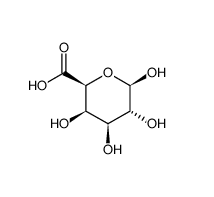
DL-Galacturonicacid

DL-Galacturonicacid

D-Galacturonic acid (2S,3R,4S,5R)-2,3,4,5-tetrahydroxy-6-oxohexanoic acid, commonly known as THOH acid, is a six-carbon sugar acid with four hydroxyl groups and…
Quote on requestIn stock
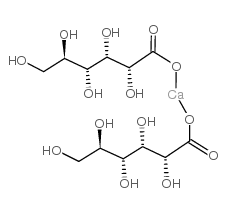
CALCIUMGLUCONATE

CALCIUMGLUCONATE

D-Gluconic acid calcium salt D-Gluconic acid calcium salt is a chemical that inhibits the activity of enzymes in the pathway of methyl glycosides. It has been s…
Quote on requestIn stock
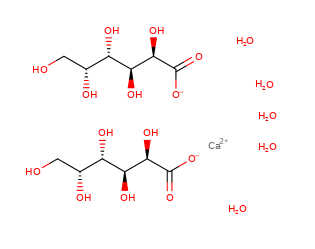
CalciumD-Galactonate

CalciumD-Galactonate

Calcium-D-galactonate hydrate, , Calcium-D-galactonate hydrate is a reagent that is used in organic synthesis as a complex compound. It can also be used as an i…
Quote on requestIn stock
erythrose4-phosphate

erythrose4-phosphate

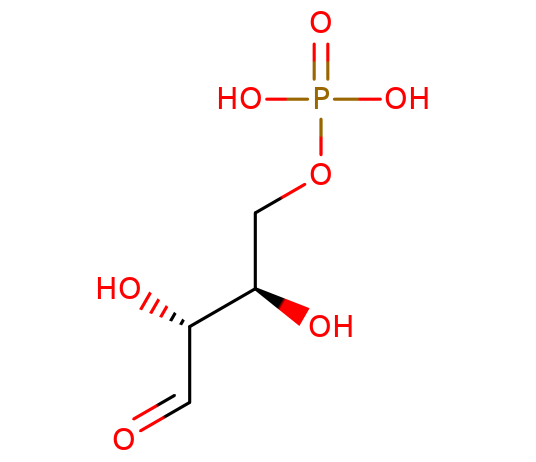
D-Erythrose 4-phosphate D-Erythrose 4-phosphate, also known as D-erythrose-4-p or 4-O-phosphono-D-erythrose, belongs to the class of organic compounds known as …

Quote on requestIn stock