About this product
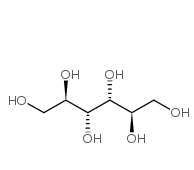
Mannitol is a naturally occurring alcohol found in fruits and vegetables and used as an osmotic diuretic. Mannitol is freely filtered by the glomerulus and poorly reabsorbed from the renal tubule, thereby causing an increase in osmolarity of the glomerular filtrate. An increase in osmolarity limits tubular reabsorption of water and inhibits the renal tubular reabsorption of sodium, chloride, and other solutes, thereby promoting diuresis. In addition, mannitol elevates blood plasma osmolarity, resulting in enhanced flow of water from tissues into interstitial fluid and plasma.D-Mannitol, also known as osmitrol or mannite, belongs to the class of organic compounds known as sugar alcohols. These are hydrogenated forms of carbohydrate in which the carbonyl group (aldehyde or ketone, reducing sugar) has been reduced to a primary or secondary hydroxyl group. D-Mannitol is a drug which is used for the promotion of diuresis before irreversible renal failure becomes established, the reduction of intracranial pressure, the treatment of cerebral edema, and the promotion of urinary excretion of toxic substances. D-Mannitol exists as a solid, soluble (in water), and a very weakly acidic compound (based on its pKa). D-Mannitol has been found in human brain and skin tissues, and has also been detected in most biofluids, including blood, urine, cerebrospinal fluid, and saliva. D-Mannitol exists in all eukaryotes, ranging from yeast to humans. D-Mannitol has been found to be associated with several diseases known as alzheimer's disease, lung cancer, and aids; d-mannitol has also been linked to several inborn metabolic disorders including ribose-5-phosphate isomerase deficiency and cytochrome c oxidase deficiency.D-mannitol appears as odorless white crystalline powder or free-flowing granules. Sweet taste. (NTP, 1992)CAS Number87-78-5Product NameMannitolIUPAC Name(2R,3R,4R,5R)-hexane-1,2,3,4,5,6-hexolMolecular FormulaC6H14O6Molecular Weight182.17 g/molInChIInChI=1S/C6H14O6/c7-1-3(9)5(11)6(12)4(10)2-8/h3-12H,1-2H2/t3-,4-,5-,6-/m1/s1InChI KeyFBPFZTCFMRRESA-KVTDHHQDSA-NSMILESC(C(C(C(C(CO)O)O)O)O)OSolubilitygreater than or equal to 100 mg/mL at 68? F (NTP, 1992)
216000 mg/L (at 25 ?C)
1 g in about 5.5 ml water; more sol in hot water; insol in ether; sol in pyridine, aniline; sol in aq soln of alkalies; 1 g dissolves in 18 ml glycerol (density 1.24); 1 g dissolves in about 83 ml alc
In water, 2.16X10+5 mg/l @ 25 ?C
216 mg/mL at 25 ?CSynonyms(L)-Mannitol, Mannitol, Osmitrol, OsmofundinCanonical SMILESC(C(C(C(C(CO)O)O)O)O)OIsomeric SMILESC([C@H]([C@H]([C@@H]([C@@H](CO)O)O)O)O)O