About this product
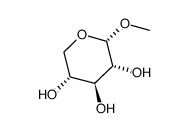
Methyl a-D-xylopyranoside is an iron chelator that can be used as a mycobacterial drug candidate. It binds to both ferric and ferrous iron, and has been shown to inhibit the uptake of ferric iron by Mycobacterium tuberculosis. It also inhibits the synthesis of siderophores, which are molecules produced by bacteria in order to acquire iron from their environment. Methyl a-D-xylopyranoside does not bind to the alpha-d-glucopyranoside moiety typically found in iron complexes. This is due to its hydroxamate group, which causes it to have an increased affinity for Fe3+. This compound is active against gram negative bacteria such as E. coli and Salmonella enterica serovar Typhimurium, but not against gram positive organisms such as Staphylococcus aureus or Streptococcus pneumoniae.
Definition and Background
Methyl alpha-D-xylopyranoside, commonly referred to as MX, is a chemical compound with the molecular formula C6H12O5. It is a monosaccharide, which means it is a simple sugar. MX belongs to a family of sugars known as xylopyranoses, which are found in hemicelluloses and pectins in the cell walls of plants.
MX was first identified in 1959 by Arthur V. Tobia while studying the chemical composition of a hemicellulose extracted from loblolly pine wood. Since its discovery, MX has been extensively studied for its physical and chemical properties, as well as its potential applications in various fields.
Synthesis and Characterization of Methyl alpha-D-xylopyranoside
MX can be synthesized through a variety of methods, including acid hydrolysis of hemicelluloses, enzymatic hydrolysis of xylan, and chemical synthesis. However, the most common method of synthesizing MX is by catalytic hydrogenation of xylose.
MX can be characterized using a variety of techniques, including mass spectrometry, nuclear magnetic resonance spectroscopy, and infrared spectroscopy. These techniques can be used to identify the chemical structure of MX and verify its purity.
Analytical Methods for Methyl alpha-D-xylopyranoside
There are several analytical methods for detecting and quantifying MX in various samples, including high-performance liquid chromatography, gas chromatography, capillary electrophoresis, and colorimetric assays. These methods are used to determine the concentration of MX in a variety of matrices, including food and beverage products, plant materials, and biological fluids.
Biological Properties of Methyl alpha-D-xylopyranoside
Studies have shown that MX has a variety of biological properties, including antioxidant, anti-inflammatory, and immunomodulatory effects. MX has also been shown to have potential therapeutic benefits for a variety of diseases, including cancer, diabetes, and neurodegenerative disorders.
Toxicity and Safety in Scientific Experiments
Studies have demonstrated that MX is generally safe and non-toxic, with no observed adverse effects in animals or humans. However, more research is needed to assess the long-term safety of MX, particularly in high doses or chronic exposure.
Applications in Scientific Experiments
MX has a variety of applications in scientific experiments, including as a precursor for the synthesis of a variety of compounds, as a non-toxic alternative to other sugars in cell culture media, and as a substrate for enzymatic assays.
Current State of Research
MX is an active area of research, with ongoing studies exploring its potential therapeutic applications, its role in plant biology and bioenergy production, and its potential environmental and industrial uses.
Potential Implications in Various Fields of Research and Industry
MX has potential implications in various fields of research and industry, including in the development of new drugs and therapeutics, as a bio-based feedstock for industrial processes, and as a non-toxic alternative to other sugars in food and beverage products.
Limitations and Future Directions
While there is significant research on MX and its potential applications, there are still several limitations and areas of future research.
One limitation is the lack of standardized methods for detecting and quantifying MX in various matrices. Additionally, while MX has been shown to be safe and non-toxic, more research is needed to assess the potential long-term effects of MX exposure.
Future directions for research include further exploration of the potential therapeutic applications of MX, development of sustainable and cost-effective methods of synthesizing MX, and development of standardized analytical methods for detecting and quantifying MX in various matrices.
Another future direction for research is exploring the potential applications of MX in the development of sustainable and biodegradable materials, such as bioplastics.
Overall, MX is a promising compound with a variety of potential applications in various fields of research and industry. However, more research is needed to fully understand its properties and potential implications.
CAS Number 91-09-8
Product Name Methyl alpha-D-xylopyranoside
IUPAC Name (2S,3R,4S,5R)-2-methoxyoxane-3,4,5-triol
Molecular Formula C6H12O5
Molecular Weight 164.16 g/mol
InChI InChI=1S/C6H12O5/c1-10-6-5(9)4(8)3(7)2-11-6/h3-9H,2H2,1H3/t3-,4+,5-,6+/m1/s1
InChI Key ZBDGHWFPLXXWRD-MOJAZDJTSA-N
SMILES COC1C(C(C(CO1)O)O)O
Canonical SMILES COC1C(C(C(CO1)O)O)O
Isomeric SMILES CO[C@@H]1[C@@H]([C@H]([C@@H](CO1)O)O)O
CAS No: 91-09-8 MDL No: MFCD00053593 Chemical Formula: C6H12O5 Molecular Weight: 164.16