About this product
2-[(Azidoacetyl)amino]-2-deoxy-D-glucose,Cas:92659-90-0
2-[(Azidoacetyl)amino]-2-deoxy-D-glucose, commonly known as 'Azido-sugar,' is a versatile chemical compound used in various scientific experiments. The compound has several unique physical and chemical properties, which make it valuable in various fields of research and industry, including biochemistry, molecular biology, and glycobiology. This paper aims to provide a comprehensive overview of 2-[(Azidoacetyl)amino]-2-deoxy-D-glucose, including its definition and background, physical and chemical properties, synthesis and characterization, analytical methods, biological properties, toxicity, and safety in scientific experiments, applications in scientific experiments, the current state of research, potential implications in various fields of research and industry, limitations, and future directions.
Definition and Background
2-[(Azidoacetyl)amino]-2-deoxy-D-glucose is a type of sugar molecule that contains a nitrogen-containing component called azide, which is a highly reactive group. The molecule is often used in chemical labeling and bioorthogonal chemical reactions, where its azide group is selectively reacted with another molecule containing a reactant group. The compound was first synthesized by K. Barry Sharpless and his colleagues in 2002.
Synthesis and Characterization
The synthesis of 2-[(Azidoacetyl)amino]-2-deoxy-D-glucose involves the reaction of 2-deoxy-D-glucose with azidoacetyl chloride in the presence of a base such as triethylamine. The reaction proceeds through a nucleophilic substitution mechanism, where the chloride group is replaced by the azide group. The resulting product is purified by recrystallization.
The characterization of 2-[(Azidoacetyl)amino]-2-deoxy-D-glucose is usually done using several analytical techniques, such as nuclear magnetic resonance (NMR) spectroscopy, high-resolution mass spectrometry (HR-MS), and X-ray crystallography.
Analytical Methods
Several analytical methods are used to determine the purity and identity of 2-[(Azidoacetyl)amino]-2-deoxy-D-glucose. These include:
1. Nuclear magnetic resonance (NMR) spectroscopy: This technique is used to determine the structure of the molecule, the purity of the sample, and the concentration of the compound.
2. High-resolution mass spectrometry (HR-MS): This technique is used to determine the molecular weight of the molecule, the purity of the sample, and the presence of any impurities.
3. X-ray crystallography: This technique is used to determine the crystal structure of the molecule.
Biological Properties
2-[(Azidoacetyl)amino]-2-deoxy-D-glucose has several biological properties, including its ability to label and track enzymes, proteins, and other biomolecules in living cells. The compound can also be used to study the mechanisms of various biological processes, such as glycosylation.
Toxicity and Safety in Scientific Experiments
The toxicity and safety of 2-[(Azidoacetyl)amino]-2-deoxy-D-glucose in scientific experiments depend on the concentration and duration of exposure. However, the compound is generally considered safe to use in scientific experiments, provided that appropriate safety measures are followed.
Applications in Scientific Experiments
2-[(Azidoacetyl)amino]-2-deoxy-D-glucose is widely used in various scientific experiments, including:
1. Glycosylation studies: The compound can be used to study the mechanisms of glycosylation, which is the process of adding sugar molecules to proteins and lipids.
2. Bioorthogonal chemistry: The compound is used in bioorthogonal chemical reactions, where its azide group is selectively reacted with other molecules containing a reactant group.
3. Enzyme labeling: The compound is used to label and track enzymes in living cells.
Current State of Research
The research on 2-[(Azidoacetyl)amino]-2-deoxy-D-glucose is ongoing, and new applications and synthetic methods are being developed regularly.
Potential Implications in Various Fields of Research and Industry
2-[(Azidoacetyl)amino]-2-deoxy-D-glucose has several potential implications in various fields of research and industry, including:
1. Bioorthogonal chemistry: The compound can be used in bioorthogonal chemical reactions to develop new drugs and therapies.
2. Glycobiology: The compound can be used in glycobiology to study the mechanisms of glycosylation and develop new treatments for diseases.
3. Biomedical imaging: The compound can be used in biomedical imaging to visualize the distribution and concentration of biomolecules in living cells and tissues.
Limitations and Future Directions
The limitations of 2-[(Azidoacetyl)amino]-2-deoxy-D-glucose include its low solubility in water and its limited stability in acidic conditions. However, several synthetic methods are being developed to overcome these limitations.
Future directions in the research on 2-[(Azidoacetyl)amino]-2-deoxy-D-glucose include:
1. Developing new synthetic methods to improve the yield and purity of the compound.
2. Developing new applications in bioorthogonal chemistry, glycobiology, and biomedical imaging.
3. Improving the stability and solubility of the compound in different conditions.
4. Investigating the potential toxicity of the compound in vivo.
Conclusion
2-[(Azidoacetyl)amino]-2-deoxy-D-glucose is a versatile chemical compound with several unique physical and chemical properties. The compound has several potential implications in various fields of research and industry, including bioorthogonal chemistry, glycobiology, and biomedical imaging. The research on 2-[(Azidoacetyl)amino]-2-deoxy-D-glucose is ongoing, and new applications and synthetic methods are being developed regularly. The future directions in the research on the compound include developing new synthetic methods, developing new applications, improving its stability and solubility, and investigating its potential toxicity in vivo.
CAS Number 92659-90-0
Product Name 2-[(Azidoacetyl)amino]-2-deoxy-D-glucose
IUPAC Name 2-azido-N-(3,4,5,6-tetrahydroxy-1-oxohexan-2-yl)acetamide
Molecular Formula C8H14N4O6
Molecular Weight 262.222
InChI InChI=1S/C8H14N4O6/c9-12-10-1-6(16)11-4(2-13)7(17)8(18)5(15)3-14/h2,4-5,7-8,14-15,17-18H,1,3H2,(H,11,16)
InChI Key SBNIXWHTKPFIQR-LRSZDJBLSA-N
SMILES C(C(C(C(C(C=O)NC(=O)CN=[N+]=[N-])O)O)O)O

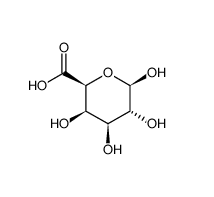
![N-Azidoacetylglucosamine, 2-[(Azidoacetyl)amino]-2-deoxy-D-glucose, Cas:92659-90-0](https://iqqtzppqhmpvcumbzjyb.supabase.co/storage/v1/object/public/images/products/23/1782804673504_main_D-Erythronolactone.png)