About this product
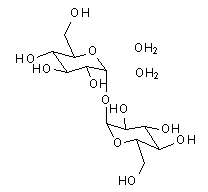
Trehalose? DihydrateTrehalose is a non-reducing disaccharide consisting of two glucose molecules joined by an alpha, alpha-1,1 bond. It was first discovered in 1832 by French chemists Louis Nicolas Vauquelin and Pierre Jean Robiquet, who isolated it from the false truffle mushroom Tuber macrosporum. Trehalose is found in a variety of organisms, including bacteria, fungi, plants, and invertebrate animals. It is also found in small amounts in mammalian tissues, including blood and brain tissue.Physical and Chemical Properties
Trehalose is a white crystalline powder with a sweet taste. It is soluble in water but insoluble in most organic solvents, including ethanol and ether. It is stable at high temperatures and high pH values. Trehalose forms anhydrous crystals, meaning that it does not absorb water from the environment. This property makes trehalose an ideal candidate for use in the stabilization of proteins and other biological molecules.Synthesis and Characterization
Trehalose can be synthesized by a variety of methods, including enzymatic conversion of maltose, glucose isomerization, and chemical synthesis. Enzymatic methods involve the use of trehalose synthase, an enzyme that catalyzes the conversion of maltose to trehalose. Glucose isomerization is another method that involves the conversion of glucose to fructose followed by the condensation of two fructose molecules to form trehalose. Chemical synthesis involves the condensation of two glucose molecules in the presence of an acid catalyst.Analytical Methods
There are several analytical methods available for the detection and quantification of trehalose. These methods include high-performance liquid chromatography (HPLC), capillary electrophoresis, and enzymatic assays. HPLC is the most commonly used method for the determination of trehalose in biological samples. Enzymatic assays involve the use of trehalase, an enzyme that hydrolyzes trehalose to glucose, which can be measured using glucose oxidase-based assays.Biological Properties
Trehalose has been shown to have several biological properties, including antioxidant, anti-inflammatory, and anti-apoptotic effects. It has also been shown to enhance the survival and activity of cells under various stress conditions, such as dehydration, freeze-drying, and heat shock. Trehalose can also protect proteins and lipids from denaturation and oxidation, making it an ideal candidate for the stabilization of biological molecules.Toxicity and Safety in Scientific Experiments
Trehalose has generally been shown to be safe in scientific experiments. It is non-toxic and non-carcinogenic, and has a low potential for allergenicity. However, high doses of trehalose have been shown to cause gastrointestinal symptoms, such as diarrhea and vomiting, in some individuals.Applications in Scientific Experiments
Trehalose has a wide range of applications in scientific experiments. It is commonly used as a cryoprotectant for the preservation of biological molecules, such as proteins, lipids, and DNA. Trehalose can also be used as a stabilizer for vaccines, as it helps to maintain the stability and efficacy of the vaccine during storage and transport. In addition, trehalose has potential applications in the food industry, as it can be used as a sweetener, stabilizer, and texture modifier.Current State of Research
Research on trehalose is ongoing, with new applications and potential benefits being discovered. Recent studies have focused on the use of trehalose as a therapeutic agent for a variety of diseases, including neurodegenerative disorders, diabetes, and cancer. Trehalose has also been shown to have potential applications in skin care, as it can improve skin hydration and prevent aging.Potential Implications in Various Fields of Research and Industry
Trehalose has the potential to have a significant impact in various fields of research and industry. Its applications in the preservation and stabilization of biological molecules could lead to improved drug development and vaccine production. In the food industry, trehalose could be used as a natural sweetener and a replacement for artificial sweeteners. Trehalose's potential therapeutic properties also make it a promising candidate for the treatment of various diseases.Limitations and Future Directions
Although trehalose has many potential applications, there are still some limitations and areas for future research. One limitation is the cost of production, which is currently higher than that of other sugars. Future research could focus on developing more cost-effective methods for trehalose production. Another area for future research is the potential toxic effects of high doses of trehalose and the long-term effects of trehalose consumption. Finally, there is a need for further research on trehalose's potential therapeutic benefits and its mechanism of action in various diseases.Title:?Trehalose
CAS Registry Number:?99-20-7CAS Name:?a-D-Glucopyranosyl-a-D-glucopyranosideAdditional Names:?mushroom sugar; mycose;?a,a-trehaloseMolecular Formula:?C12H22O11Molecular Weight:?342.30Percent Composition:?C 42.11%, H 6.48%, O 51.41%Literature References:?Non-reducing disaccharide found in fungi, bacteria, yeasts, and insects; 45% as sweet as sucrose. Provides the energy source for flight in many insects. Incorporated into mycobacterial structural glycolipids such as cord factors,?q.v. Isoln from the ergot of rye: H. A. L. Wiggers,?Ann.?1?129 (1832). Prepn and review of early history: T. S. Harding,?Sugar?25, 476-478 (1923). Isoln from yeast: E. M. Koch, F. C. Koch,?Science?61, 570 (1925); L. C. Stewart?et al.,?J. Am. Chem. Soc.?72,?2059 (1950). Synthesis: Lemieux, Bauer,?Can. J. Chem.?32,?340 (1954). Crystal structure: G. A. Jeffrey, R. Nanni,?Carbohydr. Res.?137, 21 (1985). Review of metabolism: A. D. Elbein,?Adv. Carbohydr. Chem. Biochem.?30, 227-256 (1974).?In vitro?evaluation in cryopreservation of human oocytes: A. Eroglu?et al.,?Fertil. Steril.?77, 152 (2002). Use in freeze-drying human platelets: W. F. Wolkers?et al.,?Cryobiology?42, 79 (2001);?eidem,?Cell Preservation Technol.?1, 175 (2003). Review of properties, toxicity and safety studies: A. B. Richards?et al.,?Food Chem. Toxicol.?40, 871-898 (2002); of stabilizing functions and applications: T. Higashiyama,?Pure Appl. Chem.?74,?1263-1269 (2002).?Derivative Type:?DihydrateCAS Registry Number:?6138-23-4Properties:?Orthorhombic, bisphenoidal crystals from dil alcohol. Sweet taste. mp 96.5-97.5?. The water of crystn escapes around 130?. Anhydrous trehalose melts at 203?. [a]D20?+178? (c = 7 of the dihydrate). Sol in water, hot alcohol. Insol in ether. Does not reduce Fehling's soln. Is fermented by yeast. Is not split by?a-glucosidase. Acid hydrolysis gives 2 mols?D-glucose.Melting point:?mp 96.5-97.5?Optical Rotation:?[a]D20?+178? (c = 7 of the dihydrate)?Use:?Stabilizes cells during freezing, freeze-drying and air-drying. Sweetener and stabilizer in foods; cryoprotectant for freeze-dried foods. Additive in cosmetics and personal care products.CAS No: 6138-23-4 Synonyms: a-D-Glucopyranosyl-a-D-glucopyranoside dihydrate MDL No: MFCD00071594 Chemical Formula: C12H22O11?2H2O Molecular Weight: 378.33In Stock.??COA:Product name:?D-(+)-Trehalose? Dihydrate? ? ??CAS:?6138-23-4
M.F.:?C12H22O11.2H2O???M.W.:?342.30?(as Anhydrous)? ??Batch No:?20140718? ?Quantity:9kgItemsStandardsResultsAppearancewhite crystals or powderPositiveSolubilityEasily soluble in water, insoluble in etherCompliesAppearance of solutionDissolve0.5 gin 10 ml of water,and the solution should be clearCompliesIdentificationIR and TLCCompliesMS and NMRShould ComplyCompliesM.P.97??~??99?97??~99?Specific rotation[?]20/D(C=7 inH2O)+180? ?~??+182?+181.2?Residue on ignitionMax. 0.5%0.1%TLCShould be one spotone spotHeavy metalMax.20ppmCompliesAny other impurityMax. 0.5%CompliesAssayMin. 99%99.4%Total Bacteria Count?1000cfu/gCompliesYeast, Mold & Fungi?100cfu/gCompliesSalmonellaNegativeCompliesE. ColiNegativeCompliesStaphylococcusNegativeComplies
CAS Number6138-23-4Product NameTrehaloseIUPAC Name(2R,3S,4S,5R,6R)-2-(hydroxymethyl)-6-[(2R,3R,4S,5S,6R)-3,4,5-trihydroxy-6-(hydroxymethyl)oxan-2-yl]oxyoxane-3,4,5-triol;dihydrateMolecular FormulaC12H26O13Molecular Weight378.33 g/molInChIInChI=1S/C12H22O11.2H2O/c13-1-3-5(15)7(17)9(19)11(21-3)23-12-10(20)8(18)6(16)4(2-14)22-12;;/h3-20H,1-2H2;2*1H2/t3-,4-,5-,6-,7+,8+,9-,10-,11-,12-;;/m1../s1InChI KeyDPVHGFAJLZWDOC-PVXXTIHASA-NSMILESC(C1C(C(C(C(O1)OC2C(C(C(C(O2)CO)O)O)O)O)O)O)O.O.OSynonymsTrehalose Dihydrate; ?,?-Trehalose Dihydrate; ?-D-Glucopyranosyl ?-D-Glucopyranoside Dihydrate;Canonical SMILESC(C1C(C(C(C(O1)OC2C(C(C(C(O2)CO)O)O)O)O)O)O)O.O.OIsomeric SMILESC([C@@H]1[C@H]([C@@H]([C@H]([C@H](O1)O[C@@H]2[C@@H]([C@H]([C@@H]([C@H](O2)CO)O)O)O)O)O)O)O.O.OReferences:
1. Stewart LC, Richtmyer NK, Hudson CS, J. Am. Chem. Soc. 1950, p2059