About this product
Vicine
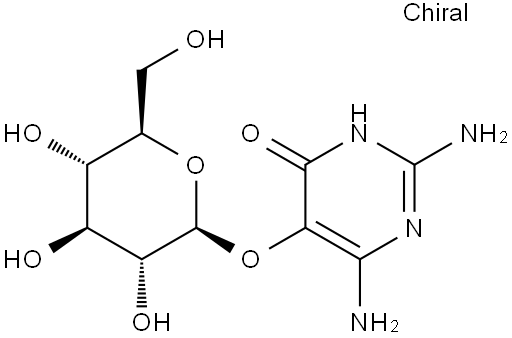
Vicine (CAS No. 152-93-2) is a naturally occurring alkaloid glycoside primarily found in fava beans ( Vicia faba ). It is chemically identified as 2,6-diamino-5-(β-D-glucopyranosyloxy)-4(1H)-pyrimidinone and has the molecular formula C₁₀H₁₆N₄O₇ with a molecular weight of 304.26 g/mol .
Chemical and Physical Properties
CAS Number : 152-93-2
EINECS : 205-809-4
Molecular Formula : C₁₀H₁₆N₄O₇
Molecular Weight : 304.26 g/mol
Boiling Point : 445.09°C
Melting Point : 242–244°C
Density : 2.18 g/cm³
Appearance : White crystalline powder (typically stored neat at room temperature or -20°C for long-term stability).
Structure and Sources
Vicine consists of a divicine (pyrimidine aglycone) moiety linked to a β-D-glucopyranose sugar. It is biosynthesized in plants like Vicia faba and acts as a defense compound against herbivores.
Biological Significance and Toxicity
Favism : Vicine is toxic to individuals with glucose-6-phosphate dehydrogenase (G6PD) deficiency , causing oxidative stress and hemolytic anemia (favism).
Mechanism : Hydrolysis by intestinal β-glucosidases releases divicine, which generates reactive oxygen species (ROS), damaging red blood cells.
Applications
Biochemical Research : Studied for its role in oxidative stress pathways and interactions with enzymes like xanthine oxidase.
Reference Standard : Used as a certified primary reference material (purity >95% by HPLC) in analytical testing, particularly in phytochemical studies.
Storage and Handling
Storage : Store at 2–8°C for long-term stability. Short-term storage at room temperature is acceptable.
Solubility : Soluble in water and DMSO.
Safety Considerations
Toxicity : Handle with caution due to its potential to induce hemolysis in susceptible individuals.
Regulatory Status : Labeled with hazard warnings (e.g., "Warning") for occupational exposure.
In summary, vicine is a biologically active glycoside with significant implications in nutrition, toxicology, and biochemistry. Its dual role as a plant defense compound and a research tool underscores its importance in both agricultural and medical sciences.
Citations:
https://pubs.acs.org/doi/10.1021/jf00118a041
https://pubs.acs.org/doi/10.1021/jf60194a016
https://centaur.reading.ac.uk/88530/8/1-s2.0-S0924224419301992-main.pdf
https://www.nature.com/articles/s41598-024-83488-z
https://pmc.ncbi.nlm.nih.gov/articles/PMC10934171/
https://pmc.ncbi.nlm.nih.gov/articles/PMC5006014/
https://en.wikipedia.org/wiki/Vicine